Muay Thai in Phuket: watching and training guide 2026
Phuket: Live Muay Thai at Bangla Boxing Stadium with T-shirt
Where is the best place to watch Muay Thai in Phuket?
Bangla Boxing Stadium in Patong is the most accessible and consistently programmed venue, with fights running most evenings of the week. Tickets start at around 1,000 THB for upper seating and go up to 2,000 THB ringside. For a more local feel with fewer tourists in the crowd, Rawai Muay Thai in the south hosts regular fight nights that attract a mixed local and expat audience.
Muay Thai — the ancient Thai martial art combining punches, kicks, elbows, and knee strikes — is one of the most legitimate cultural experiences available in Phuket. Unlike the scripted shows and tourist-engineered “authentic” experiences that fill the island’s entertainment calendar, Muay Thai fights are real competitive bouts between trained athletes. The fighters want to win. The crowd bets on outcomes. The atmosphere in a working boxing stadium is unlike anything else on offer in Patong.
This guide covers both sides of the Muay Thai coin in Phuket: watching as a spectator and training as a participant.
| Where | Bangla Boxing Stadium & Patong Boxing Stadium (Patong); Rawai Muay Thai (south Phuket) |
| Watching cost | around 800–2,000 THB per person depending on seat tier |
| Training cost | around 500–1,500 THB for a single beginner session |
| Fight nights | most evenings in Patong (peak season); twice weekly at Rawai |
| Booking | walk-up tickets usually available; book ahead for ringside on weekends |
Watching Muay Thai: the main venues
Bangla Boxing Stadium (Patong)
Bangla Boxing Stadium is the most accessible Muay Thai venue in Phuket, located just off Bangla Road in the heart of Patong. It’s been running for years and has established itself as the primary tourist-facing fight venue, with fights typically running 3–5 nights per week depending on the season.
The stadium holds several hundred spectators across three seating tiers:
- Upper seats: 1,000–1,200 THB (~$31–37) — decent overhead view, you see the full ring
- Mid-tier: 1,300–1,600 THB (~$40–49) — the practical sweet spot for most visitors
- Ringside: 1,800–2,000 THB (~$55–61) — close enough to hear the impacts and smell the liniment oil
Ringside is genuinely different from upper seating at Muay Thai — you can hear the strikes landing, see the fighters’ technique up close, and feel the energy of the crowd more viscerally. If you’re a Muay Thai enthusiast or this is an important part of your Phuket trip, ringside is worth the premium. For casual first-timers, mid-tier is fine.
Patong Boxing Stadium
Patong Boxing Stadium is the other main fight venue in Patong and runs on alternate nights from Bangla, meaning that between the two venues, you can find a fight on almost any evening during peak season. The atmosphere is slightly more local — fewer organised tour-group arrivals, more independent visitors — and the seating is comparable.
Ticket prices are in the same range: 1,000–2,000 THB depending on tier. If you have flexibility in timing, check which venue is running the night you’re available and compare the fight cards — venues publicise upcoming bouts on their social media in the week before each event.
Rawai Muay Thai
Rawai in the south of Phuket has a different Muay Thai culture from Patong. Rawai Muay Thai Camp hosts regular fight nights that draw a mixed crowd of local Thais, long-term expats, and tourists who’ve done their research. The atmosphere is less packaged than the Patong venues — more raw, fewer tour buses, and a crowd that genuinely follows the sport rather than treating it as an evening attraction.
Ticket prices are typically lower: 800–1,500 THB depending on seating and event. Fight nights run less frequently than in Patong — usually twice a week — but when they happen, the experience is more authentic. The distance from most tourist accommodation (30–40 minutes from Patong by taxi) is the main barrier.
Understanding what you’re watching
The structure of a fight card
A typical Phuket fight night runs 8–10 bouts, each scheduled for up to 5 rounds of 3 minutes each. Many fights end before the full 5 rounds via knockout (rare but not uncommon), technical stoppage, or clear enough dominance that one fighter’s corner throws in the towel. Decision outcomes are common for more even fights.
The early bouts on the card often feature younger or less experienced fighters — teenagers or fighters with fewer professional bouts — and the quality can be uneven. The main events, typically the last 3–4 bouts of the evening, are where the best fighters appear. Arrive on time if you’re interested in the full card, but the main events are worth staying for regardless.
Tourist bouts vs authentic Muay Thai
There’s a genuine spectrum in Phuket’s Muay Thai scene. At the organised tourist venues, fight cards are real competitions, not staged performances — but the field of fighters includes a lot of international visitors who’ve paid to fight in a “real Thai boxing match” as a bucket-list experience. These bouts exist on the same card as genuine professional fighters and can be technically inconsistent.
If you’re watching a bout between an experienced Thai fighter with 80+ professional fights and a tourist who trained for two weeks, you can usually tell. That’s not a reason to skip these venues — the main event bouts are consistently quality — but understanding the mixed card explains why fight quality varies across an evening.
For the most authentic competitive Muay Thai experience in Phuket, Rawai fight nights tend to have a higher proportion of genuine local and professional fighters. The trade-off is convenience and frequency.
The betting atmosphere
One of the most distinctive aspects of watching Muay Thai in Thailand is the informal ringside betting, conducted via hand signals between spectators throughout the fight. You’ll see animated gestures and animated exchanges — this is the betting market, where individuals in the stands are wagering with each other (not through organised bookmakers).
As a tourist spectator, you’re unlikely to be drawn into this unless you seek it out. The signals are a traditional part of the experience and add significantly to the atmosphere. Understanding that the animated spectators aren’t arguing — they’re updating live odds — makes the crowd dynamics considerably more interesting to watch.
Training Muay Thai in Phuket
What a visitor training session involves
Tourist and beginner training sessions at Phuket’s main camps typically run 60–90 minutes and cost 500–1,500 THB for a single session (cheaper with multi-day packages). A standard session includes:
- Warm-up: skipping rope, shadow boxing, basic conditioning
- Technique instruction: guard position, stance, basic strikes (jab, cross, kick, knee)
- Pad work: 3–4 rounds on Thai pads held by a trainer who guides your combinations
- Cool-down
You’ll leave sweaty, slightly sore in your shins, and with a genuine appreciation for how technically demanding the sport is. Pad work with a good trainer is the highlight — they call the combinations and you execute them, which is both instructional and exhausting.
Contact sparring is not part of beginner sessions unless specifically requested and mutually arranged. You won’t be asked to fight anyone.
The main training camps
Tiger Muay Thai (Chalong/Ao Chalong area, near Chalong) is the largest and most internationally known camp in Phuket. It offers a full range of sessions from beginner drop-ins to long-term residential training programmes. The facilities are excellent and the instruction is professional. The downside is that it’s very popular, which means larger classes and less individual attention during peak periods. Prices run 800–1,500 THB for a single session.
Rawai Muay Thai (south Phuket, near Rawai) is smaller, more traditional in approach, and has a stronger local fight programme. If you’re serious about training rather than just experiencing it, Rawai offers more focused instruction. Single sessions run 700–1,200 THB.
Patong-area camps — several small camps operate near Bangla Road and the surrounding streets. These are convenient for Patong stayers and often the easiest drop-in option, but they’re variable in instruction quality. Inspect the facilities and watch a session before committing.
Multi-day packages
If you’re staying in Phuket for a week or more and want to train seriously, multi-day packages offer substantially better value than per-session pricing. A week of twice-daily training at Tiger Muay Thai runs roughly 6,000–9,000 THB ($184–276) and includes access to strength and conditioning equipment. Residential packages with accommodation are available at several camps.
Training twice daily for a week will leave you significantly fitter and significantly more sore than any gym session you’ve done recently. Build in recovery time.
Practical guide for spectators
What to bring to a fight night
- Cash: Most venues are cash-only or prefer it for food and drinks. There’s usually a beer seller or bar inside.
- Comfortable clothing: Stadiums are open-air or partially ventilated — expect it to be warm and humid. Light clothing is practical.
- Mosquito repellent: Evening outdoor seating in Phuket = mosquitoes. A small spray keeps you comfortable for 3 hours.
- Earplugs (optional): The music between rounds — traditional Muay Thai sarama music — is played at high volume at some venues. It’s culturally important but loud.
Etiquette in the stadium
Muay Thai stadiums in Thailand have their own unwritten codes. A few practical notes:
- Don’t point your feet towards the ring — a general Thai cultural norm about the feet being the “lowest” part of the body.
- The traditional greeting and farewell ritual each fighter performs before a bout (the wai kru) is a sacred element. It’s not an entertainment warm-up. Watch quietly.
- Cheering is encouraged and enthusiastic. Muay Thai crowds are not politely appreciative — they’re vocally engaged.
- Alcohol is usually available at stadiums but being visibly drunk is poor form.
When to visit for the best fights
Fight quality peaks during high season (November–April), when more international visitors bring larger purses for bigger name fights, and the Thai fighting calendar supports higher card quality. Checking the best time to visit Phuket guide will help you understand the seasonal patterns. The monsoon shoulder season (May–October) sees fewer tourists and correspondingly lighter fight cards — bouts still happen and are worth attending, but the main events won’t consistently feature the island’s best fighters.
If a specific fighter or fight style matters to you, follow the venues on Instagram — they post upcoming cards 3–7 days in advance.
Shoulder-season fight nights (May, October) are underrated for a different reason: smaller crowds mean easier seat upgrades on arrival, and the fighters on a lighter card still fight with the same intent even if the marquee names aren’t on the bill. If your main goal is soaking up the atmosphere rather than seeing a specific champion, timing isn’t something to obsess over.
Combining watching and training
The obvious combination for a Muay Thai-focused day in Phuket is a morning training session followed by an evening fight night. This is popular enough that several tour operators package them together. The physical reality is that a genuine training session in Phuket’s humidity will leave you tired by evening, so plan a quiet afternoon and a good meal between sessions.
The Phuket itinerary ideas guide includes a dedicated day plan for this combination if you want a structured version.
Muay Thai vs other Phuket evening entertainment
If you’re choosing between Muay Thai and one of Phuket’s theatrical shows, they’re genuinely different experiences.
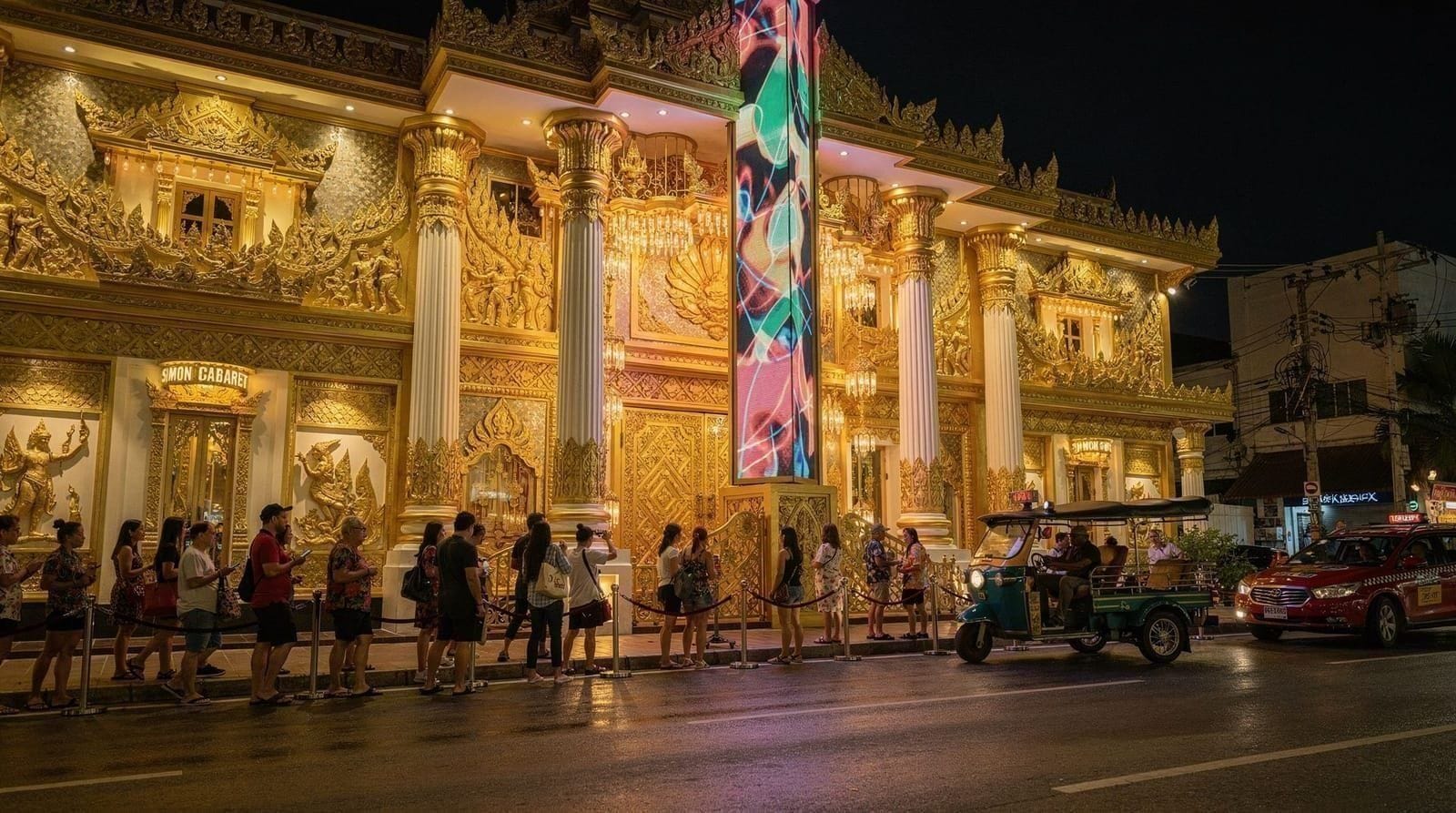
Simon Cabaret and Carnival Magic are polished performances with predetermined outcomes. They’re entertaining, but passive. Muay Thai is live sport — unpredictable, physically intense, and grounded in a martial tradition that’s central to Thai culture. For visitors with any interest in sport, combat sports, or authentic cultural experiences, Muay Thai consistently outperforms the theatrical alternatives on depth of experience.
The best shows in Phuket guide positions Muay Thai within the full landscape of Phuket entertainment options if you want a comparative overview. For understanding Thai culture and etiquette in Phuket more broadly — including the cultural significance of Muay Thai — that guide provides useful background before attending your first fight.
Budget summary
| Option | Cost per person |
|---|---|
| Upper seats, Bangla Stadium | 1,000–1,200 THB (~$31–37) |
| Mid-tier seats, Patong venues | 1,300–1,600 THB (~$40–49) |
| Ringside seats | 1,800–2,000 THB (~$55–61) |
| Rawai fight night | 800–1,500 THB (~$25–46) |
| Single training session (beginner) | 500–1,500 THB (~$15–46) |
| Week training package | 6,000–9,000 THB (~$184–276) |
Comparing the three venues at a glance
| Bangla Boxing Stadium | Patong Boxing Stadium | Rawai Muay Thai | |
|---|---|---|---|
| Location | Off Bangla Road, Patong | Patong, alternate nights | South Phuket (30–40 min from Patong) |
| Crowd | Mixed tourist/tour-group | Slightly more independent | Local + long-term expat |
| Frequency | 3–5 nights/week | Alternates with Bangla | ~2 nights/week |
| Ticket price | 1,000–2,000 THB | 1,000–2,000 THB | 800–1,500 THB |
| Best for | Convenience, first-timers | Same-strip alternative | Authenticity, less packaged feel |
Combining a fight night with dinner in Patong
Most fight cards start around 9pm, which leaves the earlier evening open. A practical routine several operators and long-term visitors follow: eat dinner in central Patong by 7:30pm, walk to the stadium by 8:45pm to find your seat before the crowd fills in, and treat the fights as the main event of the evening rather than a stopover. Restaurants two to three streets back from the beach tend to be better value and less rushed than those directly on the main tourist strip — the same logic that applies to eating well anywhere near Bangla Road.
Booking ahead vs walk-up tickets
For a casual weekday visit, walk-up tickets are usually available right up to fight time — arrive 30–45 minutes early and buy directly at the stadium ticket window, which avoids any online booking fee. The picture changes on Friday and Saturday nights in high season (December–February), when tour buses fill mid-tier and ringside seats well before doors open; if a specific fight night or seat tier matters to you, book at least a day ahead. Online booking also gives a small practical advantage: your seat number is confirmed before you arrive, so you skip the queue at the ticket window entirely, which matters if you’re combining the fight with an earlier dinner in Patong and want a tight schedule.
If you only have one night in Patong
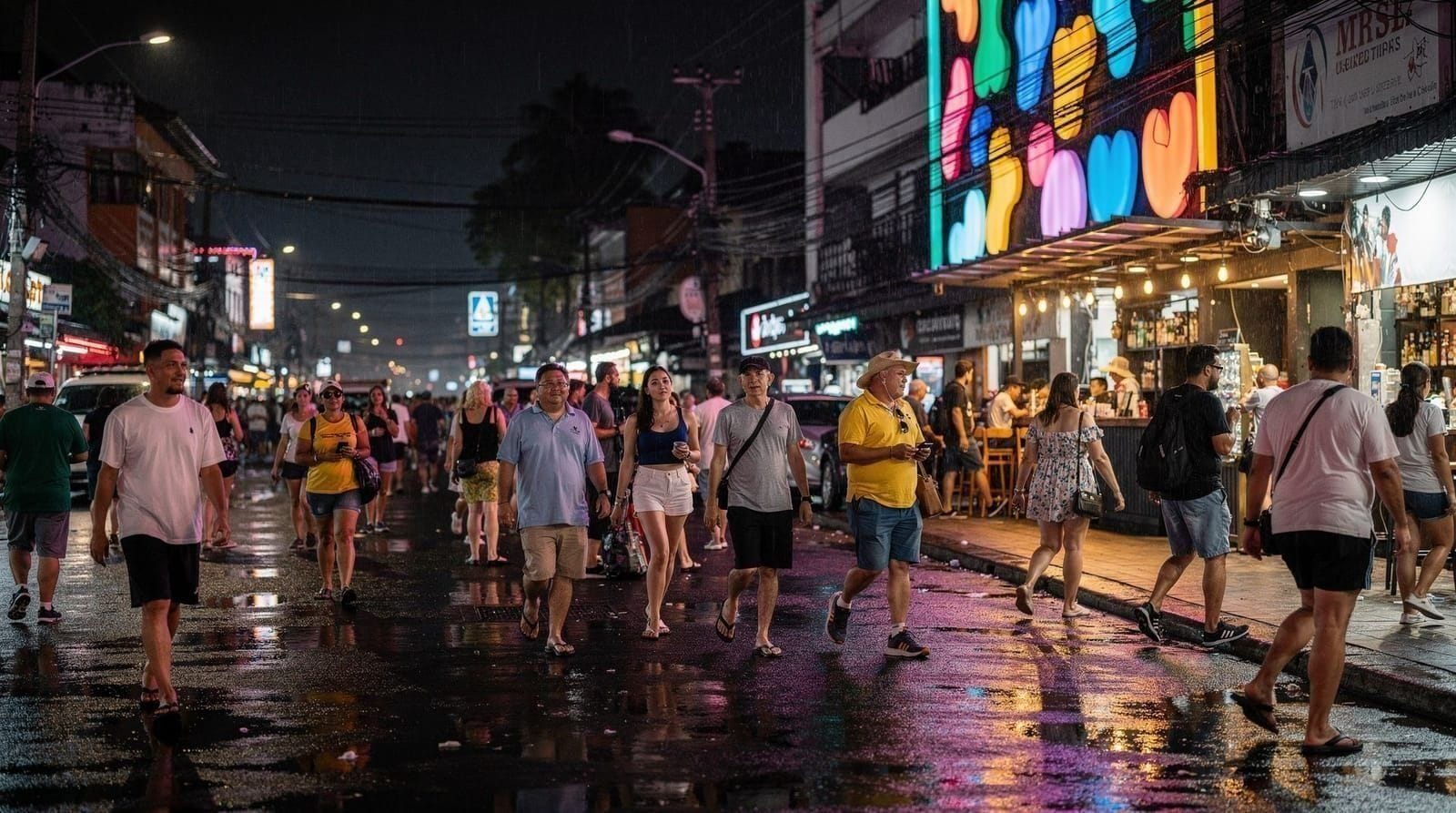
Visitors weighing Muay Thai against Bangla Road’s bars and clubs for a single evening should know it isn’t really an either-or choice — Bangla Boxing Stadium sits just off Bangla Road itself. A practical sequence many visitors use: watch the early bouts, then walk the strip afterwards once the fight card wraps around 9:30–10pm, so you get the sport and the spectacle in one evening without rushing either. The Patong nightlife guide has the fuller picture of what Bangla Road involves if you’re deciding how the rest of the night should go.
Frequently asked questions about Muay Thai in Phuket: watching and training guide 2026
How much do Muay Thai tickets cost in Phuket?
What nights do Muay Thai fights happen in Phuket?
How long does a Muay Thai fight night last?
Are Phuket's tourist Muay Thai fights real or staged?
Can I train Muay Thai in Phuket as a complete beginner?
Is Muay Thai training suitable for women and children?
What should I wear to a Muay Thai fight?
How do I place bets at a Muay Thai fight?
Top experiences
Bookable activities with verified prices and instant confirmation on GetYourGuide.