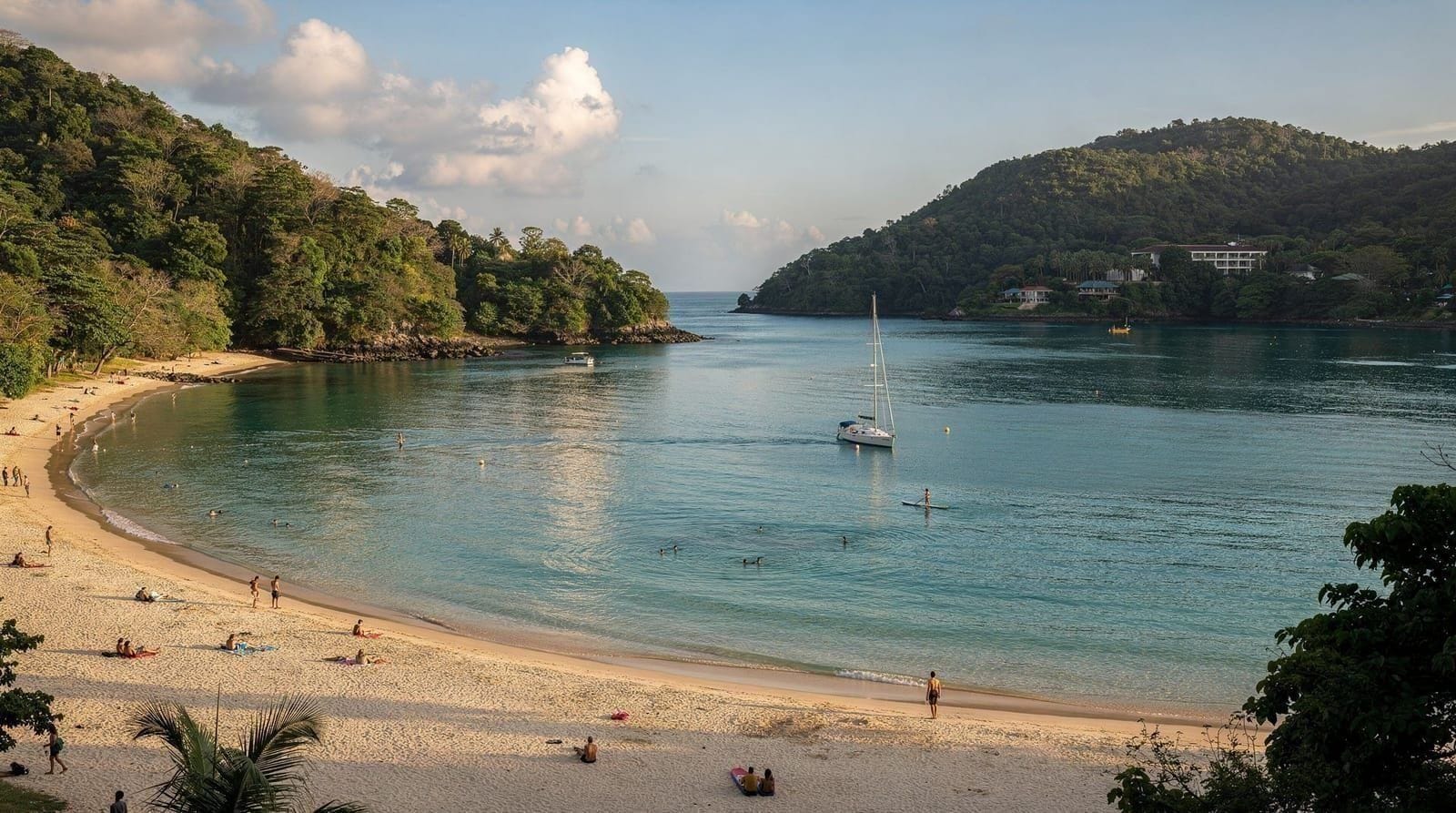
Phuket for divers — 7-day diving itinerary
Phuket: Scuba diving day trip — King Cruiser & Shark Point
Is Phuket good for scuba diving? Yes — Phuket sits within boat range of some of Southeast Asia’s best dive sites: Similan Islands (world-class reefs), King Cruiser wreck, Shark Point, Richelieu Rock, and Racha Yai. Budget 2,500–5,000 THB per person per dive day ($77–$153 USD) including boat and equipment.
| Best for | Certified divers, PADI students, underwater photographers |
| Base | Rawai, Kata Beach, or Nai Harn |
| Cost | Around 42,800–65,500 THB/person total, 7 nights |
| Getting around | Dive boat pickups, Grab otherwise |
| Book ahead | PADI course and Similan day trip especially, 3–5 days minimum |
Phuket’s diving landscape
Phuket itself isn’t a dive destination — the water around the main island is stirred-up and murky. Phuket is a launch pad for the surrounding dive sites. Within 45–120 minutes by speedboat, you can reach sites ranging from beginner-friendly reef dives to advanced wreck and drift diving.
The critical seasonal caveat: The best dive sites — Similan Islands, Surin Islands, Richelieu Rock — are part of protected national parks that close June–October each year. If you’re visiting outside this window, this itinerary substitutes with the year-round sites (Racha Yai/Noi, King Cruiser, Shark Point) that are still excellent.
PADI certification: If you want to get certified in Phuket, Day 1–3 are dedicated to the PADI Open Water course. If you’re already certified, start at Day 2 and add an extra dive day.
The dive operator ecosystem in Phuket is large and uneven in quality. At the top end — PADI 5-Star Dive Centers with experienced instructors, well-maintained equipment, and honest site assessments — the diving is genuinely first-rate. At the bottom end, unlicensed boats and instructors who skip safety steps are a real problem. The selection guidance below and our scuba diving in Phuket guide will help you pick correctly.
Where to base yourself for diving: Rawai in the south puts you closest to the pier departure points for Racha Island and gives easy access to the southern dive operator cluster. Kata Beach has a particularly good concentration of reputable dive schools — Dive Asia and Sea Fun Divers both operate from here. The Nai Harn area is quiet and convenient for southern dive pickups. Avoid Patong for dive operators specifically — there are many, but quality control is lower and the beach itself is not pleasant.
Day 1–3 — PADI Open Water certification (beginners)
If you’re not yet a certified diver, Phuket is an efficient place to get your PADI Open Water Diver card. The standard 3-day course includes pool sessions, theory (eLearning ideally completed before arrival), and 4 open-water dives. Most dive schools certify at Racha Yai Island — calm conditions, good visibility, ideal training environment.

Cost: 12,000–16,000 THB ($368–$490 USD) for the full 3-day course including equipment rental, boat transport, and certification fee. Do the eLearning beforehand (PADI’s online theory module costs ~$200 and saves classroom time on Day 1).
Choosing a dive school: Look for PADI 5-Star Dive Centers (highest rating). Scubacat, Dive Asia (Kata Beach), and Sea Fun Divers (Kata) have consistent reputations. Avoid schools that rush the pool sessions or offer suspiciously low certification prices — below 9,000 THB ($276) for Open Water should raise immediate questions about what’s being cut. Also check: instructor-to-student ratio (4:1 is the PADI guideline for open water; 2:1 is better for nervous beginners), equipment condition (inspect the regulators — salt crust is a warning sign), and whether the school has an on-site clinic or hospital partnership (Bangkok Hospital Phuket and Mission Hospital both have hyperbaric chambers for decompression emergencies).
What to expect day by day: Day 1 is theory and confined-water skills in a pool (3–4 hours). Day 2 is the first two open-water dives at Racha Yai — shallow profile (5–12m), practicing skills: clearing your mask, buoyancy control, emergency ascent procedures. Day 3 covers two more open-water dives at slightly greater depth. By Day 3, most students are genuinely relaxed underwater and beginning to enjoy it rather than manage anxiety.
Monsoon season note: PADI training continues year-round from Phuket. Racha Yai is sheltered enough that training conditions remain acceptable May–October. Visibility drops (8–15m vs 20–30m in dry season) but skills practice doesn’t require viz.
Already certified? Skip to Day 2’s dive day content below and add an extra dive day on Day 1 instead — an additional day at Racha Yai or, in November–May, a Similan liveaboard orientation dive.
Day 2/4 — Racha Yai and Racha Noi (3 dives)
Racha Island is the go-to site for day trips from Phuket — 45–60 minutes by speedboat. Racha Yai (the main island) has several sites suitable for all certification levels: Bay 1 (Bungalow Bay) for beginners, Anemone Reef for advanced (25–30m), and a cleaning station where manta rays appear occasionally (January–March).
Racha Noi (further south) is for experienced divers: strong currents, deeper profiles (30m+), but more pelagic life including white-tip reef sharks. It’s the kind of site where you drop to 25m and watch a shark cruise the ledge below you — unhurried, completely uninterested in you.

The 3-dive day trip (Racha Yai + Racha Noi) covers the full range of the island group. Equipment rental included; bring your own BCD and regulator if you have them (saves ~300 THB/$9.20 per day and ensures your equipment is properly maintained).
Surface interval: Between dives at Racha Yai, the island’s main bay has a small restaurant (pad thai, 120 THB/$3.68; grilled fish, 200–300 THB/$6.13–$9.20) and sun loungers. The snorkeling in the shallows during the surface interval is excellent — the coral coverage at 1–4m depth in Bay 2 is better than many sites at full dive depth.
Visibility: Typically 15–25 metres in dry season, dropping to 8–15m in monsoon. Best in December–April.
Underwater photographer note: Racha Yai’s best macro life is at Anemone Reef (advanced divers) — nudibranchs, frogfish, and pipefish among the coral heads. The sandy bottom at Bay 1 has reliably positioned leopard sharks resting during the morning — wide-angle shots from 2m distance are achievable with a INON or Sea&Sea strobe setup.
Day 3/5 — King Cruiser wreck and Shark Point
King Cruiser is an 85-metre car ferry that sank in 1997 after striking Anemone Reef. Now a protected artificial reef, it’s one of the most diveable wrecks in Thailand — penetrable at multiple levels from 3 metres to 33 metres, with excellent fish density and good coral growth after nearly 30 years. The wreck is intact: you can recognise the vehicle decks, the bridge, the engine room. Fish life inside includes enormous schools of glassfish that turn in unison as you pass through the corridors.
External wreck dives (top of the wreck at 3–8m) are fine for Open Water divers. Internal penetration dives (engine room at 28–33m, vehicle deck passages) require Advanced Open Water minimum and ideally a wreck speciality. Never enter a wreck without a torch and a dive buddy.
Shark Point (Hin Musang) is 2 km away — a submerged granite pinnacle with exceptional soft coral density and regular leopard shark sightings. One of Phuket’s most photographed dive sites. Leopard sharks rest on the sandy areas between 5–18m — they are harmless, slow-moving, and accustomed to divers. Do not touch, chase, or attempt to ride them (this happens; it’s illegal and stresses the animal).
Both sites are included in the same day trip from Phuket:

Certification required: Open Water minimum for the shallower King Cruiser profiles. Advanced Open Water (or equivalent experience) recommended for deeper wreck penetration and Shark Point at full depth.
Timing: Shark Point is best dived at high tide when visibility is clearest and currents manageable. Your dive operator will schedule this automatically, but it’s worth understanding why the departure time matters — most King Cruiser/Shark Point departures leave Chalong Pier at 8am for this reason.
Day 4/6 — Phi Phi dive sites (3 dives)
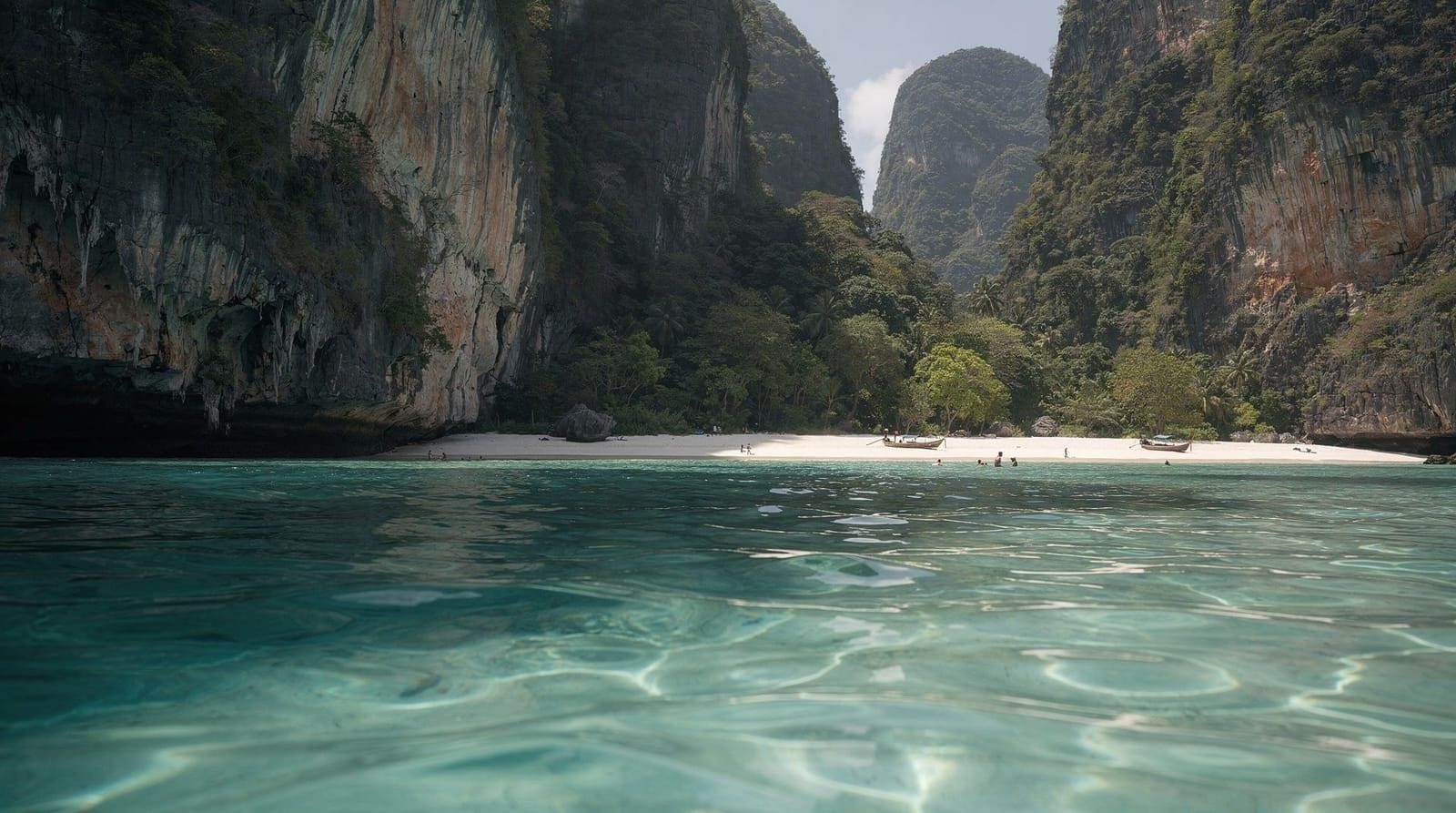
The Phi Phi Islands area has a cluster of excellent sites: Bida Nok (pinnacles, high fish density, moray eels), Bida Nai (coral gardens, reef sharks), and Shark Point off Phi Phi (different from Hin Musang near King Cruiser). All are reachable by day trip from Phuket or from Phi Phi Don itself.

The Phi Phi dive trip is typically 3 dives over 8 hours. The sites around Phi Phi are less deep than King Cruiser or Racha Noi — maximum 25–28m — making them suitable for Open Water certification.
Bida Nok specifics: The twin pinnacles at Bida Nok reach to within 5m of the surface and drop to 30m. The walls are thick with soft corals — seafans, wire corals, and brilliant orange tunicates at 15–20m depth. Barracuda and trevally school in the open water above the pinnacle; look down into the blue from the top and you’ll often see them wheeling in formation.
What makes Phi Phi different from Racha: The topography. Racha Yai is relatively flat reef; Phi Phi’s Bida sites are dramatic underwater geology. If you’re doing only one island for a dive day, Racha Yai wins on wildlife; Phi Phi wins on landscape.
Snorkeling alternative: If you’re not diving but want the Phi Phi underwater experience, the surface snorkeling at Bamboo Island and around the Phi Phi Don bays is among the best in the area. Visibility is better than most inshore sites. The best snorkeling in Phuket guide covers the surface options in detail.
Day 5/7 — Similan Islands (November–May only)
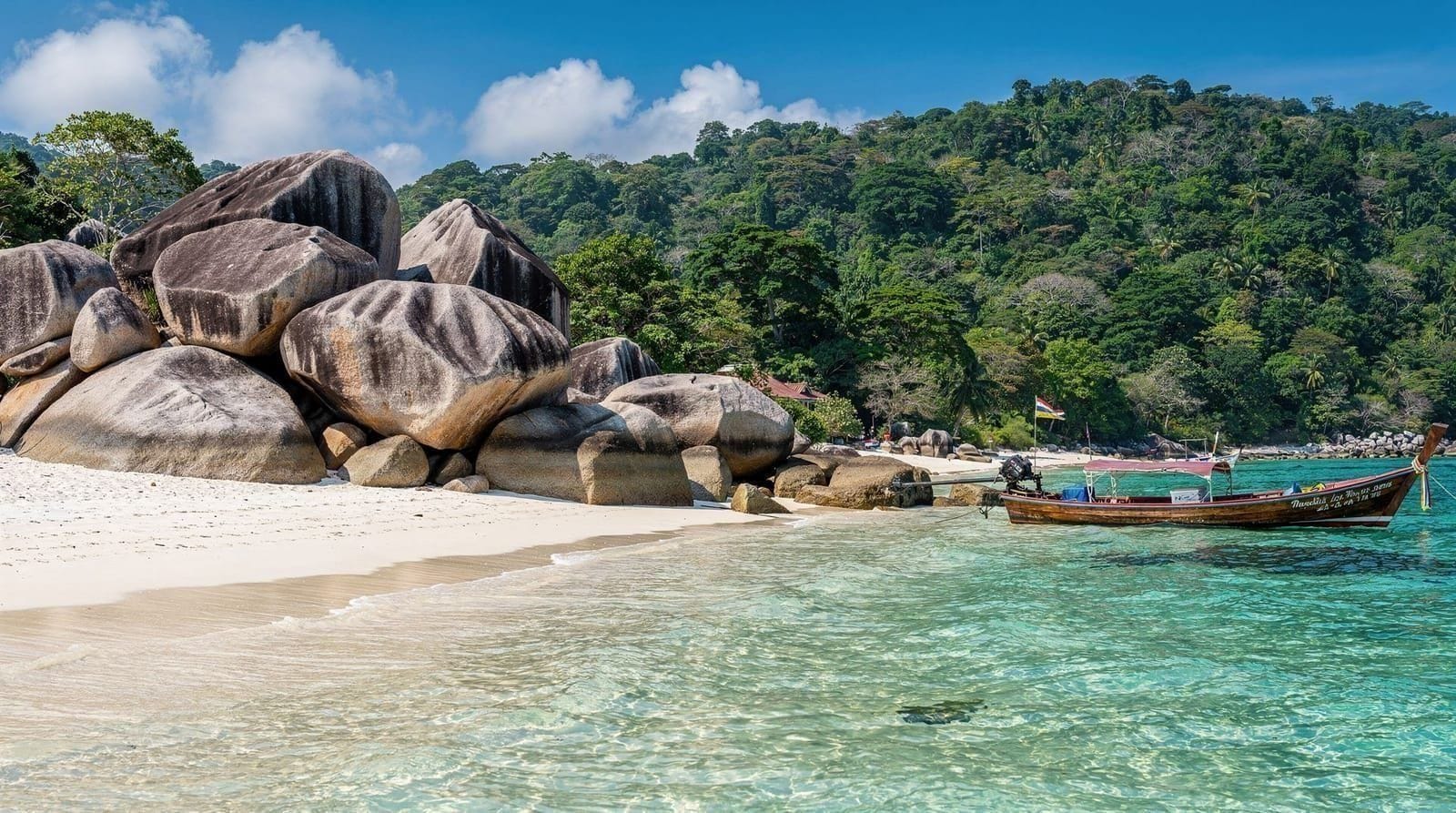
Similan Islands is the headline of any Andaman dive trip — 9 islands 70 km northwest of Phuket, with 20–35m visibility, rock formations unlike anything else in Thailand, and an extraordinary variety of marine life. The sites here (Christmas Point, Elephant Head Rock, Donald Duck Bay) are on Southeast Asia’s all-time list.
The day trip from Phuket is long: depart 7:30am, 2.5 hours each way, back at Phuket by 7pm. Worth it entirely.

What makes Similan special: The boulders. The islands’ signature topography — enormous granite boulders stacked underwater into arches, swim-throughs, and canyons — creates micro-habitats with extraordinary diversity. Elephant Head Rock (site 8) is the most technically demanding: a dive through an arch system at 18–25m with strong current. Christmas Point (site 7) is more accessible but equally stunning — a sloping reef to 30m with resident barracuda, Napoleon wrasse, and seasonal whale sharks (February–April).
Whale sharks: February–April is the period when whale sharks are most frequently encountered at Similan, particularly at sites 7 and 8. They are not guaranteed — this is wild ocean, not an aquarium — but the probability is meaningfully higher than at any other time of year. Whale sharks at Similan feed near the surface; approach slowly from the side, not from above or head-on.
Monsoon closure note: Similan Islands National Park closes May 15–October 31 each year (exact dates vary). If visiting outside this window, substitute with a second King Cruiser/Shark Point day (excellent repeat diver site) or a trip to Koh Doc Mai (soft coral pinnacle, 30 minutes from Phuket, open year-round). Koh Doc Mai’s vertical wall at 5–20m has some of the best soft coral colour in Phuket’s year-round sites.
For the full dive site breakdown, see our Similan Islands diving guide and scuba diving in Phuket guide.
Day 6 — Phang Nga Bay surface activities (rest day for divers)
After 3–4 days of diving, a rest day is not just pleasant — it’s physiologically recommended. Repeat diving without adequate surface intervals increases decompression sickness risk. No-fly times must be observed (18 hours minimum after repetitive dives), and nitrogen off-gassing happens faster when you’re relaxed above the surface than when you’re diving again.
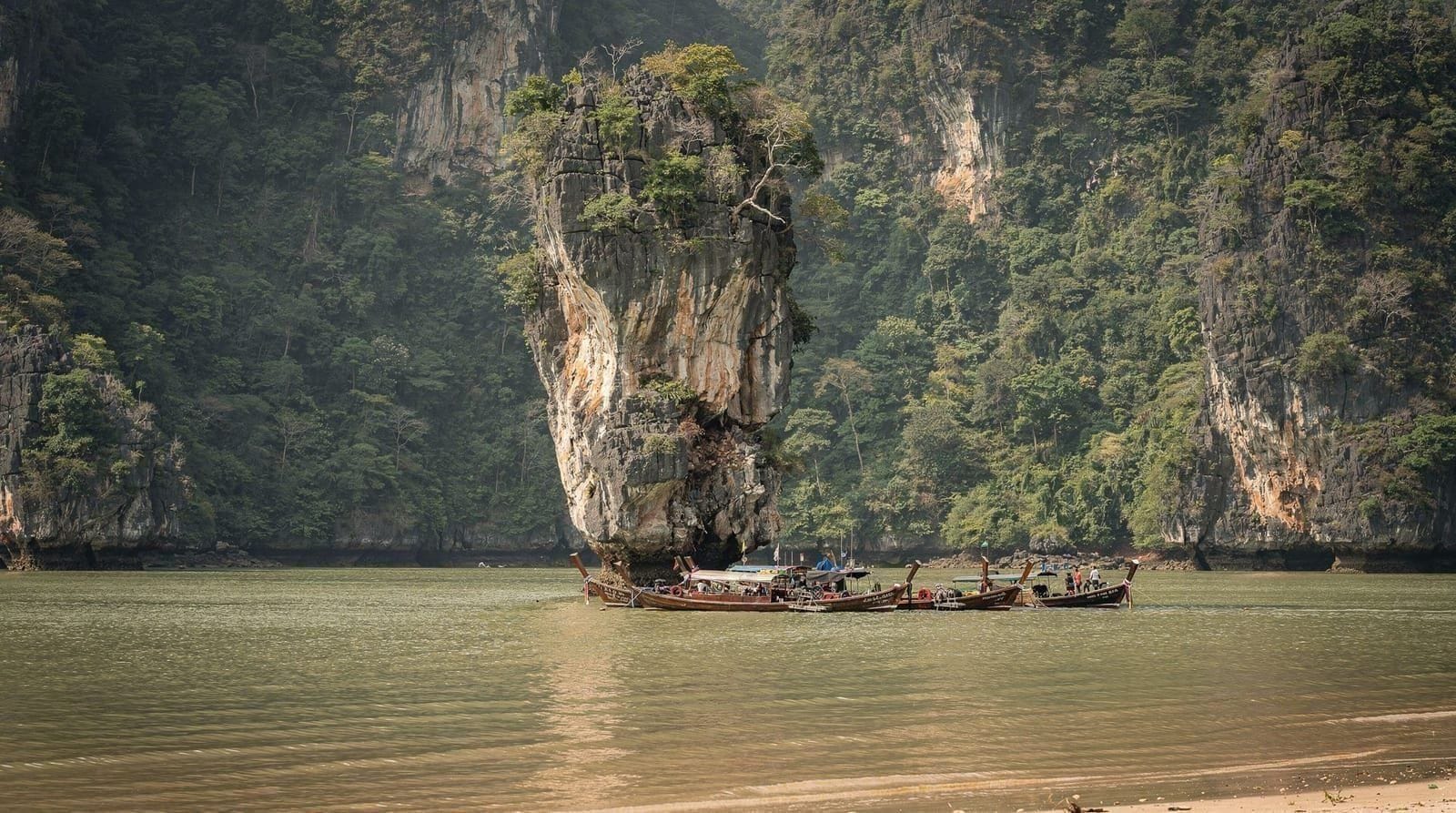
Phang Nga Bay surface activities (kayaking, James Bond Island, Koh Panyi village) make an excellent rest-day option. The bay’s sheltered water works year-round — monsoon season keeps the open Andaman rough but leaves Phang Nga calm.
The sea cave kayaking in Phang Nga is excellent in its own right: you paddle through a cave entrance at the base of a karst and emerge inside a hong (collapsed cave system), surrounded by jungle-covered walls with a circle of sky above. No dive equipment required — just a paddle and a willingness to duck. See our Phang Nga Bay sea canoe guide for how to book this well.
Koh Panyi: The floating village is a Muslim fishing community of around 1,800 people built on wooden stilts over the bay. The village has been here since the late 18th century. Walking the boardwalks in the morning (before the day-trip coaches arrive at 10am) is one of the more authentic travel experiences available within easy reach of Phuket.
Note on flying after diving: PADI guidelines state minimum 18 hours before flying after repetitive dives, 12 hours after a single dive. Don’t schedule your departure flight less than 18 hours after your last dive. This itinerary places the flight on Day 8 — well within safety margins if the last dive day is Day 5.
Day 7 — Local reef snorkeling, departure prep
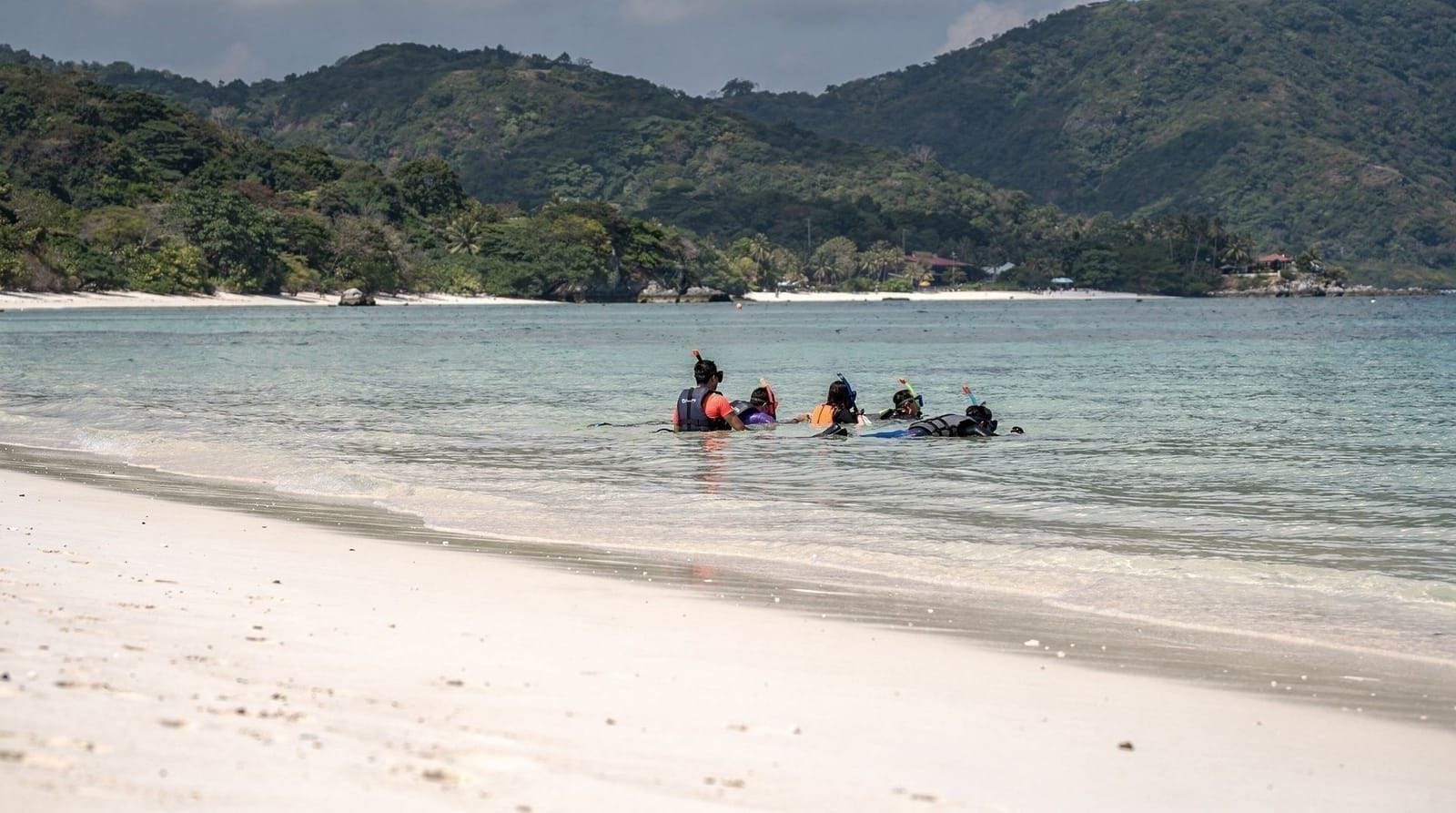
For a final morning, Nai Harn in southern Phuket has accessible snorkeling from the beach — basic by Similan standards, but a pleasant low-key morning. The beach itself is one of Phuket’s quietest in the south, with a good local restaurant strip on the road above the beach. Nai Harn Lake sits behind the beach and is worth a 30-minute walk for the birdwatching if the snorkeling doesn’t appeal.
For snorkelers who want something better than Nai Harn shore snorkeling: Racha Island has a snorkel-only day trip option without the full dive package. The clarity at Racha on a calm dry-season day — visibility routinely 20–25m — is as good as anything outside the Similans.
Evening: dive equipment clean and packed. Check your dive log is updated with all sites and depths — useful for the next dive trip and often requested as proof of experience by operators at new destinations. Fly home the following day.
Dive site comparison
| Site | Depth range | Best for | Season |
|---|---|---|---|
| Racha Yai Bay 1 | 5–18m | Beginners, PADI training | Year-round |
| Racha Yai Anemone Reef | 12–30m | Advanced, mantas (Jan–Mar) | Year-round |
| King Cruiser wreck | 3–33m | Wreck diving, all levels | Year-round |
| Shark Point (Hin Musang) | 5–26m | Leopard sharks, soft coral | Year-round |
| Phi Phi Bida Nok/Nai | 5–25m | All levels, reef sharks | Year-round |
| Similan Islands | 5–40m | All levels, pelagics | Nov–May only |
| Surin Islands | 5–30m | Advanced, manta rays | Nov–May only |
Read more in our best snorkeling in Phuket guide for the surface perspective.
Dive operator selection: what to look for
The difference between a good and a poor dive operator matters more here than in almost any other context — poor safety practices underwater have serious consequences. Key indicators of a quality operator:
PADI 5-Star Dive Center accreditation: This is not just a marketing badge. It requires regular third-party audits, minimum instructor-student ratios, and equipment maintenance standards. Check the PADI website directly — don’t take a sign outside a shop at face value.
Equipment maintenance: All regulators and BCDs should be serviced annually. A cracked mouthpiece or sticky inflator button is fixable topside; a failing regulator at 25m is not. Ask when equipment was last serviced. A good operator will have records.
Dive guide ratio: 8:1 (diver to guide) is PADI’s maximum for certified diver groups. 4:1 or 6:1 is better. Any operator promising groups of 12 with one guide is cutting corners.
Oxygen on board: All dive boats should carry oxygen. If you see a dive boat without a clearly visible oxygen kit, walk away.
Hyperbaric chamber access: The nearest chamber to Phuket is at Mission Hospital. Your operator should have a protocol for emergencies and the phone number of the chamber memorised.
Budget breakdown (per person, 7 nights, mid-range diver)
| Item | THB | USD |
|---|---|---|
| Accommodation (7 nights near Kata or Rawai) | 12,600–21,000 | $386–$644 |
| PADI Open Water course (or 3 fun dives) | 12,000–16,000 | $368–$490 |
| Racha Yai/Noi 3-dive day trip | 2,800–4,000 | $86–$123 |
| King Cruiser/Shark Point day trip | 2,500–3,500 | $77–$107 |
| Phi Phi dive day trip | 2,800–4,000 | $86–$123 |
| Similan day trip | 3,500–5,000 | $107–$153 |
| Food (7 days) | 5,600–10,500 | $172–$322 |
| Grab and local transport | 1,000–1,500 | $31–$46 |
| Total | ~42,800–65,500 | ~$1,313–$2,009 |
For general Phuket cost planning, see our Phuket travel budget guide.
Underwater photography gear and settings for these sites
If you’re bringing a camera, each site in this itinerary rewards a different approach. Racha Yai’s Bay 1 leopard sharks are best shot wide-angle from a low angle, keeping at least 2 metres distance and letting the shark’s own movement do the work rather than chasing it for a better angle. King Cruiser’s interior corridors need a strong focus light rather than relying on ambient light — the glassfish schools scatter and reform beautifully if you hover rather than swim through quickly, giving them time to settle back into formation around you.
Similan’s boulder swim-throughs (Elephant Head Rock especially) are dramatic with a fisheye lens but genuinely dangerous to attempt while managing a bulky camera rig in current — if you’re not fully confident in the topography, do the site once without a camera first. Across all sites, resist the urge to touch coral or the seabed for stability while composing a shot; a broken fin kick against a wall does more damage in a second than a diver realizes.
Non-diving travel companions
If you’re traveling with a partner or friend who doesn’t dive, this itinerary still works without major restructuring. Racha Yai and Similan both offer dedicated snorkeling stops alongside the dive schedule, so a non-diver can join the same boat and see much of the same marine life from the surface — Similan’s Donald Duck Bay in particular has shallow coral gardens genuinely comparable to what divers see slightly deeper.
On Day 6’s Phang Nga Bay rest day, the whole itinerary becomes shared regardless of certification. The one day worth planning separately is Day 3/5 (King Cruiser and Shark Point) — the wreck penetration sections aren’t snorkel-friendly, so a non-diver is better off spending that day at Nai Harn or exploring Phuket Old Town instead of joining the boat for a day with limited surface activity.
Adjusting the week around Similan’s closure
The single biggest variable in this itinerary is whether you’re traveling November–May (Similan open) or June–October (closed). If you’re planning around the closure, the honest substitution isn’t a lesser version of Similan — it’s a genuinely different but still excellent week built around repeat visits to Racha Yai/Noi and King Cruiser/Shark Point, plus Koh Doc Mai as a third year-round option. Divers who specifically chose Phuket for Similan and find themselves traveling in the closed season should seriously consider Khao Lak as a base instead for a future trip — it’s the standard launch point for Similan liveaboards during the season and sits closer to the park than Phuket does.
Our Similan Islands diving guide covers the Khao Lak-based alternative in more detail if you want to plan that trip separately rather than force it into a Phuket-based week. For this itinerary as written, if Similan is closed, replace Day 5/7 with a second King Cruiser/Shark Point trip or a Koh Doc Mai excursion and treat the week as a Racha-and-wrecks trip rather than a diminished Similan trip.
Buddy checks, insurance and the parts new divers underestimate
A few things matter more on a dive-focused week than a standard sightseeing trip. Dive-specific travel insurance (DAN or an equivalent policy covering decompression illness and hyperbaric treatment) is not optional — standard travel insurance policies frequently exclude scuba diving beyond a shallow depth limit, and a chamber treatment without coverage runs into the tens of thousands of dollars.
Log your dives properly from Day 1, including air consumption and any equipment issues, since a consistent log makes it much easier for a new operator to assess your comfort level if you dive elsewhere later in the trip. If you’re newly certified and diving Racha Noi’s stronger currents for the first time on Day 2/4, tell your dive guide explicitly — a good operator adjusts the group’s site and depth plan around the least experienced diver rather than assuming everyone in a “certified divers” trip has equal comfort underwater.
Frequently asked questions about diving in Phuket
Where should divers stay in Phuket?
Rawai in the south is closest to the pier departure points for Racha Island and gives easy access to the southern dive operator cluster. Kata Beach has a good concentration of reputable dive schools. Avoid Patong — the dive schools there are numerous but quality varies. The where to stay in Phuket guide covers accommodation options.
When is the best time to dive in Phuket?
November–April: best visibility (15–35m), calmest seas, all sites open. December–March: Similan at its finest, manta ray season at Racha Yai and Surin. May–October: monsoon limits options (Similan/Surin closed), but King Cruiser, Racha, and Phi Phi dive year-round with reduced visibility.
Is Phuket good for learning to dive?
Yes — Racha Yai is a genuinely good training environment with calm conditions, good visibility, and experienced instructors at accredited schools. The PADI Open Water 3-day course here is comparable in quality to anywhere in Southeast Asia.
Do I need an Advanced Open Water to dive in Phuket?
Open Water certification covers most of the accessible sites (max 18m profile). For the King Cruiser wreck at depth (25–33m), Advanced Open Water is recommended. The Similan and Surin sites can be dived at Open Water depth but you miss the deeper pinnacles.
Are liveaboard dive trips worth it from Phuket?
For the Similan and Surin Islands, yes — overnight liveaboards do 3–4 dives per day and get to sites in the early morning before day-trip crowds arrive. Cost: 10,000–25,000 THB ($307–$767) for 2–3 nights. See our Similan Islands diving guide for liveaboard recommendations.
Can snorkelers enjoy a diver-focused trip to Phuket?
Absolutely. Racha Yai’s shallow bays have excellent snorkeling with 15–20m visibility in dry season. The Similan day trip (when open) includes dedicated snorkeling stops at Donald Duck Bay and the Similan Beach sites where non-divers can genuinely see reef sharks, sea turtles, and dense coral at 2–5m depth. The island hopping week itinerary includes snorkeling alternatives for non-diving partners.
Top experiences
Bookable activities with verified prices and instant confirmation on GetYourGuide.