Phuket on a budget — 7-day itinerary under 25,000 THB
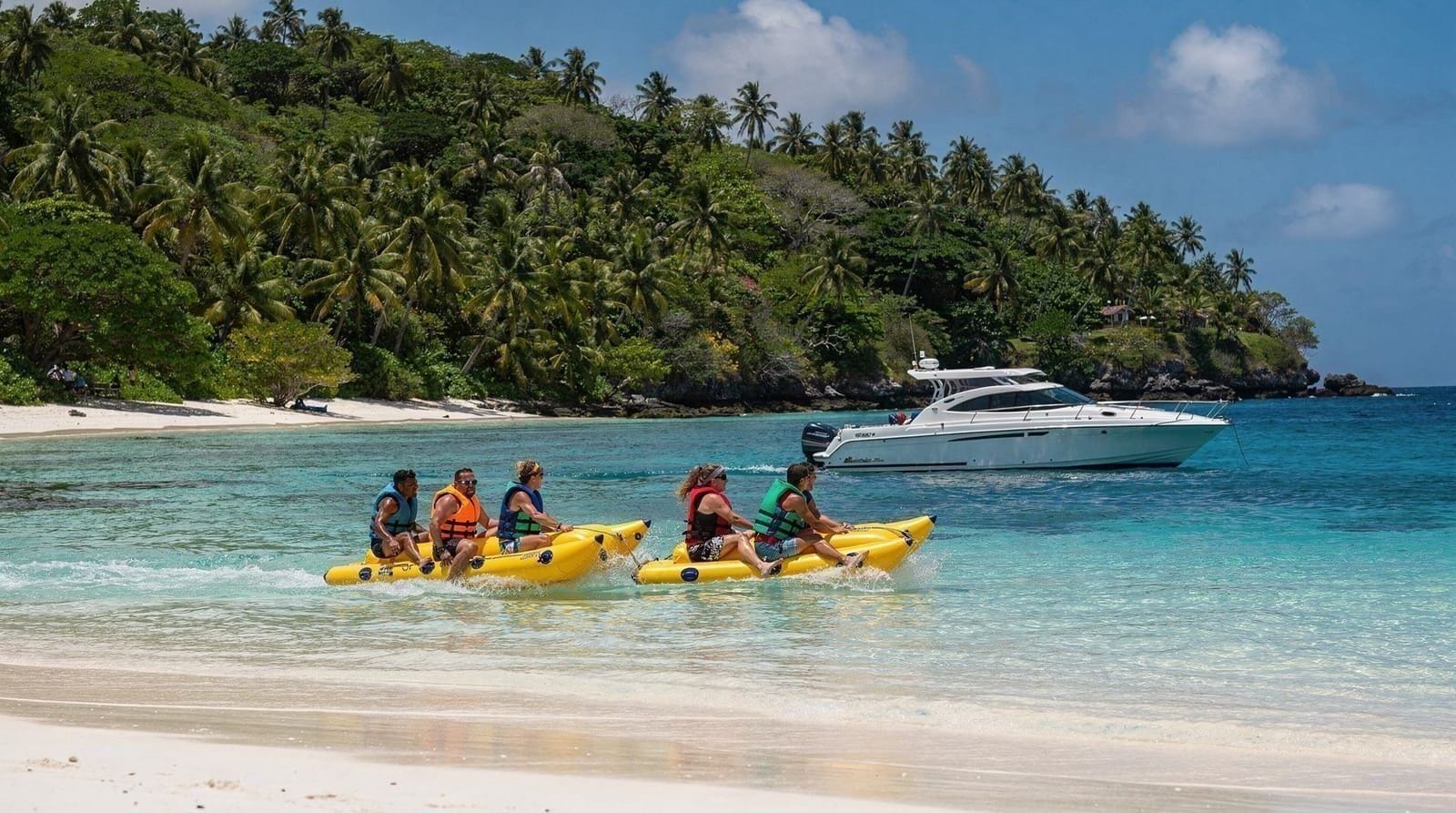
Phuket: Phi Phi & Bamboo Island snorkeling tour with lunch
Can you do Phuket cheaply? Yes — if you avoid the tourist traps, eat street food, use songthaews instead of taxis, and book day trips via reputable operators at mid-range prices rather than on-street hawkers. A realistic budget week in Phuket runs 2,500–3,500 THB per person per day ($77–$107 USD), including a Phi Phi day trip and Phang Nga Bay.
| Best for | Budget travelers, backpackers, students, solo travelers |
| Base | Rawai or Phuket Old Town (not Patong) |
| Cost | Around 13,750–22,700 THB/person total, 7 nights |
| Getting around | Songthaews by day, Grab at night |
| Book ahead | Phi Phi and Phang Nga Bay tours, 2–3 days minimum |
Phuket budget reality check
Phuket is 40–60% more expensive than northern Thailand, but significantly cheaper than most Western travel destinations. The budget trap is not the overall cost — it’s the tourist-zone premium: beach vendors charging 3× the local price, tuk-tuks quoting 10× Grab rates, and “budget” tours run by operators who cut corners on safety.
This 7-day itinerary targets 2,500–3,500 THB ($77–$107 USD) per person per day, which buys you a private room in a clean guesthouse, two meals at street food level plus one restaurant meal daily, and the actual good day trips (Phi Phi and Phang Nga Bay) at market rates. You won’t be in luxury — but you’ll see the same islands as the five-star guests.
Best season for budget travel: June–October (monsoon). Prices drop 30–50%, crowds disappear, and the rain is mostly afternoon thunderstorms rather than all-day drizzle. The trade-off: seas are rougher (speedboat day trips may cancel occasionally), Similan Islands are closed, and Surin Islands close too. Phi Phi and Phang Nga Bay still run.
Where budget travelers lose money before they even start: The biggest mistake is booking accommodation in Patong. Budget rooms in Patong exist, but they’re typically in airless back alleys where the noise from Bangla Road carries until 3am. The same money buys a significantly better room in Rawai or Old Town — quieter, better food nearby, and more authentic atmosphere.
Day 1 — Arrival and Phuket Old Town
Airport: the cheap option
The airport bus (Route 1, operated by Smart Bus) runs from HKT to Phuket Town for 150 THB ($4.60). Journey: 1–1.5 hours including stops. From Phuket Town, a songthaew to Phuket Old Town or Rawai costs 50–80 THB ($1.53–$2.45). Total airport-to-area: 200–230 THB ($6.15–$7.07) versus 500–700 THB ($15.35–$21.47) by Grab.
The airport bus is reliable and air-conditioned. Downside: no option to take it at night (service hours approximately 6am–9pm) and it doesn’t reach southern beaches directly. If you arrive after 9pm, Grab is the only sensible option.
ATM at the airport: Take THB cash immediately on arrival at the airport ATM — the fee (220 THB/$6.75 per transaction) is the same everywhere, so there’s no advantage to waiting. Withdraw 5,000–8,000 THB ($153–$245) to cover your first few days without needing to find an ATM at night.
Budget accommodation base
Rawai is the best budget base in Phuket — local prices, excellent street food scene, access to southern beaches and piers. Guesthouse dorms: 250–400 THB ($7.67–$12.25). Private rooms: 500–900 THB ($15.35–$27.60). The local market near Rawai Pier is the cheapest food on the island.
Alternative budget base: Phuket Old Town for walkable culture and cheap coffee. Avoid: Patong (budget accommodation exists but it’s in unpleasant alley locations, and everything else costs more).
What a 600–900 THB budget room looks like: Private room, fan or basic air conditioning, clean bathroom, WiFi. Not luxurious, but functional. At this price point in Rawai or Old Town, you’re staying in a family-run guesthouse rather than a resort. The trade-off is noise management — ask for a room away from the street.
Evening: Old Town street food
Take a songthaew to Phuket Old Town (~50 THB/$1.53) and walk Ranong Road night market or Phang Nga Road. Spend 150–250 THB ($4.60–$7.67) on dinner: moo ping (grilled pork skewers, 15–20 THB each), roti with condensed milk (30–40 THB), and green papaya salad (40–60 THB). The Old Town’s evening food scene is one of Phuket’s genuine bargains.
What to order and where: The Ranong Road night market runs Monday to Saturday, 5–9pm approximately. Look for the stalls with the longest queues of locals — these are the best. Khanom jeen (rice noodles with curry sauce, 50–70 THB), khao man gai (poached chicken rice, 60–80 THB), and pad krapao (basil pork stir-fry on rice with fried egg, 80–100 THB) are all excellent choices.
Day 2 — Free beaches: Kata, Karon, Rawai
The beach reality
All of Phuket’s beaches are free to enter — the sun, sand, and water cost nothing. What costs money is the infrastructure: beach chairs (200–300 THB/$6.15–$9.20 per day at commercial beaches), parasols, water sports. The budget approach: bring a sarong, buy a 25 THB ($0.77) bottle of water at a 7-Eleven, and use the beach for free.
Kata Beach and Karon Beach are both accessible by songthaew from Rawai (~50 THB/$1.53). Kata has the nicest sand for budget travelers — less jet-ski harassment than Patong, cleaner water, good shade trees at the southern end. The reef at Kata’s southern end provides decent snorkeling in dry season (November–April); visibility drops in monsoon.
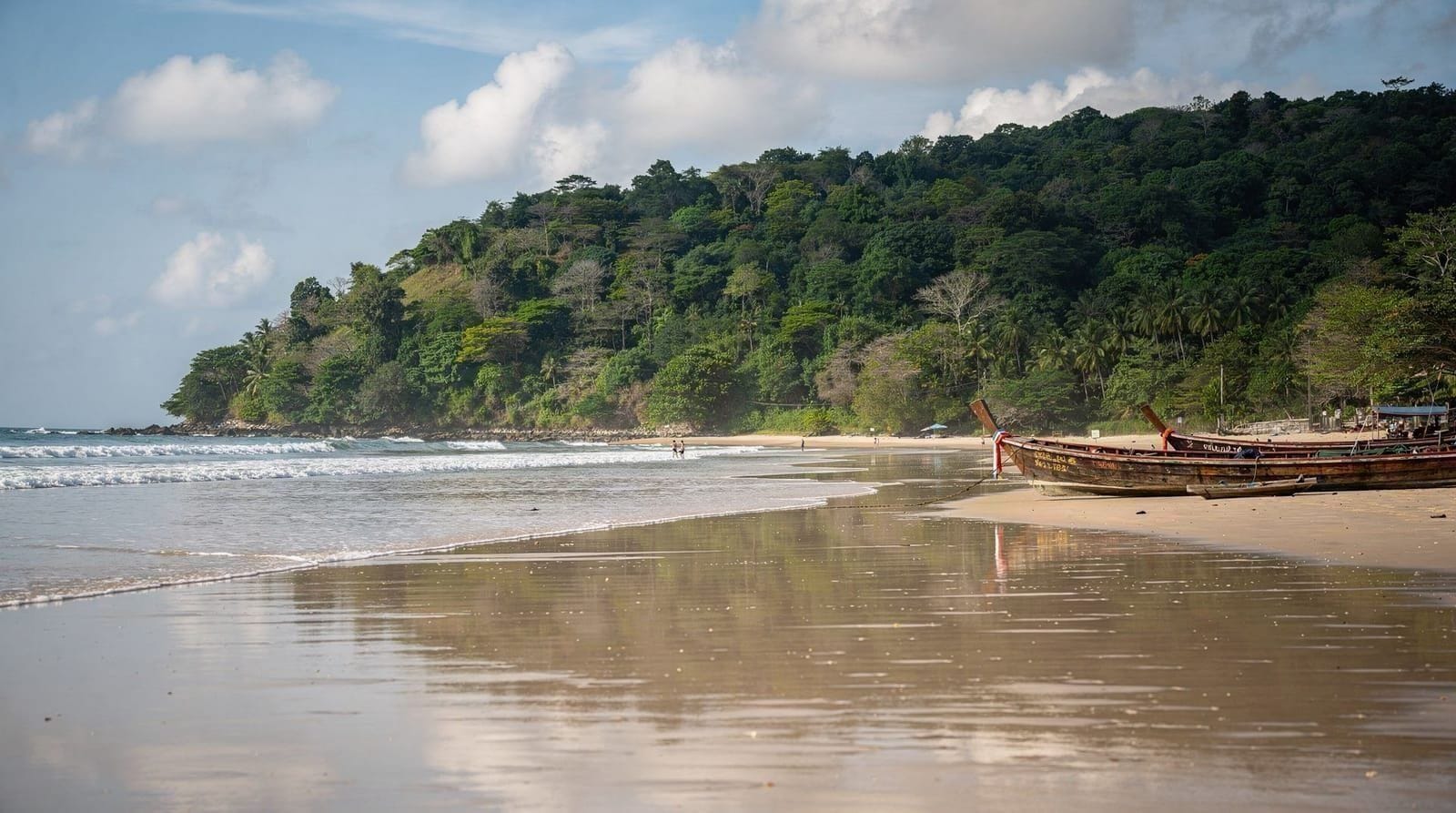
Rawai Beach itself isn’t great for swimming (rocky, shallow) but Rawai Pier has cheap longtail rides to Nai Harn (20 minutes, ~100 THB/$3.07 return private, or join a shared longtail for 50 THB/$1.53 per person). Nai Harn Beach is genuinely excellent — quiet, clean, minimal commercialisation. It’s arguably Phuket’s best beach for budget travelers: no jet skis, no aggressive vendors, a few unpretentious beach shacks.
Lunch: Rawai local market
The fresh market near Rawai Pier (open 6am–12pm) has cooked food stalls serving pad krapao (basil stir-fry on rice) and noodle soups for 50–80 THB ($1.53–$2.45) per plate. This is local-price Thai food — the same dish in a beach restaurant costs 200 THB ($6.15).
Budget lunch options near the beaches: 7-Eleven is not a joke — their hot food section (sausages, curry buns, 20–40 THB) works as a genuinely cheap snack. Fresh fruit vendors at most beaches: dragon fruit, pineapple, watermelon, 30–60 THB per bag. A plate of pad thai from a street cart near Kata Beach: 80–100 THB ($2.45–$3.07). These prices are about 40% of what a beach restaurant charges.
Afternoon: Phuket’s best free viewpoints
Two of Phuket’s best views are entirely free. Kata Noi viewpoint (a hillside lookout above the road between Kata and Karon) gives a sweeping view of Kata Beach and Kata Noi below. Walk up from Kata Beach via Route 4233 (20-minute walk uphill, or Grab for 60 THB/$1.84). Big Buddha viewpoint on Nakkerd Hill is free except for a modest donation request (0–100 THB). The 360° views over three bays — Kata, Karon, and Chalong — are among the best on the island.
Day 3 — Phuket Old Town walking tour
Morning: Old Town in depth
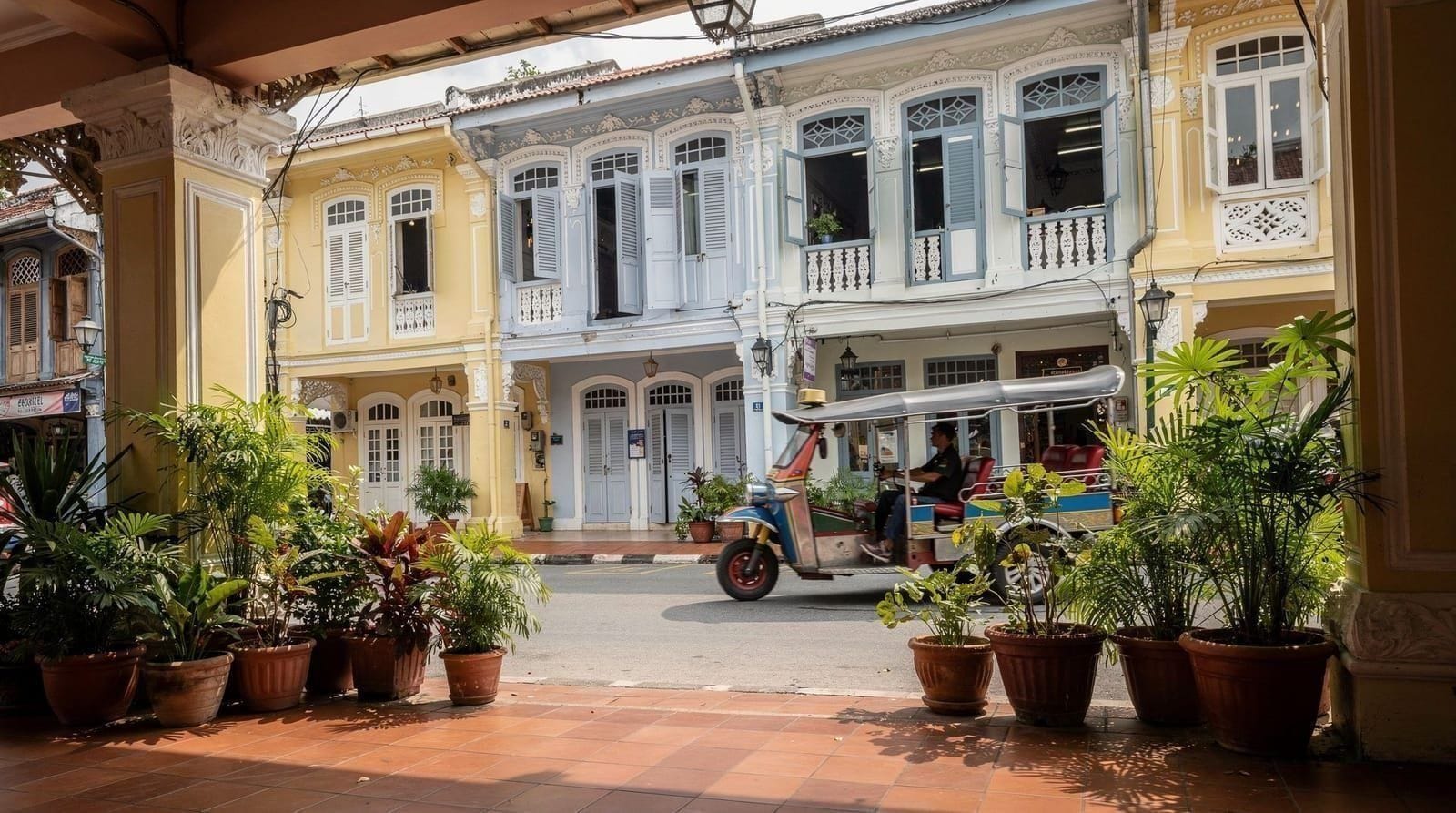
The Old Town is entirely walkable and free to explore. The Sino-Portuguese shophouses along Thalang, Dibuk, Phang Nga, and Yaowarat Roads are the visual centrepiece. Free cultural sites: Wat Mongkol Nimit (Chinese-Thai temple), Jui Tui Chinese Shrine, Boon Kaw Kong Shrine, the Phuket Trickeye Museum exterior (free outside views).
Phuket Museum (Thai History): 200 THB ($6.15) entry — worth it for context. The Baba Museum near Thalang Road: 100 THB ($3.07).
Best free cultural walk in Old Town: Start at the roundabout at the top of Dibuk Road at 8am. Walk south to the Clock Tower (Phuket Town’s main landmark, good coffee stalls around it), then east along Yaowarat Road for the Chinese-Thai shopfront architecture, then north up Phang Nga Road for the street art murals, then back west along Thalang Road for the craft shops and kopitiams. The whole circuit: 2.5 hours, zero entrance fees.
For a guided food tour that includes 14 dishes at 5–6 local stops — good value as a single experience combining food and culture introduction:

Afternoon: Sunday Walking Street (if applicable)
If Day 3 falls on a Sunday, the Old Town Walking Street runs 4pm–10pm along Thalang Road — over 100 food stalls, craft vendors, and live music. Budget 200–400 THB ($6.15–$12.25) for grazing through the whole street. This is Phuket’s best free evening.
Non-Sunday: the evening Old Town food cluster around Ranong Road night market serves the same good food without the tourist crowd premium.
What to eat at the Sunday Walking Street: The stalls near the Heroines Monument (midpoint of the walking street) tend to have the most interesting traditional Phuket dishes: kanom buang (crispy Thai crepes, 20–30 THB), moo hong (braised pork belly, 60–80 THB per portion), and oh aew (tapioca jelly dessert, 30–40 THB). These dishes are specific to Phuket’s Peranakan food tradition and worth trying before you leave the island.
Day 4 — Phi Phi Islands group tour (budget approach)
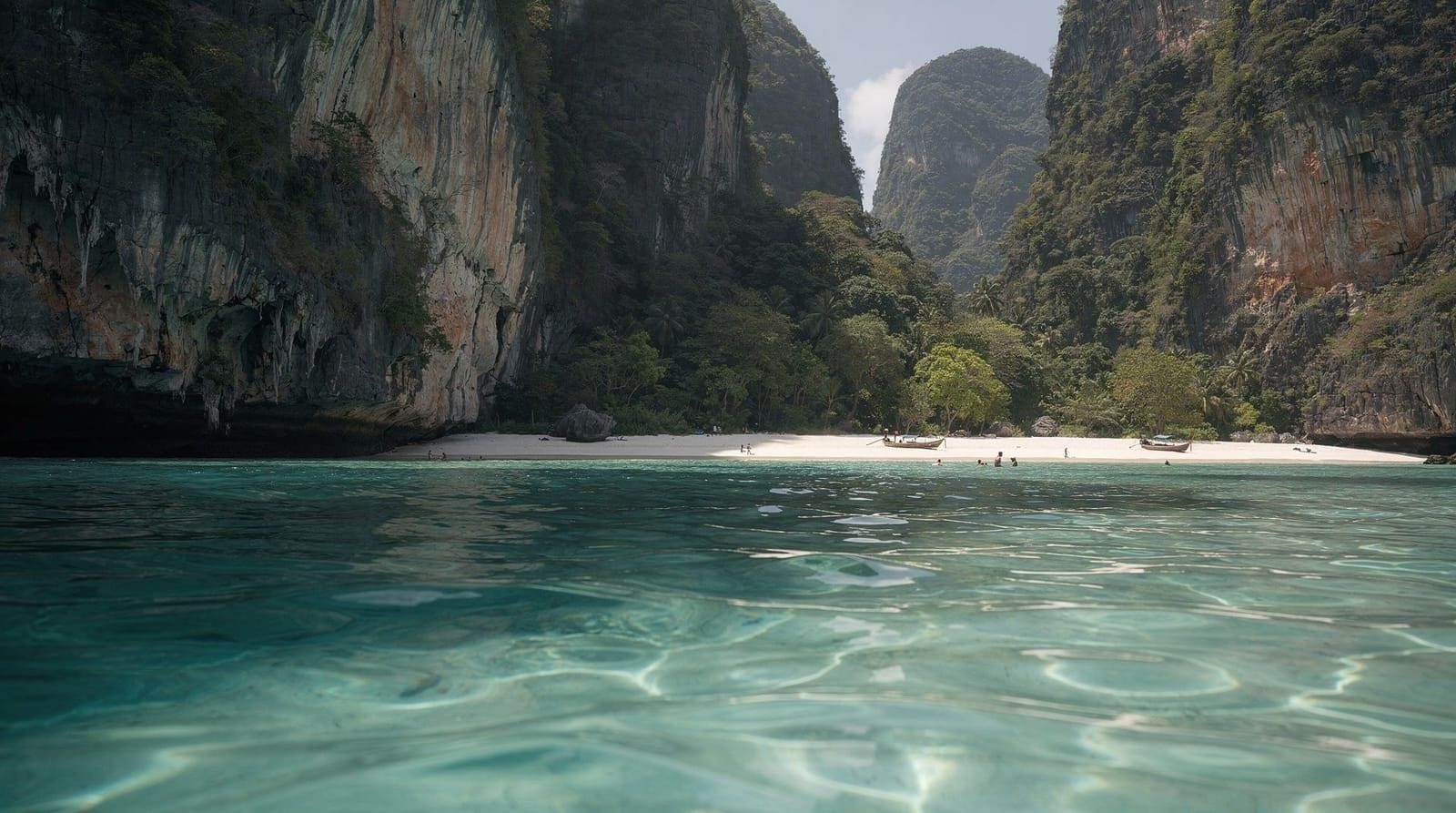
The Phi Phi day trip is Phuket’s best day trip and there’s no genuinely cheap version — the boat fuel, national park fee, and crew cost what they cost. The budget approach is to book a group speedboat tour rather than a private charter, and to book via a reputable operator (not from street touts who take a 30–40% commission and use lower-safety boats).

Standard group speedboat: 1,400–1,800 THB ($42.94–$55.21) per person including lunch, park fees, and hotel pickup. Premium tours (smaller groups, better boats): 2,200–2,800 THB ($67.48–$85.89). Stick with 1,400–1,800 THB for budget travel.
What to watch out for on cheap Phi Phi tours: Tours priced under 1,200 THB ($36.81) typically use older boats without proper safety equipment, pack 40+ people onto a vessel designed for 20, and skip the national park fee (illegal). The legal minimum for a compliant Phi Phi group speedboat tour from Phuket is around 1,300–1,500 THB ($39.88–$46.01) per person.
What’s included vs. what costs extra: Most group tours include hotel pickup, speedboat transfer, snorkeling stops with basic equipment, Maya Bay visit, and a buffet lunch on Phi Phi Don. Not usually included: national park entry fee (if not pre-paid, you pay 200 THB/$6.15 at the pier), good-quality snorkel gear (upgrade for 200–300 THB/$6.15–$9.20 from the operator if you care about fit and visibility), and drinks beyond water.
Read our best speedboat tours guide for a more detailed comparison.
Day 5 — Phang Nga Bay longtail tour
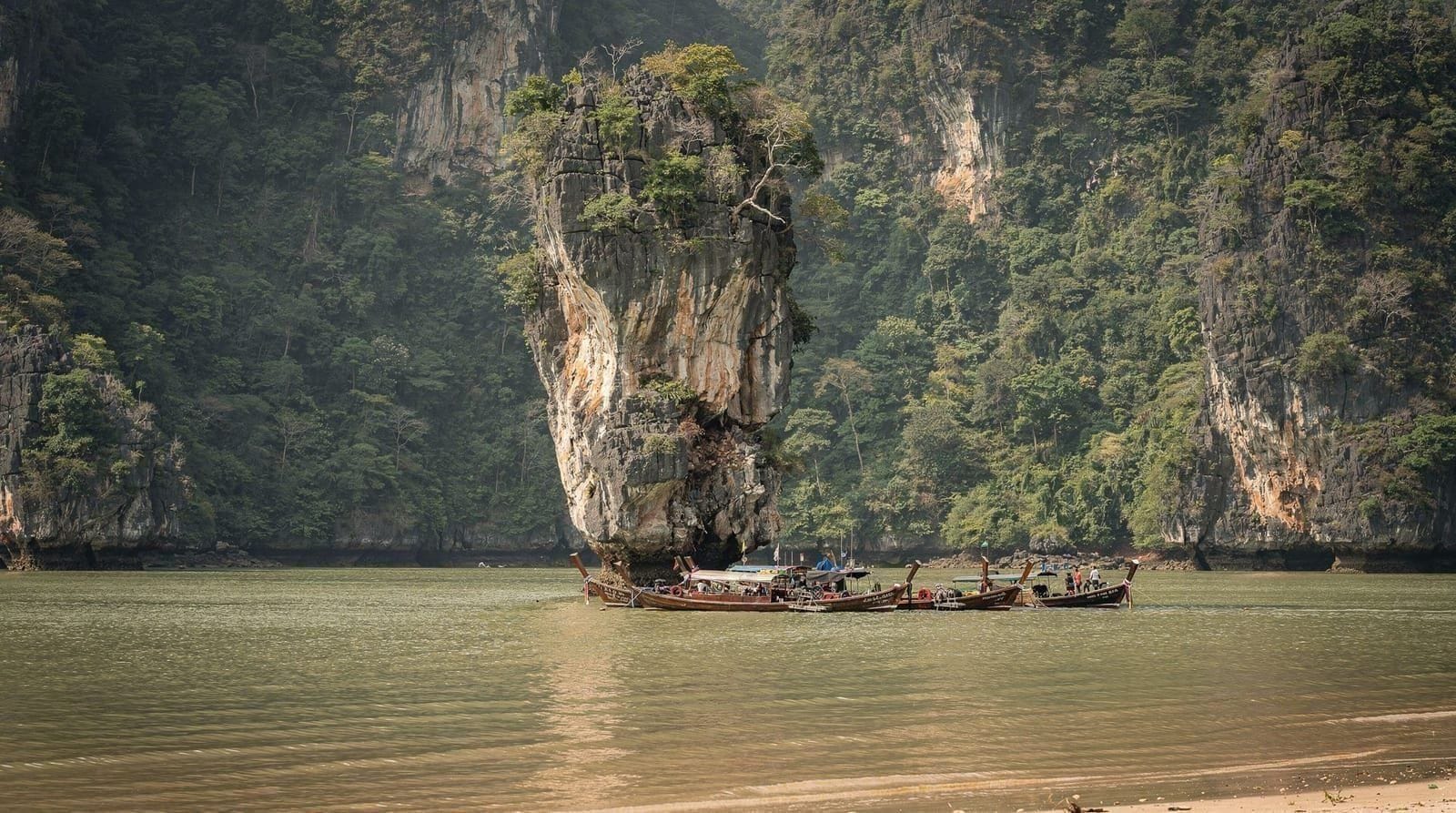
Phang Nga Bay is a must-see and the longtail small-group tour is genuinely good value — it accesses sea caves the big boats can’t reach, includes James Bond Island and Koh Panyi, and runs at a lower price than the speedboat-based tours.

Cost: 1,200–1,600 THB ($36.81–$49.08) per person including hotel pickup and lunch. The big-boat tours to James Bond Island cost similar amounts but pack in more passengers with less flexibility.
What you see on this tour: The small-group longtail gives access to the inner sea caves — formations like Tham Lod (a cave you kayak through, available as an add-on) that the big ferry tours simply cannot reach. James Bond Island (Khao Phing Kan) is the visual centrepiece: the distinctive Tapu rock formation that appeared in The Man with the Golden Gun (1974). The floating village of Koh Panyi is the human-interest highlight — a Muslim fishing community that has lived above the water for over 200 years. There are souvenir shops (skip them) and a genuine seafood restaurant (worth the extra 200–300 THB/$6.15–$9.20 for a proper lunch).
Timing note: The longtail tours typically run 8am–5pm. The bay’s sea caves are best lit in the late morning when sunlight angles into the formations. Ask the guide to schedule the cave section before noon if possible.
Free add-on: If the tour drops you at Phang Nga Town or Koh Panyi for the afternoon visit, bring cash for the fresh seafood restaurants at the floating village (400–700 THB/$12.25–$21.47 for a proper meal for two).
Day 6 — Coral Island and Rawai seafood
Morning: Coral Island longtail
Coral Island is reachable by public longtail from Chalong Pier (~15 minutes, 200–300 THB/$6.15–$9.20 per person return if you join a shared boat at the pier). The organized day trips cost 600–900 THB ($18.40–$27.60) and include equipment; the pier longtail approach is cheaper but you pay for snorkel rental separately (~200 THB/$6.15).

The longtail cruise with snorkeling is good value as a half-day option. Snorkeling equipment and guide included.
Coral Island vs. the day trips: Coral Island (Koh He) is a smaller, quieter alternative to the Phi Phi day trip. The coral is less spectacular than Bamboo Island off Phi Phi, but it’s also 40% cheaper and takes half the time. If you’ve already done Phi Phi on Day 4, Coral Island is a good easy morning rather than a repeat of the same experience. The beach itself is pleasant — white sand, turquoise water, a handful of beach restaurants.
Getting to Chalong Pier from Rawai: Songthaew or Grab, approximately 20 minutes and 60–100 THB ($1.84–$3.07). From Kata Beach: 30 minutes, 80–120 THB ($2.45–$3.68). Chalong Pier is also the departure point for Racha Island and various dive trips if you want to explore further.
Afternoon and evening: Rawai seafood market
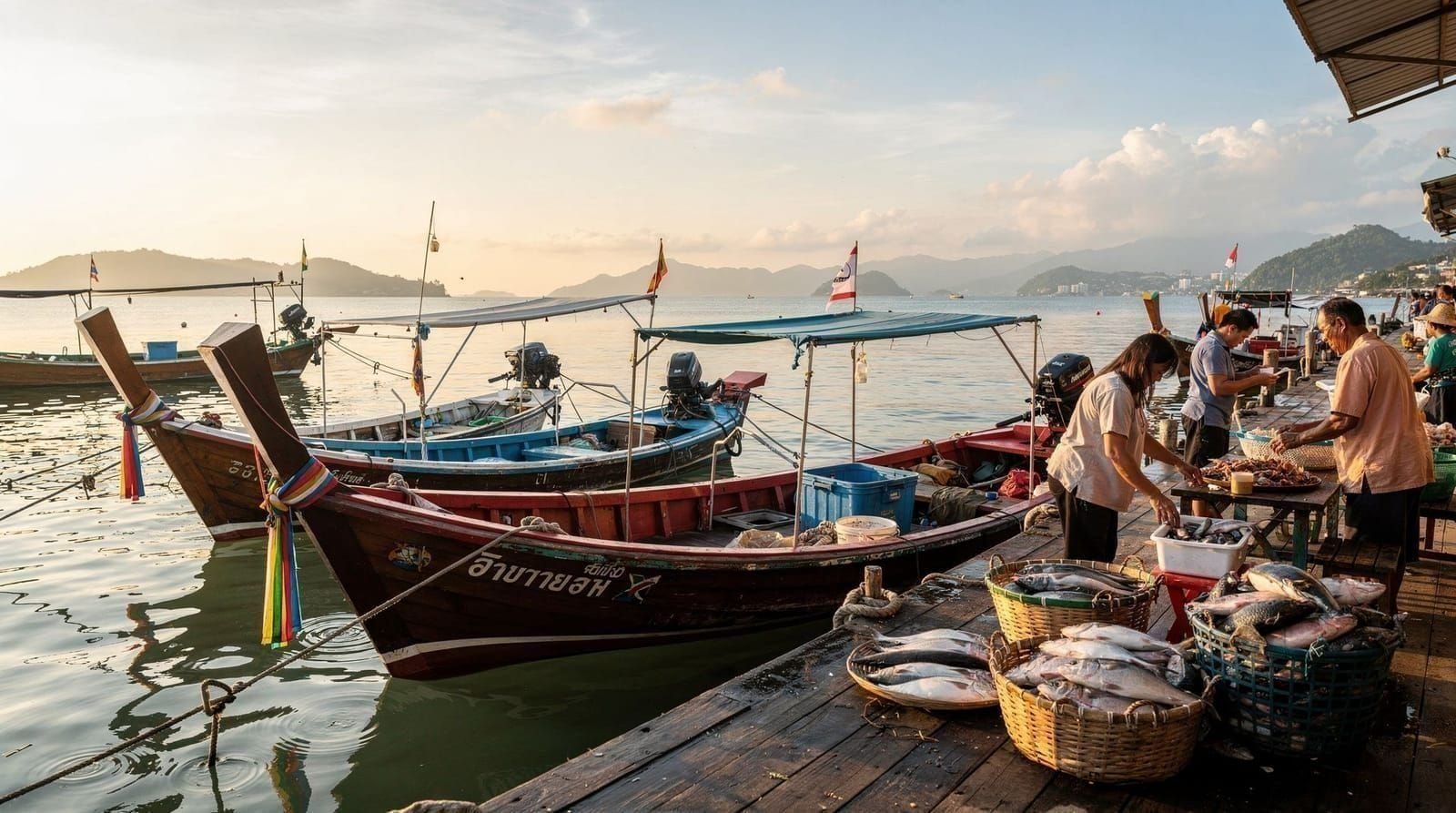
Rawai Pier’s seafood market lets you buy fresh fish, prawns, squid, and crab from vendors, then take it to one of the adjacent restaurants for cooking (cooking fee: 50–100 THB/$1.53–$3.07 per dish). Total dinner for two: 400–700 THB ($12.25–$21.47) for a proper seafood spread. This is one of the best genuine local dining experiences on the island.
How the Rawai seafood market works: Walk along the vendor stalls, point at what you want, agree on a price (it’s displayed on the ice, but you can negotiate for larger quantities). The vendors then weigh your selection. Take the bag next door to one of the several cooking restaurants — they’ll steam, grill, or fry your selection for a fixed per-dish cooking charge. The whole process takes 10 minutes, and you eat 20 minutes after that. Order garlic butter prawns (400–600 THB/$12.25–$18.40 for half a kilo), whole steamed fish (300–500 THB/$9.20–$15.35 depending on species and weight), and som tam on the side.
Day 7 — Market morning, Old Town coffee, departure
Morning: Malin Plaza or Phuket Town market
Malin Plaza (Patong) and the central Phuket Town fresh market (Kaset Road) are good morning food stops. The local fresh market sells ripe tropical fruit (dragon fruit, rambutan, mangosteen in season) for 30–60 THB ($0.92–$1.84) per kilogram — far cheaper than hotel or beach vendors.
Old Town’s boutique coffee shops (Kopitiam by Wilai, Raya Coffee) serve excellent local-roast coffee for 60–100 THB ($1.84–$3.07) — a reasonable final morning indulgence.
Kopitiam by Wilai specifically: This is one of the oldest coffee shops in Old Town, run by the third generation of a Hokkien family. The coffee is single-origin Phuket-region roast, served the traditional way with condensed milk (60–80 THB/$1.84–$2.45). The kaya toast (grilled bread with coconut jam and soft-boiled eggs, 40–60 THB/$1.23–$1.84) is the standard Peranakan breakfast. Arrive before 9am to avoid the queue.
Final souvenir shopping: If you want to take something home, the Old Town’s Thalang Road boutiques sell local products: Phuket cashews, batik sarongs, locally made ceramics. Avoid the night market souvenir stalls near Bangla Road — everything there is mass-produced and 50% more expensive than the same items in Old Town shops.
Departure
Airport bus from Phuket Town: 150 THB ($4.60). Or Grab if your accommodation is nearer the south (500–700 THB/$15.35–$21.47). Allow 1.5–2 hours before international departure.
Traffic note for departures: Route 402 (the main airport highway) runs north through the island and gets congested during morning rush hour (7:30–9:30am) and evening (4:30–6:30pm). If your flight is in the 8–10am window, leave at 6am. If it’s in the evening, plan around the peak traffic period or build in an extra 30–45 minutes.
Budget breakdown (per person, 7 nights)
| Item | THB | USD |
|---|---|---|
| Accommodation (7 nights, budget guesthouse) | 3,500–6,300 | $107–$193 |
| Airport bus/Grab | 150–700 | $4.60–$21 |
| Phi Phi day trip | 1,400–1,800 | $43–$55 |
| Phang Nga Bay tour | 1,200–1,600 | $37–$49 |
| Coral Island half-day | 400–900 | $12–$28 |
| Old Town food tour | 800–1,200 | $24.50–$37 |
| Food (7 days, street food + market) | 5,600–8,400 | $172–$258 |
| Local transport (songthaews, longtails) | 700–1,200 | $21–$37 |
| Beaches, temples, market entrance | 0–600 | $0–$18 |
| Total | ~13,750–22,700 | ~$422–$696 |
Target budget: 17,000–20,000 THB ($521–$614) for 7 days. Achievable with street food eating, songthaew transport, and the two main day trips (Phi Phi + Phang Nga Bay).
For a deeper dive into costs, see our Phuket travel budget guide.
Where budget travelers lose money in Phuket (avoid this)
Tuk-tuks without negotiating: Quote is always 3–5× the fair Grab rate. Negotiate to 50–60% of first offer, or just use Grab.
“Closed temple” scam: Tuk-tuk or taxi driver says your destination temple is “closed for a special ceremony” and offers to take you somewhere else (always a gem shop or tailor with a kickback arrangement). Temples are almost never closed. Just go to the temple directly.
Jet ski damage scam: Renters document “damage” after you return the jet ski and demand large compensation. If you must use a jet ski: photograph it thoroughly from all angles before getting in the water, with the rental operator watching.
Airport exchange desks: The worst THB exchange rate on the island. Exchange at a SuperRich counter in Bangkok if transiting, or at any exchange booth in Patong/Old Town. Never at the airport.
Tour booking on the street: Touts on Patong’s main street take 30–40% commission and book you onto the lowest-quality boats. The same tour booked through your guesthouse or directly with a reputable operator costs the same or less, with better quality.
Read the full scams to avoid guide before you arrive.
Getting around Phuket cheaply
Songthaews (shared red pickup trucks) are the backbone of cheap transport in Phuket. They run on fixed routes between Phuket Town and the main beach areas — Patong, Kata, Karon, Kamala, and Rawai all have regular songthaew services. Cost: 30–80 THB ($0.92–$2.45) per person, depending on distance.
Key songthaew routes for this itinerary:
- Rawai → Phuket Old Town: 50–60 THB ($1.53–$1.84), runs until approximately 6pm
- Rawai → Kata Beach: 50 THB ($1.53)
- Phuket Town → Patong: 40–50 THB ($1.23–$1.53)
Songthaews stop running around 6–7pm. For evening transport, use Grab (Grab Car or Grab Bike — the motorbike option is cheaper and faster in traffic). GrabBike is 60–120 THB ($1.84–$3.68) for most tourist-area trips and perfectly safe for short distances. See the full getting around Phuket guide.
Solo travel on a budget: safety and social notes
This itinerary works well solo — none of the accommodation or transport choices assume a group, and the two main day trips are small-group tours where you’ll naturally end up with other travelers. Rawai and Old Town guesthouses tend to have common areas or rooftop spaces where solo travelers meet each other, more so than isolated resort accommodation.
A few practical notes specific to solo budget travel: keep your accommodation’s address saved in Thai script on your phone (many songthaew and taxi drivers navigate better with Thai text than an English address), don’t carry your full cash withdrawal on you at the beach — split it between your daypack and your accommodation’s safe, and let your guesthouse know roughly which day trip you’re on each day, since it’s a low-effort way to have someone aware of your general schedule. None of this is Phuket-specific caution so much as sensible practice anywhere, but it matters slightly more when budget accommodation means fewer staff paying attention to your comings and goings than a full-service hotel would.
Where this budget route flexes
If you’re traveling for less than 7 days, the two non-negotiable days are Day 4 (Phi Phi) and Day 5 (Phang Nga Bay) — everything else in this itinerary is genuinely interchangeable or droppable without losing the trip’s character. A 5-day budget version keeps Days 1, 3, 4, and 5 and drops the Coral Island day; a 3-day version keeps only Day 1’s arrival, Day 4’s Phi Phi trip, and Day 5’s Phang Nga Bay. If you’d rather add days than cut them, Day 2 and Day 6 (free beaches and the Rawai seafood market) are the easiest to double up — a second beach day or a second Rawai dinner costs almost nothing extra and doesn’t require any new booking.
If you have longer than 7 days and want to extend on a budget, Koh Lanta further south is noticeably cheaper than Phuket itself for both accommodation and food — see our Phuket–Koh Lanta 10-day route for how that connects. Krabi is a comparable budget destination in the other direction if Koh Lanta’s extra travel time doesn’t suit your schedule — see the Phuket–Krabi combo itinerary for that version.
Monsoon-season budget travel in more detail
June through October isn’t just cheaper — it changes the character of a budget week in Phuket in ways worth planning around. Accommodation drops far enough that a private room with air conditioning often costs the same as a fan-only dorm bed in high season, meaning the comfort upgrade essentially comes free. Street food and market stalls run the same prices year-round, so the biggest savings land on accommodation and tours rather than food.
The trade-offs are real: expect a cancelled or rescheduled Phi Phi day roughly once every week or two of monsoon travel due to swell, and pack a proper rain layer since afternoon downpours are frequent even if usually brief. If you’re building this itinerary for low season specifically, book Day 4 (Phi Phi) and Day 5 (Phang Nga Bay) with some flexibility either side — don’t schedule either on your last full day, since a weather reschedule then leaves no buffer before departure.
Stretching the budget further without cutting experiences
A few adjustments push this itinerary’s total cost down another 10–15% without losing the two headline day trips. Book both Phi Phi and Phang Nga Bay through the same operator if a bundle discount is offered — many small operators discount 5–10% for a two-tour booking made together. Skip the Old Town food tour’s guided version in favor of the self-guided free walk described on Day 3, and use the guide’s route as your own map instead — you lose the narration but keep the food.
Dorm accommodation in Rawai (250–400 THB/night) instead of a private room saves roughly 2,000–3,500 THB across the week, meaningful if you’re traveling solo and don’t mind shared space. None of these cuts touch the islands or the food quality — they trim the parts of the budget that add the least to the actual experience. One more lever worth mentioning: traveling with even one other person roughly halves your per-person transport costs on songthaew charters and private longtail rides to Nai Harn, since fixed per-vehicle prices split cleanly two ways — solo travelers won’t see this saving on shared songthaews, but it’s real on anything chartered.
Frequently asked questions about budget travel in Phuket
What is a realistic daily budget for Phuket?
Backpacker (dorm, street food, local transport, no tours): 900–1,500 THB ($28–$46). Budget with private room and occasional day trips: 2,500–3,500 THB ($77–$107). Mid-range (decent hotel, tours, restaurant meals): 4,000–6,000 THB ($123–$184). Luxury: 8,000 THB+ ($245+).
When is Phuket cheapest?
June–September (monsoon peak). Accommodation drops 30–60%. The trade-off: rough seas limit some day trips, and September is genuinely wet. October–November (tail of monsoon, drying out): good balance of lower prices and improving weather.
Can I use songthaews to get around Phuket?
Yes — songthaews are shared red pickup trucks running fixed routes between major beaches and Phuket Town. Cost: 30–80 THB ($0.92–$2.45) per person. They stop running around 6–7pm. For night transport, Grab is the safest option. Learn the main routes at the getting around Phuket guide.
Are there free beaches in Phuket?
All of Phuket’s beaches are free to enter under Thai law. Beach chairs and umbrellas cost money, but the sand and sea are free. Nai Harn (south) and Nai Yang (north) have the least commercial pressure and are the best free beach days.
Is it cheaper to eat in Phuket or buy food at markets?
Markets and street stalls (fresh or cooked food) are 30–60% cheaper than restaurants. A full meal at a street stall: 60–120 THB ($1.84–$3.68). The same meal in a restaurant targeting tourists: 200–350 THB ($6.15–$10.75). Eat local, save substantially.
Is it safe to drink the tap water in Phuket?
No — tap water in Phuket is not safe to drink. Bottled water at 7-Eleven costs 15–25 THB ($0.46–$0.77) for a 1.5-litre bottle. A better long-term solution for a week-long stay: buy a 20-litre refillable water jug from a local shop (100–150 THB/$3.07–$4.60) and refill at water dispensers found near most guesthouses and convenience stores (1 THB per litre). This reduces plastic waste and costs roughly 7 THB ($0.21) per day.
Can I negotiate prices in Phuket?
For markets, street food, and some guesthouses: negotiation is expected. For restaurants with printed menus, tours booked through reputable operators, and shops with price tags: do not negotiate. The distinction matters — trying to negotiate at a legitimate restaurant will create an awkward situation. Songthaew fares are usually fixed for shared rides; private charter songthaews are negotiable.
What’s the cheapest way to do Phi Phi from Phuket?
The group speedboat tour at 1,400–1,600 THB ($42.94–$49.08) is the minimum practical cost for a compliant, safe Phi Phi day trip from Phuket. A cheaper-looking alternative is to take the slow ferry to Phi Phi Don (350–400 THB/$10.75–$12.25 one way), spend a night, then return — but the accommodation cost (500–1,200 THB/$15.35–$36.81 per night) often makes the overnight route more expensive than the day trip unless you specifically want the overnight experience.
Top experiences
Bookable activities with verified prices and instant confirmation on GetYourGuide.