Phuket to Koh Lanta — 10-day Andaman island adventure
Phuket: Phi Phi, Maya Bay & Khai Island day tour by speedboat
How do you travel from Phuket to Koh Lanta? The classic route is Phuket → Phi Phi → Koh Lanta by ferry — a logical south-eastward hop down the Andaman coast. The full 10-day loop adds Phang Nga Bay, an overnight on Phi Phi Don, Krabi/Railay, and 3 nights on Koh Lanta. Budget 2,500–5,000 THB per person per day ($77–$153 USD) for this route.
| Best for | Island hoppers, adventure seekers, budget-conscious couples |
| Route | Phuket → Phi Phi → Krabi/Railay → Koh Lanta |
| Cost | Around 26,550–55,450 THB/person total, 10 nights |
| Getting around | Ferries and speedboats, songthaews on land |
| Book ahead | Phi Phi accommodation always; Phang Nga Bay 2 days minimum |
The Phuket–Phi Phi–Koh Lanta route
This is one of the best back-road island routes in Thailand — a 200 km arc down the Andaman coast that connects four distinct destinations by ferry and speedboat without doubling back. Start in Phuket, end in Koh Lanta (or fly home from Krabi Airport, 45 minutes away from Koh Lanta by road).
Visa note: This 10-day itinerary fits within the 30-day visa-free window for EU/UK/US/CA/AU/NZ nationals (reduced from 60 days as of June 2026). Complete your TDAC within 72 hours before arrival. See our Phuket visa guide.
Seasonal caveat: The Phi Phi–Koh Lanta ferry runs year-round. However, November–May offers calm seas for island hopping; monsoon season (June–October) brings rougher water and some operator cancellations. Koh Lanta is quieter in monsoon but most businesses remain open (unlike some Phi Phi and Similan-area operations).
What makes this route work: Unlike loop itineraries that retrace ground, this route moves in one direction. Each destination has a distinct character — Phuket is infrastructure and culture, Phi Phi is dramatic island scenery, Krabi is adventure and rock climbing, Koh Lanta is long relaxed beach days. The transitions between them are part of the experience, not just logistics.
Days 1–2: Phuket arrival and Phang Nga Bay
Day 1 — Phuket arrival
Land at HKT, Grab to your hotel. For this multi-stop itinerary, Patong or Phuket Town are convenient first-night bases — central access to Rassada Pier for tomorrow’s ferry.
Airport transport: Grab from HKT to Phuket Town runs about 300–400 THB ($9.20–$12.25, 30 minutes). To Patong: 500–650 THB ($15.35–$19.94, 45–55 minutes). The airport metered taxi is slightly cheaper but requires negotiating at a desk — use Grab for simplicity and price transparency.
Evening: quick Phuket Town dinner. If you arrive before sunset, Promthep Cape (15 minutes south of Phuket Town by Grab) is the island’s best-known sunset viewpoint — a cliff above the southern tip overlooking Nai Harn Bay. Admission is free; the parking lot food stalls sell som tam (papaya salad, 60–80 THB/$1.84–$2.45) and fresh coconuts.
Where to eat on arrival night: Phuket Town’s Ranong Road night market (weekdays) runs from 5pm — noodle soups, grilled satay, mango sticky rice for 50–120 THB ($1.53–$3.68) per dish. Old Town restaurants on Dibuk and Phang Nga Roads: 150–350 THB ($4.60–$10.75) per person for a full meal.
Day 2 — Phang Nga Bay day trip
Before leaving Phuket, the Phang Nga Bay day trip is essential. You won’t pass this way again on this itinerary, and it’s best accessed from Phuket (the bay is northwest of the island).

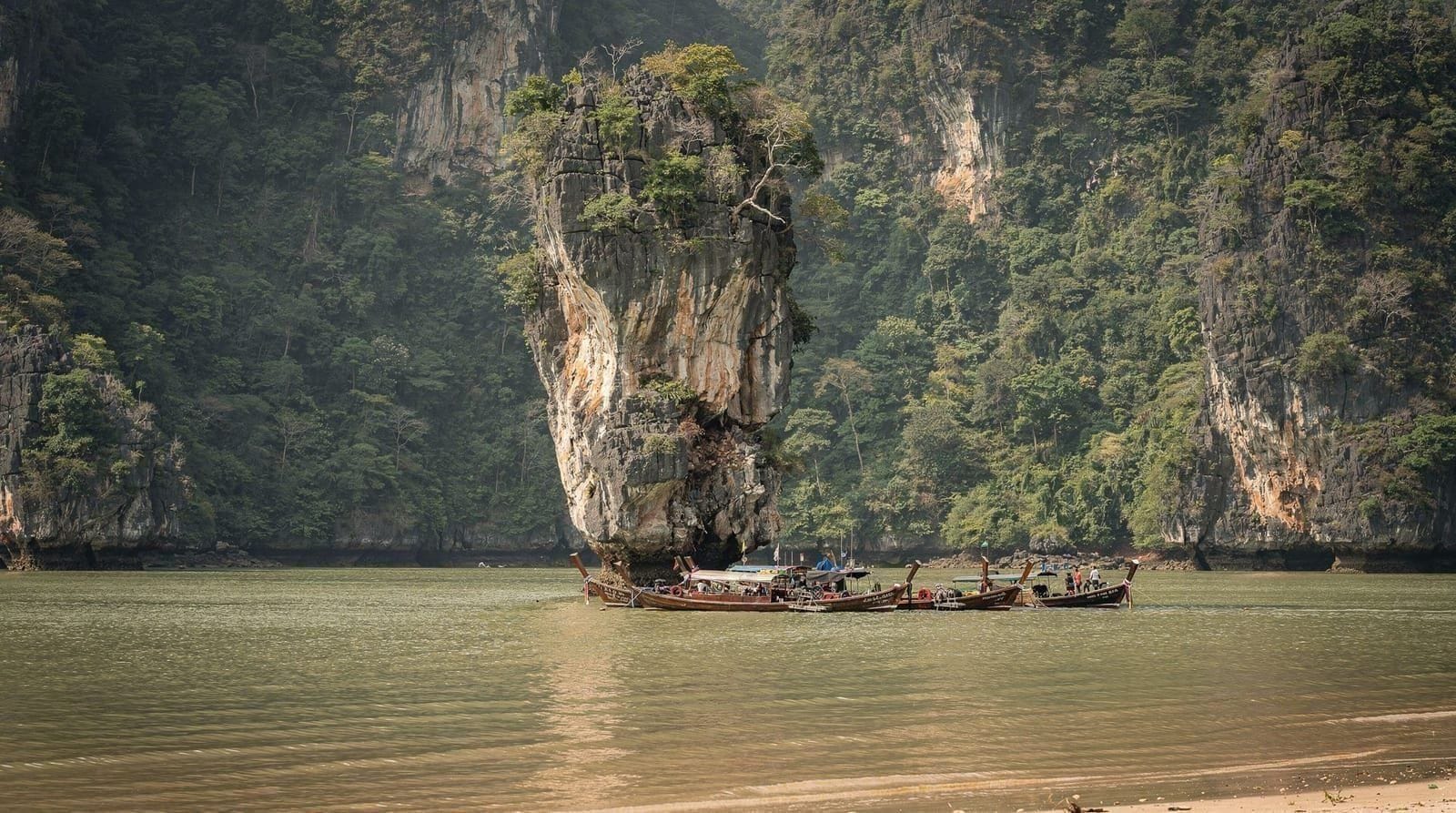
James Bond Island (Khao Phing Kan), Koh Panyi floating village, and sea cave kayaking in a full day. Back at your hotel by 5:30pm. Pack bags in the evening — you leave for Phi Phi tomorrow morning.
What to expect on the Phang Nga Bay day: Hotel pickup typically 8am. Transfer to the pier (1–1.5 hours drive). Longtail boat departs around 10am. You stop at the main limestone formations and sea caves before reaching James Bond Island around noon. After James Bond Island, the tour typically stops at Koh Panyi — a Muslim fishing village built entirely on stilts above the water. The village restaurant serves excellent fresh seafood (300–500 THB/$9.20–$15.35 for lunch, paid separately if not included). Return to Phuket pier by 4–5pm, hotel drop by 5:30–6pm.
More in our James Bond Island day trip guide.
Days 3–4: Phi Phi Islands overnight
Day 3 — Phuket to Phi Phi by speedboat
From Rassada Pier, speedboats depart for Phi Phi Don at 8:30am and 1:30pm (~650–900 THB/$19.95–$27.60 one way, 1–1.5 hours). The ferry option (PP Ferry, Tigerline) is cheaper (~400 THB/$12.25) but takes 2 hours on a bigger boat.

Arrive at Phi Phi Don’s Ton Sai Bay by midday. Check in to your accommodation (1,000–4,000 THB/$30.70–$122.70 per night depending on quality — the island’s budget guesthouses are genuinely poor quality; mid-range is worth the extra spend here).
Phi Phi Don accommodation tip: The island’s power comes from generators; electricity is expensive and intermittent in budget guesthouses. Air conditioning is a meaningful upgrade here versus elsewhere on the route. Good mid-range options cluster around Loh Dalam Bay (the northern bay) — 15 minutes’ walk from the Ton Sai ferry dock but significantly quieter at night.
What to do on arrival afternoon: Drop bags, walk the village. Ton Sai village is compact — the main drag has restaurants, dive shops, pharmacy, exchange booths. Rent a kayak for the afternoon (300–500 THB/$9.20–$15.35 per 2 hours) and paddle to the quieter bays around the headland.
Afternoon and evening on Phi Phi Don
Explore the Ton Sai village (walkable in 20 minutes), hike up to the famous Phi Phi Viewpoint (30-minute climb, vertical steps, entry fee 30 THB/$0.92, spectacular panoramic view of both bays), and swim at Loh Dalam Bay (the northern bay, gentler than Ton Sai).
The viewpoint hike is steep — worn sandals become a safety issue on the concrete steps. Proper footwear matters more here than anywhere else on this itinerary. The view from the top, looking down on the twin bays with the Andaman Sea behind, is among the best in southern Thailand.
Evening: Phi Phi at night is modest but fun — the cluster of fire-show bars along the beach runs 8pm–midnight. Dinner at Unni’s or The Local (mid-range, 300–500 THB/$9.20–$15.35 per person for full meal). Unni’s is particularly good for Western-Thai mixed menus if group preferences vary; The Local does better traditional Thai.
Day 4 — Maya Bay and island snorkeling from Phi Phi
Staying overnight means you can reach Maya Bay before the day-trip boats arrive from Phuket (by 7am, the bay is calm and uncrowded). Book a local longtail from the beach at Ton Sai (800–1,200 THB/$24.50–$36.80 to hire the whole longtail for 3–4 hours).
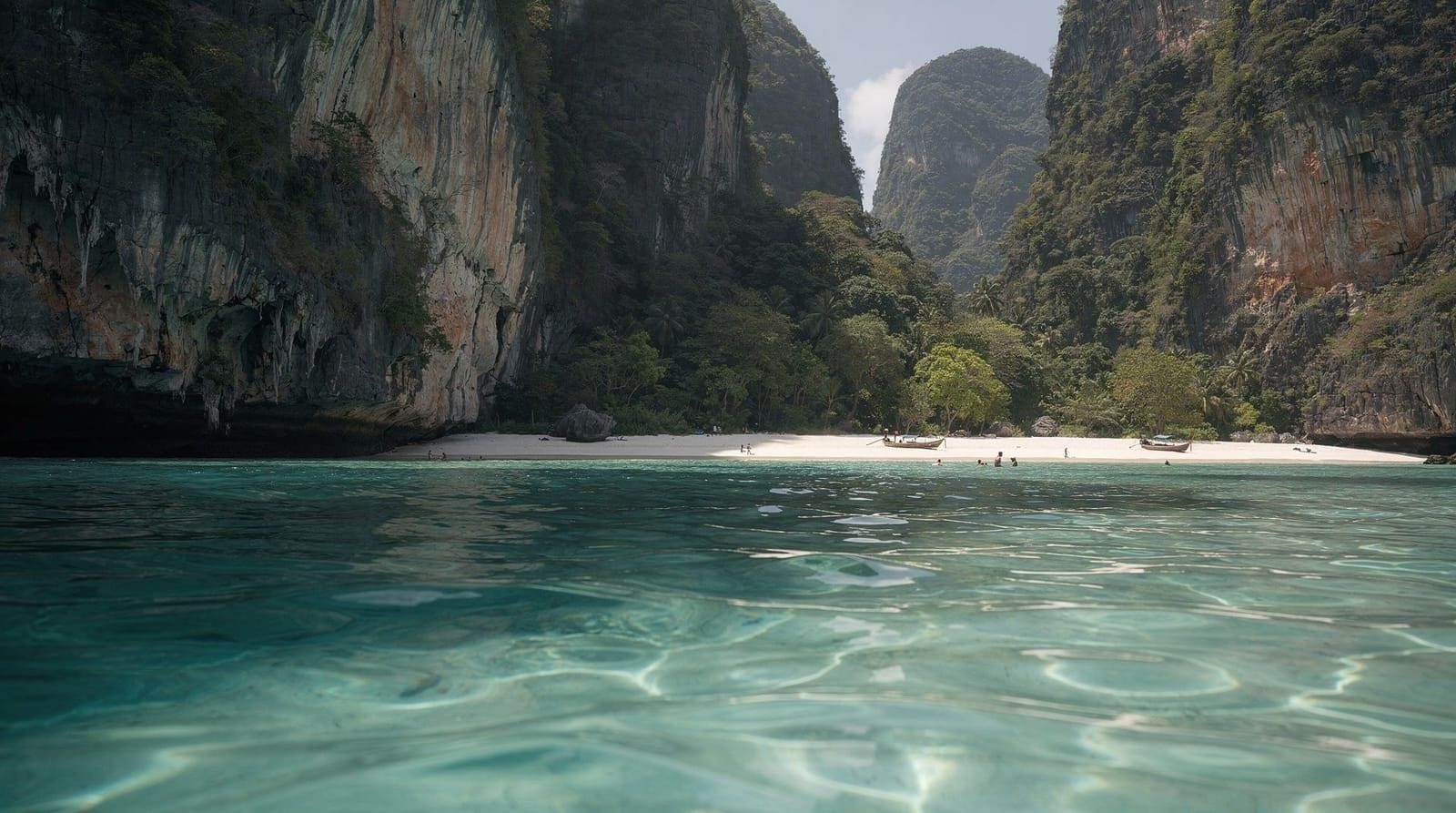
Maya Bay’s access controls: you anchor offshore, longtail ferries you in groups of 15–20, beach access allowed, swimming inside bay prohibited. The limestone cliffs at dawn are extraordinary — the difference between seeing Maya Bay at 7am versus 11am (when the Phuket day-trip speedboats arrive) is dramatic. Early means a few dozen people; late means hundreds.
After Maya Bay, the longtail can take you to Bamboo Island (excellent snorkeling, less crowded than the main Phi Phi snorkel spots), and return to Ton Sai by noon. Pack up, eat lunch at the village, and catch the 1:30pm speedboat or afternoon ferry to Krabi.
Snorkeling at Bamboo Island: The reef around Bamboo Island hosts lionfish, parrotfish, and occasional blacktip reef sharks (harmless, reef-dwelling). Rent basic snorkel gear from the longtail operator for 100–150 THB ($3.07–$4.60). Bring reef-safe sunscreen — the standard chemical sunscreens are banned near protected coral areas. See the reef-safe snorkeling guide for more.
See our Phi Phi Islands guide and Maya Bay guide.
Days 5–6: Krabi and Railay Beach
Day 5 — Phi Phi to Krabi by ferry
The Phi Phi to Krabi ferry takes 1.5 hours and costs 350–450 THB ($10.75–$13.80) per person. Ferries run twice daily: 9am and 2:30pm typically (check current schedule with your guesthouse). Arriving at Krabi Town pier, catch a shared songthaew to Ao Nang (~80 THB/$2.45, 30 minutes).
Check in to Krabi/Ao Nang accommodation. Budget guesthouses on Ao Nang’s back streets: 600–1,200 THB ($18–$37). Mid-range beach-adjacent: 1,500–3,000 THB ($46–$92).
Afternoon: rest, walk Ao Nang Beach, watch the longtails navigate the bay. Ao Nang has a slightly different feel to Phi Phi — it’s a town on the mainland coast, not an island, with actual supermarkets, pharmacies, and ATMs. The beach itself is functional rather than spectacular; the value of Ao Nang is as a staging post for Railay and the surrounding islands.
Dinner in Ao Nang: The walking street running inland from the beach has cheap-to-mid Thai restaurants. Wanna’s Place and Lung Phor are both consistently recommended for authentic Thai at 100–250 THB ($3.07–$7.67) per person. Seafood restaurants along the waterfront: 350–600 THB ($10.75–$18.40) per person.
Day 6 — Railay Beach and rock climbing
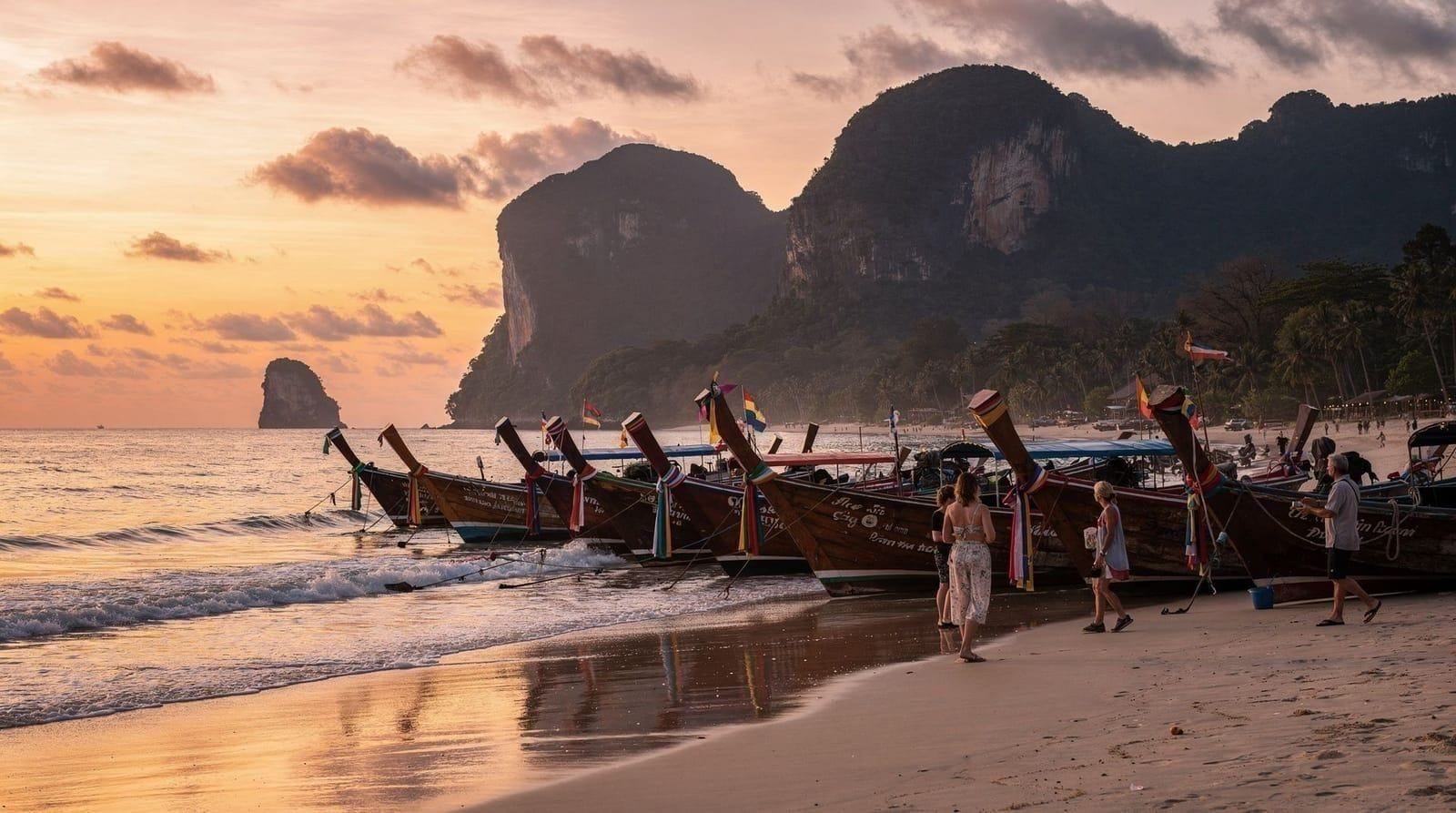
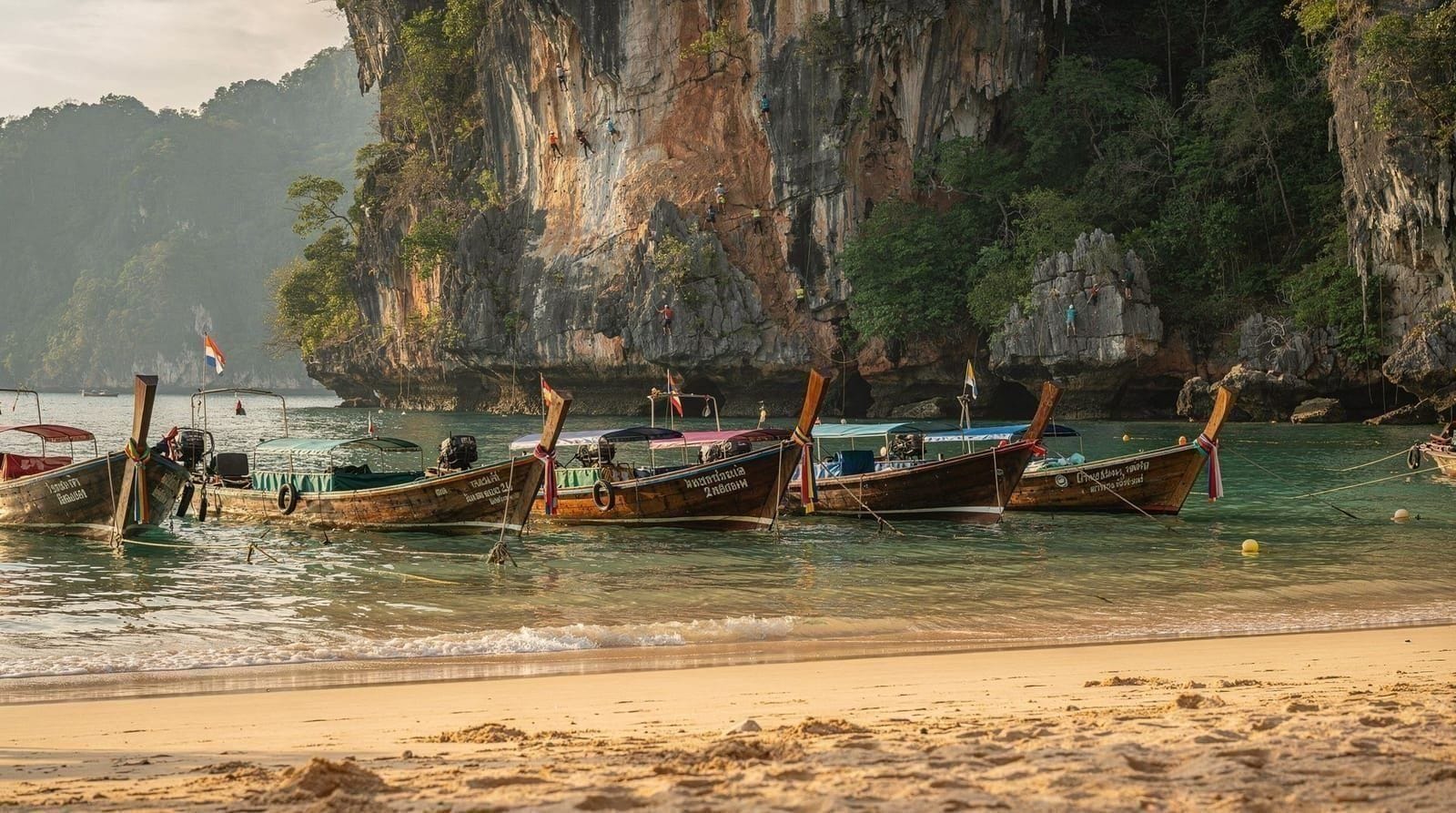
Railay Beach is 15 minutes by longtail from Ao Nang Beach (150 THB/$4.60 per person each way, boats depart when full from the main beach area). The peninsula is cut off from the mainland by vertical limestone — accessible only by water.
Spend the morning on Railay West Beach (calm water, good swimming), walk across to the east beach (tidal, muddy but atmospheric), and hike 20 minutes to Phra Nang Cave Beach — a royal shrine in a cave at the base of a massive cliff, with turquoise water and dramatic scenery. The shrine features hundreds of carved wooden phalluses left as offerings — distinctive and genuinely part of local culture, not a tourist gimmick.
For those wanting to try rock climbing, Railay is the best beginner venue in Thailand — over 750 bolted routes, many accessible at intermediate beginner level. Half-day guided climbing sessions with gear: 1,500–2,200 THB ($46–$67) per person.

This tour covers the Krabi inland highlights (Tiger Cave Temple, Emerald Pool, hot springs) if you prefer a nature day over beach and climbing. The Tiger Cave staircase (1,237 steps to the summit shrine) gives the best 360° view of Krabi’s limestone landscape. The Emerald Pool is a jungle-fed natural pool with vivid turquoise water; arrive early (before 9am) before the day-trippers arrive from Ao Nang.
Railay practical notes: There are ATMs on Railay West Beach but the charge 300 THB ($9.20) per withdrawal — take cash from Ao Nang before crossing. Longtail frequency drops significantly after 6pm; plan your return before dark to avoid waiting long at the pier.
Days 7–10: Koh Lanta
Day 7 — Krabi to Koh Lanta by ferry
The Krabi to Koh Lanta ferry departs from a pier near Krabi Town (shared songthaew from Ao Nang: 80 THB, then the ferry: ~350–500 THB/$10.75–$15.35). Journey time: 1.5–2 hours. Alternatively, the overland minivan via Ban Hua Hin car ferry (2.5 hours, 350 THB/$10.75) operates year-round.
Koh Lanta is a relaxed, elongated island with a long west coast beach road connecting different beach areas. Saladan village (north) is the ferry arrival point. Long Beach (Hat Khlong Dao), Klong Nin Beach, and Kantiang Bay (south) are the main accommodation clusters.
Best base on Koh Lanta: Long Beach (Hat Khlong Dao) for the best combination of budget and mid-range accommodation, beach quality, and convenience. Kantiang Bay for a quieter, more scenic location (steeper hills, fewer restaurants, but beautiful). Budget guesthouses at Long Beach: 600–1,200 THB ($18–$37) per night. Mid-range bungalows with pool: 1,500–3,500 THB ($46–$107).
First afternoon on Koh Lanta: After check-in, walk or rent a bicycle to the beach in front of your guesthouse. Koh Lanta has a slower rhythm than Phi Phi and Krabi — this is intentional. Order a fresh lime soda (40 THB/$1.23) from a beach bar and adjust to the pace.
Day 8 — Koh Lanta west coast beach day
Koh Lanta’s west coast beaches run for 27 km — you could spend three days just working through them. The main options:
Hat Khlong Dao (Long Beach): Broad, gentle waves, good restaurants lining the beach. The most social spot — beach volleyball in the afternoon, good sunsets.
Hat Phra Ae (Long Beach South): Narrower, quieter, with a good budget-backpacker scene. Several cheap bungalow operations directly on the beach at 600–900 THB ($18–$27.60) per night if you want to relocate south.
Klong Nin Beach: Local feel, excellent seafood restaurants directly on the beach, waves suitable for snorkeling off the rocks. The seafood here is notably cheaper than at the main tourist beaches.
Kantiang Bay: Most dramatic — a horseshoe bay with calm turquoise water and hills on three sides. The far end of the bay has a reef for snorkeling directly off the beach.
Hire a scooter for the day (250–400 THB/$7.67–$12.25) to work your way down the west coast and back, trying a different beach for each meal. Traffic is light compared to Phuket.
Scooter note: Koh Lanta scooter rental is lower-risk than Phuket — less traffic, slower speeds, smaller tourist volume. That said, photograph every scratch before rental and confirm the deposit terms in advance. See our scooter rental safety guide.
Lunch on the beach: The Klong Nin Beach restaurants serve whole grilled fish (300–450 THB/$9.20–$13.80) and fresh papaya salad for roughly 60–80 THB ($1.84–$2.45). This is the kind of local seafood meal that Phuket’s tourist areas charge three times more for.
Day 9 — Phi Phi speedboat day trip from Koh Lanta
The Phi Phi Islands are 45–60 minutes from Koh Lanta by speedboat — closer than from Phuket. Day trips from Koh Lanta include the same sites (Maya Bay, Bamboo Island, Monkey Beach) at a slightly different angle and timing.
If you’ve already done Phi Phi thoroughly from Phuket on Days 3–4, substitute this day with the Koh Lanta 4 Islands local trip instead — Koh Rok (the highlight, with stunning turquoise lagoons), Koh Ha (diving), and Koh Mook. The Koh Rok boats from Koh Lanta are among the most underrated day trips on the Andaman coast.

This Krabi-based 4 Islands tour is similar in structure to what’s available from Koh Lanta. Operators at Koh Lanta’s Saladan pier run equivalent tours locally — 1,800–2,500 THB ($55–$77) per person including lunch and snorkel gear. Book through your guesthouse the evening before to avoid walking from operator to operator in the morning.
Koh Rok specifically: This small uninhabited island has some of the clearest water in the Andaman Sea — visibility often exceeds 20 metres in dry season. The main reef wraps around a shallow lagoon with healthy coral coverage. It’s a protected national park island: entry fee 200 THB ($6.15) per person included in most day trip prices. Swimming is allowed; you must not touch or stand on coral.
Day 10 — Koh Lanta Old Town and departure
Spend the final morning at Koh Lanta Old Town (Ban Si Raya) on the east coast — a 2 km stretch of wooden shophouses on stilts over the water, home to a Peranakan-Muslim community. Far less visited than Phuket Old Town and genuinely atmospheric. Walking the waterfront boardwalk takes 45 minutes; the seafood restaurants at the southern end open for lunch.
The Old Town is a 20-minute drive from Long Beach — take a Grab or motorbike taxi (80–120 THB/$2.45–$3.68 one way). The stilted buildings house small cafés, handicraft shops, and a few old family businesses that have been here for generations. It’s the kind of place most island-hoppers skip entirely, which means you’ll have it largely to yourself.
Departure options from Koh Lanta:
- Ferry to Krabi Town, then flight from KBV (Krabi Airport): total 3–4 hours. Domestic flights to Bangkok connect to most international routes.
- Ferry to Phi Phi, then speedboat/ferry back to Phuket HKT: total 4–5 hours.
- Private minivan Koh Lanta → Krabi Airport direct: ~2.5 hours, ~1,500–2,500 THB ($46–$77) per car.
For most travelers, the Koh Lanta → Krabi Airport route is cleanest for departure. See our Phuket ferries guide for the full inter-island transport picture.
Ferry schedule overview (approximate, check locally)
| Route | Method | Duration | Cost per person |
|---|---|---|---|
| Phuket → Phi Phi | Speedboat | 1–1.5 hrs | 650–900 THB |
| Phuket → Phi Phi | Ferry | 2 hrs | 350–450 THB |
| Phi Phi → Krabi | Ferry | 1.5 hrs | 350–450 THB |
| Krabi → Koh Lanta | Ferry/minivan | 1.5–2.5 hrs | 350–500 THB |
| Koh Lanta → Krabi | Ferry/minivan | 1.5–2.5 hrs | 350–500 THB |
What to book in advance on this route
Phang Nga Bay day trip (Day 2): Book at least 2 days ahead in peak season (December–February). The small-group longtail tours cap at 8–10 people and fill up. In low season, same-day booking often works.
Phi Phi accommodation (Days 3–4): Book ahead always. Quality mid-range rooms on Phi Phi are genuinely limited — the island has fewer than 2,000 hotel beds and demand is high in peak season. Walk-ins pay 30–50% more and get the leftover rooms.
Koh Lanta accommodation (Days 7–10): Less critical than Phi Phi, but Long Beach’s popular mid-range bungalows fill up in December–January. Book 5–7 days ahead in peak season; 2–3 days is fine in shoulder season.
Krabi day activities: Rock climbing guides book up 1–2 days ahead in peak season. The Tiger Cave / Emerald Pool tour typically runs daily and books easily the day before.
Budget breakdown (per person, 10 nights, budget-mid)
| Item | THB | USD |
|---|---|---|
| Accommodation (10 nights) | 10,000–25,000 | $307–$767 |
| Phuket → Phi Phi ferry | 650–900 | $20–$28 |
| Phi Phi → Krabi ferry | 350–450 | $10.75–$13.80 |
| Krabi → Koh Lanta transfer | 350–500 | $10.75–$15.35 |
| Phang Nga Bay tour | 1,200–1,600 | $37–$49 |
| Koh Lanta day trips (x2) | 2,000–4,000 | $61–$123 |
| Krabi activities (x2) | 2,000–4,000 | $61–$123 |
| Food (10 days, mostly local) | 8,000–15,000 | $245–$460 |
| Local transport (longtails, scooters, songthaews) | 2,000–4,000 | $61–$123 |
| Total | ~26,550–55,450 | ~$815–$1,701 |
Managing luggage across a moving itinerary
Ten days with four separate accommodation changes and multiple boat legs makes luggage strategy genuinely important. A single medium backpack (40–50L) per person is the practical ceiling — anything larger becomes a real burden across piers, longtails, and the walk from a Koh Lanta ferry to a songthaew. Pack a smaller day bag inside your main pack for the boat-day essentials (dry bag, snacks, sunscreen, swimwear) so you’re not digging through your full luggage at every pier.
Laundry is cheap and available at every stop on this route (60–100 THB per kilogram at most guesthouses) — using it every 3–4 days rather than packing for the full ten means a genuinely lighter bag throughout. If you’re checking bags for an international flight into HKT, consider that Phi Phi and Koh Lanta accommodation rarely has proper luggage storage for oversized bags — a soft-sided pack fits guesthouse storage rooms far better than a hard-shell suitcase.
What each leg of the route actually feels like
The transitions on this itinerary are distinct enough to plan your energy around them. Phuket to Phi Phi is a genuine mood shift — from an island with real infrastructure to one you can walk across in twenty minutes, and most travelers feel that shift within an hour of arriving at Ton Sai. Phi Phi to Krabi trades island intensity for mainland practicality — Ao Nang has supermarkets and pharmacies that Phi Phi doesn’t, a small relief if you need to restock anything.
Krabi to Koh Lanta is the biggest pace change of the whole route: the moment you’re on Long Beach with a lime soda, the trip’s rhythm audibly slows down, and most travelers describe the last three days as the ones they remember as genuinely restful rather than sightseeing-focused. Planning your energy around these shifts — pushing harder on Phi Phi and Krabi’s activity days, deliberately doing less on Koh Lanta — gets more out of the itinerary than trying to maintain the same pace throughout.
Shortening or extending this route
Ten days is enough to do this route without rushing, but it’s genuinely flexible in both directions. Cut to 7 days by dropping the Phi Phi overnight to a day trip and reducing Koh Lanta to 2 nights — you lose the early-morning Maya Bay and the leisurely Koh Lanta pace, but keep the core arc and the route’s essential shape intact. Extend to 12–14 days by adding a night on Koh Yao Noi between Phuket and Phi Phi, or by pushing further south from Koh Lanta toward Trang’s island cluster if you want to go further off the standard route than this itinerary already does.
Either extension keeps the same directional logic — you’re never doubling back on a leg you’ve already covered, which is one of this route’s genuine advantages over a hub-and-spoke Phuket-only trip. The one section worth protecting regardless of how you adjust the length is the Phi Phi overnight — a day trip from Phuket sees Maya Bay at its most crowded, while staying over gets you there before the Phuket boats arrive. Whatever length you land on, keep the Days 1–2 Phuket segment as short as your flight logistics allow; it’s the least distinctive part of this particular route compared with a standalone Phuket trip.
Why this route beats a Phuket-only trip for some travelers
The honest case for this itinerary over a Phuket-based week is variety of character, not just variety of scenery. Phuket is infrastructure-heavy and geared toward day-trip logistics; Phi Phi is small and intense; Krabi’s Railay adds a genuinely different activity (rock climbing) that Phuket doesn’t offer; and Koh Lanta’s slow 27km beach road is a different register of relaxation than anything on Phuket’s more developed west coast.
Travelers who’ve already done a Phuket-based trip and want a second Thailand visit with a different feel are the ideal audience for this route, and it also works well as a first trip for travelers who already know from past travel that they prefer moving every few days over settling into one base. First-timers to Thailand, by contrast, may find the near-daily packing and ferry logistics genuinely tiring compared with a single-base itinerary like our 7-day Phuket itinerary — this route rewards travelers who specifically want movement as part of the experience.
Frequently asked questions about the Phuket–Koh Lanta route
How do I get from Phuket to Koh Lanta?
The two main options: (1) Ferry via Phi Phi — Phuket Rassada Pier → Phi Phi (1.5 hrs) → Koh Lanta (1.5 hrs); total ~3 hours plus waits between ferries. (2) Minivan overland — Phuket → Krabi Town → Koh Lanta via car ferry from Ban Hua Hin; total ~4 hours. For island hoppers, Option 1 is the obvious choice.
Is Koh Lanta better than Phi Phi for a long stay?
Different entirely. Phi Phi is dramatic but small — it exhausts itself in 2 nights for most travelers. Koh Lanta is quieter, larger, and better for relaxed multi-day stays (28 km of accessible beach road). For this 10-day itinerary, 2 nights on Phi Phi + 4 nights on Koh Lanta is the right balance.
Is this route possible in monsoon season?
Partially. The ferries run year-round but may cancel in very rough weather (August–September). Phi Phi and Koh Lanta remain open during monsoon. Similan Islands close (not on this route, but worth noting). Monsoon prices are 30–50% lower for accommodation, and the islands are much quieter. The trade-off is occasional rough seas and more overcast days.
What’s Koh Lanta like compared to Koh Samui or Koh Phangan?
Koh Lanta is smaller, quieter, and less developed than Samui. It lacks Koh Phangan’s party scene entirely. Think: relaxed, accessible, excellent for couples and independent travelers who find Samui too commercial and Phi Phi too small. The west coast beaches are legitimate — not just pretty photos.
Do I need to book accommodation in advance?
In peak season (December–February): yes, especially on Phi Phi Don where quality rooms are limited. In shoulder season (March–May, October–November): 2–3 days ahead is usually fine. Monsoon (June–September): walk-ins work at most places, often with negotiated rates.
Can I do this itinerary without a smartphone?
Practically, a smartphone with Grab and Google Maps makes the logistics much smoother. That said, the core ferry routes (Phuket–Phi Phi–Krabi–Koh Lanta) run on fixed schedules that you can verify in person at any pier. The main friction point without a phone is booking Grab for airport transfers and comparing operator prices for day trips. A basic offline map of each island downloaded in advance is sufficient for navigation once you arrive.
What should I pack for 10 days of island hopping?
The key is keeping luggage minimal — you’ll be moving it across piers, longtails, and ferry decks. One medium backpack (40–50L) is the maximum practical size. Essentials: reef-safe sunscreen (required near protected reefs), a dry bag for electronics and passport on boat days, sandals that stay on your feet on wet decks, and a lightweight rain layer for monsoon-season travel. See our Phuket packing list guide for the complete list.
How do I handle money across the different islands?
Take enough cash THB from an ATM in Phuket or Krabi Town before each island leg — ATMs on Phi Phi and Koh Lanta exist but charge 200–300 THB ($6.15–$9.20) per withdrawal and have lower limits. Most mid-range accommodation accepts cards; beach restaurants and longtail operators are cash-only. Budget approximately 2,000–3,000 THB ($61–$92) cash per day and replenish at each mainland stop. See our Phuket money guide for exchange rate tips.
Top experiences
Bookable activities with verified prices and instant confirmation on GetYourGuide.