Phuket in 7 days — the complete one-week itinerary
Phuket: Phi Phi, Maya Bay & Khai Island day tour by speedboat
What can you do in 7 days in Phuket? One week covers Phuket’s headline experiences comfortably: Phi Phi Islands, Phang Nga Bay with James Bond Island, Khao Sok National Park, Phuket Old Town, an ethical elephant sanctuary, beach days, and a sunset cruise — without feeling rushed. Budget 4,000–9,000 THB per person per day ($123–$276 USD) depending on your accommodation tier.
| Best for | First-timers, couples, the complete Phuket experience |
| Base | Kata Beach, optional split-stay north |
| Cost | Around 25,800–43,400 THB/person total (mid-range) |
| Getting around | Grab, no car or scooter needed |
| Book ahead | Phi Phi, Phang Nga Bay, Khao Sok, elephant sanctuary — 3–5 days minimum |
The case for a week in Phuket
Seven days lets you do Phuket properly. You can fit in the two headline day trips (Phi Phi and Phang Nga Bay), the interior (Khao Sok lake and jungle), Old Town culture, an ethical wildlife experience, and still have two genuine beach days. That’s the balance most travelers look for — active and exploratory, without skipping the thing everyone comes to Thailand for.
This itinerary is structured for a Kata Beach base with optional northward migration to Surin Beach or Bang Tao Beach for the final nights if you want to experience the upscale northern end of the island. One week does not require a car — all day trips include hotel pickup.
Best season for this itinerary: November–March for calm seas across all day trips. April–May is viable but hot. June–October (monsoon): Phi Phi tours continue but Similan Islands close — swap Day 5’s dive/snorkel content for a local beach day or cooking class.
Day 1 — Arrival, settle in, Old Town evening
Airport to hotel
Phuket International Airport (HKT) is in the far north. Kata Beach is 55–70 minutes south by Grab (500–700 THB/$15–$21). Book your accommodation’s area on the Grab map before landing for a faster process. The Grab app works seamlessly at Phuket airport — exit arrivals, walk past the metered taxi touts, and request your ride from the official Grab pickup zone on Level 1.
Arrive in the afternoon, check in, and don’t over-schedule Day 1. The jet lag from European flights (typically 10–12 hours) is real, and Phuket’s heat will slow you down initially. Drink water, find your hotel pool if there is one, and give yourself until 5pm before heading out.
What to pack for Day 1: Light clothes, flip-flops, and a small day bag. Keep your passport handy for hotel check-in. Thailand requires the TDAC (Thailand Digital Arrival Card) — complete it online before you fly. Full details in our Phuket visa guide 2026.
Evening: Phuket Old Town
Take Grab to Phuket Old Town for dinner (25 minutes from Kata, ~150 THB/$4.60). The Old Town evening scene is excellent — Dibuk Road has decent restaurants ranging from 150 THB street food to the upmarket Tu Kab Khao (500–800 THB/$15–$24.50). If Tu Kab Khao is full (it usually is without a reservation on weekends), Raya Restaurant on Dibuk Road is a solid backup — traditional Phuket-Baba cuisine, mains 180–320 THB. For something lighter and cheaper, the open-air stalls at the Thalang Road night market serve pad kra pao and mango sticky rice from 60–80 THB a plate.
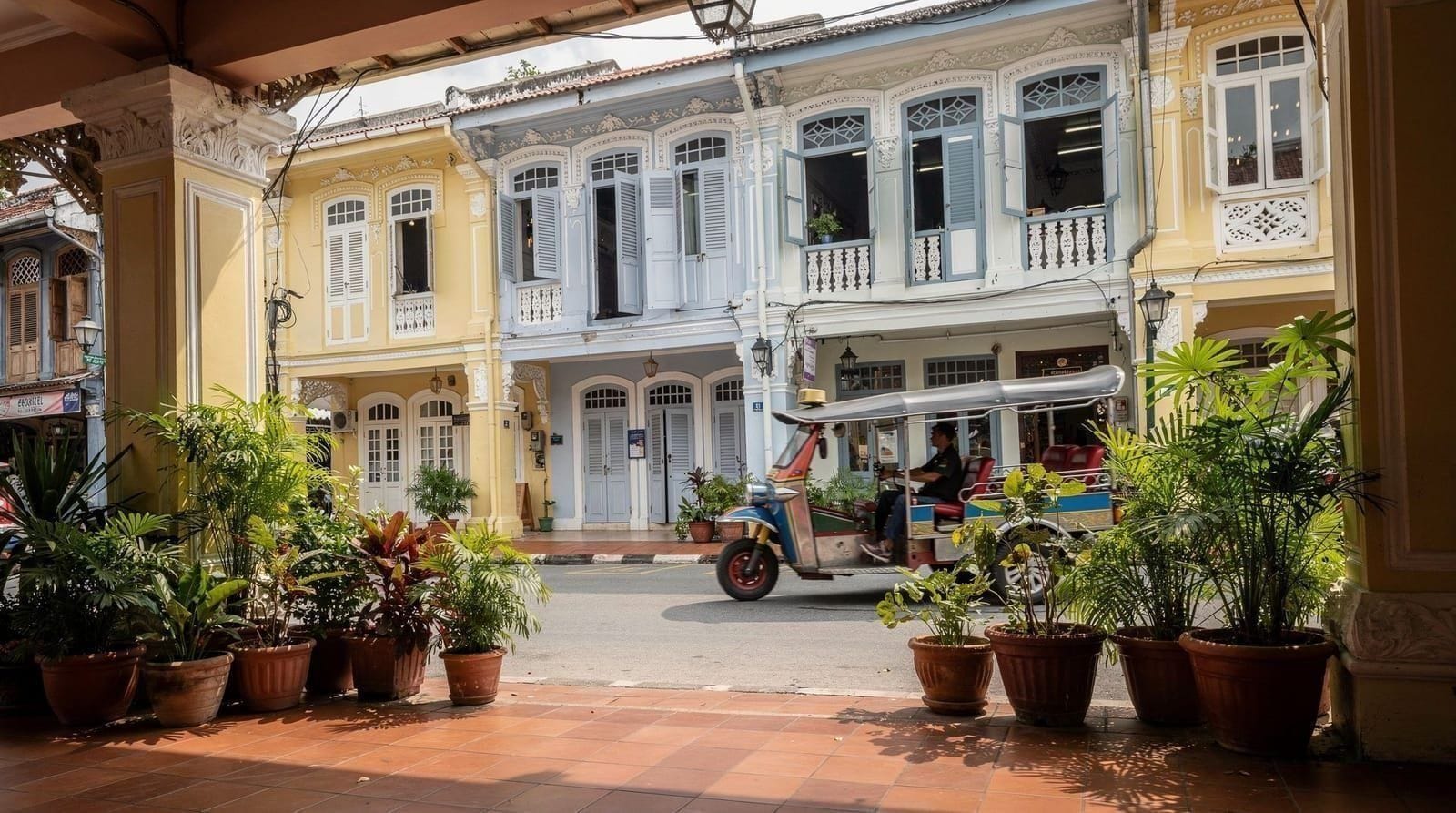
Stroll the Sino-Portuguese shophouse streets — Thalang, Phang Nga, Yaowarat — even if just briefly. You’ll return properly on Day 3.
Day 2 — Phi Phi Islands full day
The flagship day trip
Pickup from Kata Beach hotels typically 7:30–8am; departure from Rassada Pier at 9am; 1–1.5 hours to Phi Phi. The day covers Phi Phi Don (village and viewpoint, 30-minute hike for panoramic views), Maya Bay (regulated access — swimming inside prohibited since 2022 reef restoration), Monkey Beach, and Bamboo Island snorkeling with lunch included.

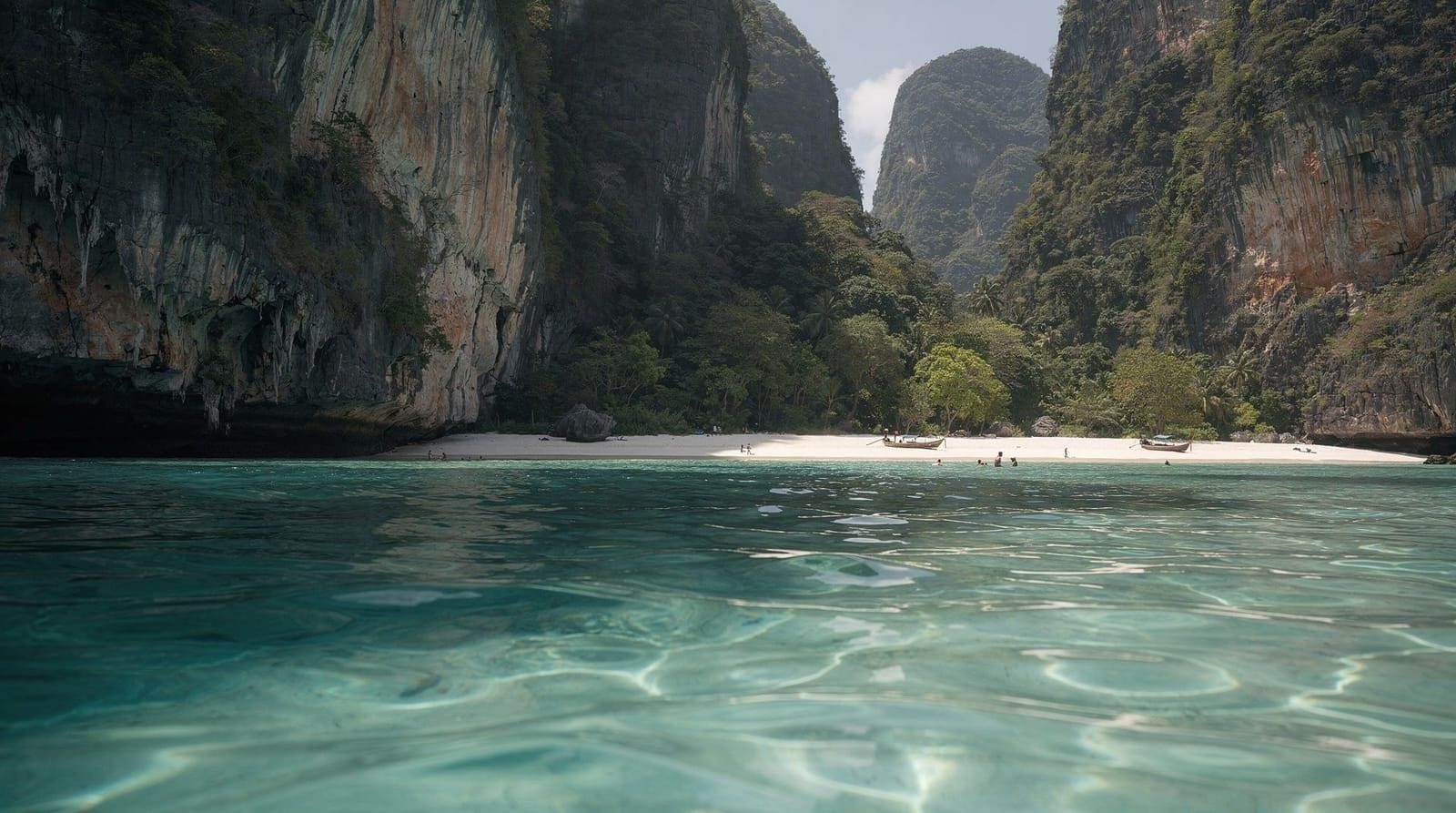
What you actually need to know about Maya Bay: The bay is stunning even with the restrictions. You arrive by longtail from the main boat in groups of 15–20. You can stand on the beach but not swim inside. The white-sand crescent backed by vertical limestone is exactly what it looks like in photos. Spend 20 minutes here and move on — the Bamboo Island snorkeling is genuinely better for underwater life.
What to pack for Day 2: Reef-safe sunscreen (standard sunscreen is banned at Maya Bay — rangers check), a rash guard or thin long-sleeve top for the boat, snorkel mask if you prefer your own, seasickness tablets if you’re prone (the speedboat ride can be choppy November–March). Leave valuables at the hotel — waterproof pouches are sold at the pier for 80 THB. More on what to bring in our reef-safe snorkeling guide.
Phi Phi Don viewpoint tip: The hike takes 20–25 minutes in humidity — start it before the group lunch so you’re not climbing at noon. Wear closed shoes if you have them; the path is rocky and steep. The panoramic shot of the twin bays is worth the effort.
Back at Rassada Pier by 5:30–6pm. Dinner in Kata or Karon. After a full day in the sun, keep it simple — Pad Thai and a cold Chang at one of the Kata Beach Road restaurants (120–180 THB, no Grab needed) beats a lengthy trip out.
For background reading before you go, see our Phi Phi Islands guide and Maya Bay guide.
Day 3 — Phuket Old Town and Chalong temples
Morning: Old Town in depth
Old Town deserves a dedicated half-day. Start at 8:30am before the tour groups arrive. The core circuit takes 2–3 hours on foot: Thalang Road (colonial shophouses, artisan coffee shops), Dibuk Road (restaurants, galleries), Phang Nga Road (street art, Chinese shrines), Yaowarat Road (Chinese-Thai gold shops).
Coffee stop: China Inn Cafe on Thalang Road opens at 8am — it occupies an 1890s heritage shophouse with an inner garden courtyard. Coffee 60–90 THB, breakfast sets 150–220 THB. Arrive early to get a table before tour groups show up after 9:30am.
Book a food tour for the most efficient cultural immersion — 14 dishes across 5–6 stops in 2 hours, with a local guide explaining the Peranakan culinary heritage:

What to pack for Day 3: Comfortable walking shoes (Old Town streets are uneven), a lightweight scarf or sarong for temple visits, cash in small bills for food stall purchases. Temples require covered shoulders and knees — the sarong doubles as cover-up. See our full Phuket Old Town guide for the complete street-by-street walking route.
Afternoon: Chalong and Big Buddha
Grab south from Old Town to Chalong (~20 minutes, ~80 THB/$2.45). Wat Chalong is the most elaborately decorated temple in Phuket — the Relic Tower houses a fragment of the Buddha’s bone according to tradition. Free entry; dress modestly (cover shoulders and knees, remove shoes at the inner shrine). Budget 45–60 minutes here; the interior murals depicting Buddhist history are detailed and worth a slow look.
From Chalong, head up to Big Buddha on Nakkerd Hill (~60 THB/$1.84 Grab each way). The 45-metre white marble statue offers the best 360° views of the southern island — three bays visible on a clear day. No entrance fee; donation box at the entrance. Arrive before 4pm for the best light. The hilltop can be windy even on hot days — useful after the heat of Old Town.
Sunset option: The road between Big Buddha and Kata Beach passes Kata Noi viewpoint (unofficially called “Kata Hill” by locals) — ask your Grab driver to stop for 5 minutes. The two-bay view at golden hour is one of Phuket’s best free photos. Then descend to Kata for dinner. Ratri Jazztaurant on Kata Noi Road has live jazz most evenings from 7pm, mains 280–450 THB.
Read our Big Buddha guide and Wat Chalong guide for more context.
Day 4 — Ethical elephant sanctuary and west coast beaches
Morning: Elephant sanctuary
Phuket’s interior hills host several genuine no-riding sanctuaries. The Elephant Jungle Sanctuary model — feeding, mud bathing, observation — is the credible version. Book 3–4 days ahead (morning slots are limited):

Half-day programs run 8am–noon. By 1pm you’re back in the Kata/Karon area.
What to check before booking any sanctuary: No riding (ever, in any form). No bullhook (ankus) visible on guides. No performance tricks. Small group sizes (max 8–10 per elephant). The ethical elephant guide has a full checklist.
What to pack for Day 4: Clothes you don’t mind getting muddy — the mud bath activity is optional but most people participate. Old trainers or sandals that can get wet. The sanctuary provides rubber boots. Bring a change of clothes for the afternoon beach. Most programs include a basic lunch at the camp.
Afternoon: West coast beach exploration
Afternoon is for the beach. Grab north along Route 4233 (the coast road) and explore Phuket’s west coast beaches. Surin Beach is a Kata upgrade — finer sand, less commercial, better beach clubs. The Bimi Beach Club at Surin has sunbeds from 200 THB (redeemable against drinks) and a clean beachside bar. Kamala Beach is 5 minutes further north and excellent for families — shallower gradient, calmer than Patong.
Budget tip: instead of beach club prices (drinks 180–280 THB each), buy from the 7-Eleven on the main road and use the public beach section — perfectly legal and the same sand.
If you want the full beach spread, our best beaches in Phuket guide ranks them honestly by crowd level, swimming quality, and access.
Day 5 — Phang Nga Bay full day
James Bond Island and sea caves
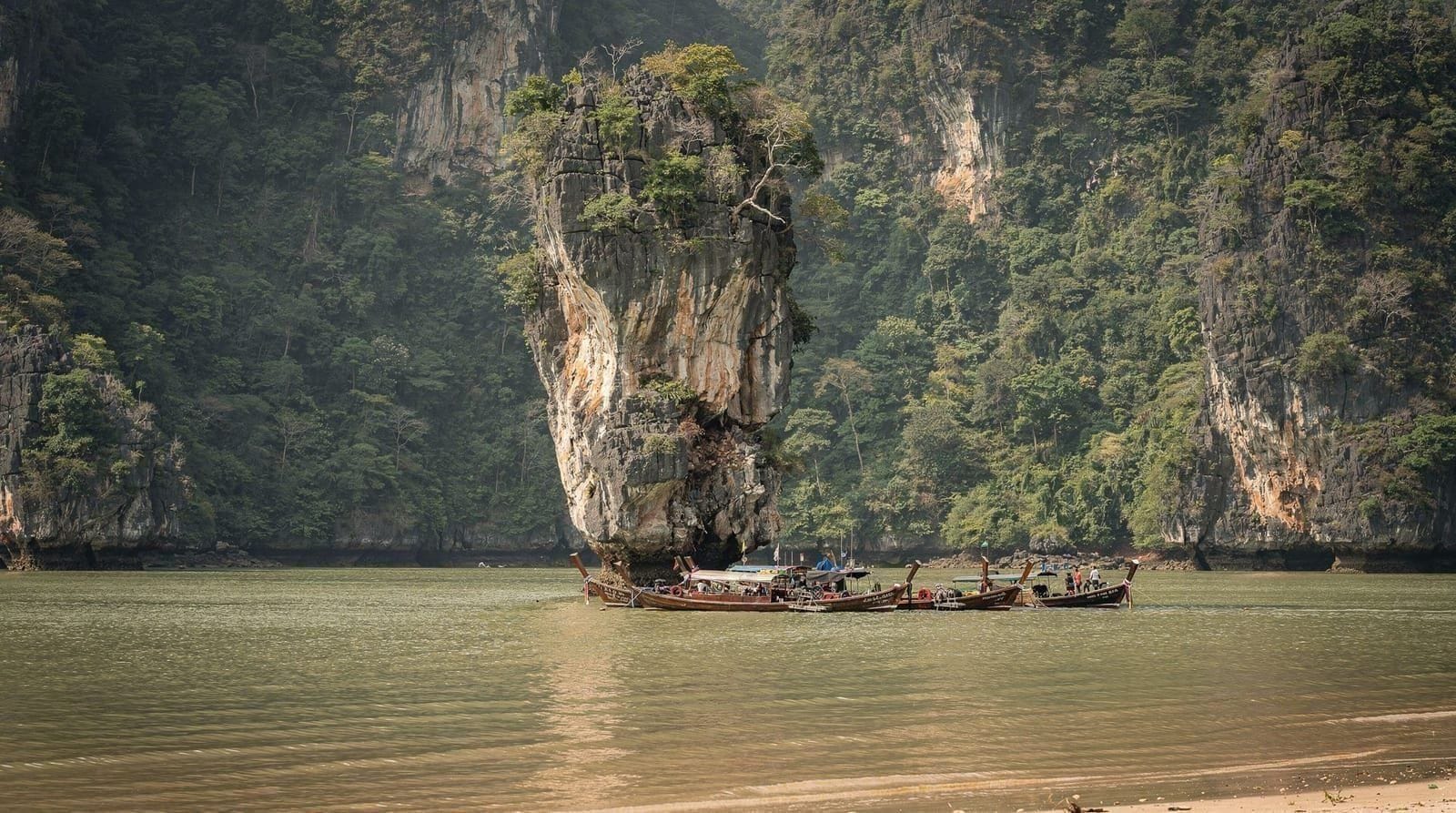
Phang Nga Bay is the second essential day trip and arguably more unique than Phi Phi — the limestone karst landscape is found nowhere else in Thailand at this scale. James Bond Island (Khao Phing Kan) is the famous rock formation from “The Man with the Golden Gun” (1974); Koh Panyi’s floating village is the human-interest highlight. The stilt village has 360 residents, a school, and a football pitch on a floating platform — it looks improbable and it is.
The small-group longtail tour is slower but more intimate, reaching sea caves that big ferries can’t access:

Tours run 8am–5pm with hotel pickup. In monsoon season (June–October), Phang Nga Bay is sheltered from the open Andaman Sea — one of the few day trips that runs reliably in rough weather.
What to pack for Day 5: Hat and sunscreen — longtail boats offer zero shade and the bay glare is intense. A dry bag for your phone (non-negotiable in sea kayak sections). Light lunch is usually provided; bring snacks for the transfer. Motion sickness tablets are less necessary here than on the Phi Phi speedboat — longtails move at a gentler pace.
Sea kayaking note: Many Phang Nga tours include an optional sea kayak section through the hongs (hollow sea caves accessible only at certain tides). If your tour offers it, take it — the interior cave chambers are extraordinary and completely different from the open bay experience. Our Phang Nga Bay sea canoe guide explains what to expect.
Read the James Bond Island day trip guide before you go.
Day 6 — Khao Sok National Park day trip
Interior Thailand
Khao Sok is the underappreciated gem that most Phuket-focused travelers miss. The national park sits 2–3 hours northeast of Phuket, straddling an ancient rainforest (older than the Amazon, apparently) with Cheow Lan Lake at its centre — a vast reservoir surrounded by vertical limestone islands, accessible only by longtail boat.
The day trip from Phuket runs 6am–8pm (long day, pack snacks). You travel to Khao Sok, take a longtail boat into the lake, swim in protected waters, see wild hornbills and monkeys from the boat, and eat lunch on a floating restaurant. It’s a complete change of scenery from the coast.

Note for June–October travelers: Khao Sok is actually better in the rainy season — the waterfalls run, the jungle is lush, and the lake is fuller. This day trip works well as a monsoon-season alternative when sea trips are rough.
What to pack for Day 6: This is the most physical day of the week. Bring: long-sleeve top (bugs in the jungle, sun on the lake), closed shoes or hiking sandals, insect repellent (DEET-based — the forest insects are serious), dry bag, hat, and a larger water bottle than usual. The floating lunch is included but bring energy bars for the morning. The 6am start is early — set two alarms.
Wildlife to expect: Hornbills are almost guaranteed on the lake — they perch on limestone cliff edges in the early morning. Monkeys (macaques and possibly gibbons) are common. Rare sightings include elephants at the water’s edge and, occasionally, Malayan sun bears. Evening return means you’ll be back in Kata by 8–9pm — a late dinner is the only sensible option.
Deeper detail in our Khao Sok National Park guide.
Day 7 — Free morning, Coral Island or departure
Morning options
If your flight is afternoon or evening, Coral Island (Koh He) is a gentle finale — 15 minutes by speedboat from Chalong Pier, clear water, easy snorkeling. No preparation needed, just show up at Chalong by 8:30am. Day trips to Coral Island cost 600–900 THB including the boat and snorkel gear rental. The water is calm and visibility is good — a low-effort reward after a busy week.
Alternatively, revisit a favourite beach from earlier in the week, hit a Thai massage (Kata has dozens — budget 300–500 THB/$9.20–$15.35 per hour for a reputable street-level shop), or spend the morning at one of Phuket’s cooking schools.
For a cooking class, the Blue Elephant in Old Town is the most famous (2,000–3,000 THB/$61–$92), but easier 4-hour classes run throughout Kata and Karon for 1,200–1,500 THB ($37–$46). See the Thai cooking classes guide.
Massage tip: Avoid places with aggressive touts on the street. The best value is shophouses set slightly back from the main tourist strips — look for a place that’s busy with a waiting list. A genuine 60-minute Thai massage for 300–350 THB is common in Kata; anything under 250 THB for a “full body” on the main drag is usually a quick rub with upsell pressure.
Departure logistics
Kata to airport: 55–70 minutes by Grab (~500–700 THB/$15–$21). Allow 2 hours before international departure. Traffic on Route 402 can be unpredictable in the early evening — if your flight is 6–8pm, request your Grab by 3:30pm at the latest to absorb any delays. Phuket airport has reasonable food options airside, so a light lunch before leaving the hotel is fine.
Where to stay for 7 days in Phuket
A central Kata Beach base works for the full week, but staying put for seven nights is also limiting. Here are the main options by budget:
Budget (under 1,500 THB/night)
Kata and Karon Beach have the best concentration of budget guesthouses in southern Phuket. Rooms at this level are simple but clean — air conditioning, ensuite bathroom, hot water. Kata Beach Road has 10–15 guesthouses in this range, most with a small pool or rooftop. Don’t expect a sea view at this price; trade the view for a better breakfast.
Mid-range (1,500–4,000 THB/night)
The sweet spot for this itinerary. Small boutique hotels in Kata and Rawai offer comfortable rooms with pools, decent breakfast, and easy day trip logistics at this tier. If you want the northern beaches for Days 5–7, Surin Beach has good mid-range options that place you close to Bang Tao Beach and the Laguna resort complex. Our where to stay in Phuket guide covers the zone-by-zone tradeoffs in detail.
Upscale (4,000 THB+ per night)
Nai Harn in the far south is the quieter, more upscale alternative to Kata — fewer tourists, excellent long beach, and some of Phuket’s best-value luxury hotels. The Royal Phuket Yacht Club at Nai Harn has views that justify the premium. For the north, the Trisara and Rosewood properties near Surin are at the top of Phuket’s accommodation market.
Split-stay strategy: A popular option is 4 nights in Kata or Rawai (convenient for Phi Phi, Phang Nga, elephant sanctuary) then 3 nights in Surin or Bang Tao (closer to the west coast beach hopping in the itinerary’s second half). This adds one Grab transfer (~300 THB north-to-south) but broadens the experience.
Packing essentials for this 7-day itinerary
This week combines speedboat day trips, jungle trekking, temple visits, and beach time — the gear requirements are genuinely varied.
Sun and water protection:
- Reef-safe sunscreen SPF 50+ (mandatory at Maya Bay, considerate everywhere else)
- Rash guard or thin long-sleeve top for boat days
- Wide-brim hat (non-negotiable on longtail boats)
- Polarised sunglasses
For day trips:
- Dry bag (waterproof pouch for phone on speedboats and kayaks)
- Seasickness tablets (Day 2 Phi Phi speedboat is the roughest crossing)
- Reusable water bottle — fill at your hotel before departing each morning
- Snorkel mask if you prefer your own fit over rental equipment
For jungle and temple days:
- Lightweight long trousers or a sarong (temple entry, mosquitoes at Khao Sok)
- Closed-toe shoes or sturdy sandals with a heel strap for Khao Sok and Big Buddha
- DEET insect repellent — essential for Day 6 Khao Sok
- Small backpack (20–25L) for day trips
Practical items:
- Portable phone charger (long days mean heavy battery use)
- Cash in THB — many street food stalls and local transport don’t take cards. Withdraw at an ATM on arrival. See our Phuket money guide for fee-free ATM tips.
- Lightweight rain jacket or packable poncho (monsoon season May–October; even dry season gets brief afternoon showers)
The full Phuket packing list guide covers seasonal variations in more detail.
Budget breakdown (per person, mid-range, 7 nights)
| Item | THB | USD |
|---|---|---|
| Accommodation (7 nights) | 12,600–21,000 | $386–$644 |
| Phi Phi day trip | 1,800–2,500 | $55–$77 |
| Phang Nga Bay tour | 1,200–1,600 | $37–$49 |
| Khao Sok day trip | 1,600–2,200 | $49–$67 |
| Elephant sanctuary | 1,500–2,500 | $46–$77 |
| Food (7 days) | 5,600–10,500 | $172–$322 |
| Grab and local transport | 1,500–2,500 | $46–$77 |
| Entrance fees, temples | 0–600 | $0–$18 |
| Total | ~25,800–43,400 | ~$791–$1,331 |
For a detailed cost breakdown, read our Phuket travel budget guide.
One evening add-on worth considering
If one of your evenings feels open — most likely Day 4 or Day 7 depending on flight timing — a Muay Thai fight night at one of the Patong stadiums is a genuinely memorable way to fill it, distinct from anything else on this itinerary and not something the day-trip schedule otherwise makes room for:
Muay Thai fight night ticket at Patong Boxing StadiumFights typically run 8–11pm with undercards building to the main event; arrive by 7:30pm to get settled and watch the pre-fight rituals (wai khru), which are as much a part of the experience as the fights themselves. It pairs naturally with a Patong dinner beforehand, though note it’s a late finish — plan a lighter Day 5 morning if you go.
Rest days and burnout prevention
Seven consecutive active days is more than it looks like on paper — three of them (Phi Phi, Phang Nga Bay, Khao Sok) involve early pickups and full-day commitments, and heat fatigue compounds across the week even for travelers used to warm climates. Build in genuine downtime rather than treating every free block as an opportunity for another activity: Day 4’s afternoon is deliberately unstructured beach time for this reason, and Day 7’s morning is flexible so a tired traveler can simply stay at the pool instead of squeezing in Coral Island.
If you notice sunburn, headaches, or persistent fatigue by Day 4 or 5, it’s worth trading one remaining activity (most easily the Day 7 Coral Island add-on) for an extra rest morning rather than pushing through — Thailand’s heat and humidity catch up with people who don’t pace themselves, and a rough final two days is a worse outcome than seeing slightly less.
How this compares with 3 and 5 days
The extra time over our 5-day itinerary buys two specific additions: a full Khao Sok day (genuinely hard to justify on a shorter trip given the 5–6 hour round-trip drive) and enough slack to split your stay between a southern base for the day trips and a northern base for the final beach-focused days. Compared with the 3-day itinerary, the difference is night and day — 3 days forces a choice between Phi Phi and Phang Nga Bay, while 7 days fits both plus Khao Sok without anyone feeling rushed.
The honest tradeoff is fatigue rather than logistics: a week gives you room to do everything, but only if you also protect the rest days built into the schedule below rather than filling every gap with another booking. If a week still feels short once you’re here, the natural next step is combining Phuket with Krabi or Koh Lanta on a future trip rather than trying to squeeze in a third region now.
Travelers who specifically want more time on the water rather than more inland variety should look at our island-hopping week itinerary, which trades Khao Sok and Old Town depth for a broader spread across Racha, Coral, and Koh Yao Noi.
Connectivity, cash and small logistics for a week-long trip
A week is long enough that small friction adds up if you don’t sort it on Day 1. Get a tourist SIM or eSIM at the airport or a 7-Eleven — you’ll rely on it for Grab, tour confirmations, and maps across seven different areas of the island. Keep a running float of small notes; street food stalls, songthaews, and temple donation boxes rarely break a 1,000 THB note, and ATM withdrawal fees (around 220 THB per transaction) mean fewer, larger withdrawals are more efficient than frequent small ones — see our Phuket money guide for the fee-minimizing strategy.
If you’re doing the split-stay (south then north), pack a smaller overnight bag for the transfer day so you’re not hauling your full luggage through a Grab and hotel lobby transition. None of this changes the itinerary’s structure, but a week is long enough that these small inefficiencies compound if ignored.
Adjusting the week for divers, families or a slower pace
This itinerary assumes a first-time visitor wanting the broadest possible coverage. If diving is your actual priority, skip this exact plan — the single Phi Phi day trip here isn’t enough dive time, and our diving-focused 7-day itinerary restructures the whole week around PADI certification and dive sites instead.
Families with young children should look at swapping Day 2’s full-day Phi Phi speedboat crossing for a shorter option and adding more pool time — our families itinerary covers the adjusted version. If the pace above still feels too full even after reading the day-by-day breakdown, the easiest fix is dropping either Khao Sok (Day 6) or the west-coast beach afternoon (Day 4) and replacing it with unstructured time at your hotel — neither cut damages the rest of the week’s logic.
Frequently asked questions about 7 days in Phuket
Is one week in Phuket enough?
One week is comfortable for the main Phuket experience — beaches, the big island day trips, Old Town, and Khao Sok. If you also want to explore Krabi or spend nights on Koh Yao Noi, consider extending to 10 days or using our Phuket–Krabi combo itinerary.
Can I visit the Similan Islands on a 7-day trip?
Yes, but only November–May (they close June–October as a protected national park). Add a Similan day trip in place of Day 6’s Khao Sok, or do both if you replace the beach day. See our Similan Islands diving guide for the full picture.
What’s the best base for 7 days?
Kata Beach for a balanced base (beach access + convenient for day trips). Some travelers do the first 4 nights in Kata and move to Bang Tao Beach for the final 3 — a north-south structure that matches this itinerary’s Day 4 west coast drive.
Do I need travel insurance for this itinerary?
Yes. Water activities (snorkeling, speedboats, kayaking in sea caves) carry genuine accident risk. Medical costs in Thai private hospitals — where you’ll be treated if injured — start at 30,000 THB ($920 USD) for anything serious. Travel insurance covering water sports is non-negotiable.
How do I avoid overtourism at Phi Phi and Phang Nga?
Both destinations are crowded in peak season (December–March). Phi Phi: go on a small-group speedboat, not the big slow ferry with 100+ passengers. Phang Nga: choose longtail small-group over big-boat tours — quieter and more access to caves. Arrive early (be at the pier by 9am). See our island hopping guide for more strategies.
What’s the weather like in December/January/February?
Prime season: calm seas, clear skies, 26–30°C, 10% chance of rain on any given day. Book accommodation and day trips in advance — the island is at capacity December 20 through January 5.
What if it rains on my day trip day?
Rain affects day trips differently depending on destination. Phi Phi tours (Day 2) will still run in light rain but may be cancelled by the operator in heavy swell — most reputable operators offer a free reschedule or credit, not a refund. Phang Nga Bay (Day 5) is sheltered and almost always runs. Khao Sok (Day 6) runs in virtually all weather — the jungle is better when it’s wet. If a trip is genuinely cancelled due to weather, the fallback in Phuket is straightforward: an extra Old Town half-day, a Thai cooking class, or a spa afternoon. The best time to visit Phuket guide explains the seasonal weather patterns in detail so you can build in appropriate buffers when booking.
Is Phuket good for first-time visitors to Thailand?
Yes — Phuket is one of the easiest first introductions to Southeast Asia. The infrastructure is well-developed, English is widely spoken at tourist-facing businesses, Grab works reliably for transport, and the contrast between beach days and cultural sites means you’re never stuck for options. The main traps to avoid are overpriced taxi touts at the airport (use Grab instead), gem shop scams in Old Town, and tuk-tuk drivers offering suspiciously cheap tours. The Phuket scams to avoid guide covers the specific patterns to watch for. First-timers to Thailand specifically will benefit from reading about temple etiquette before Day 3 — covered in our Phuket Old Town guide.
Any tips for solo travelers doing this itinerary?
All five tours in this itinerary are small-group trips where you join other travelers, so solo travelers are not isolated on day trip days. The Kata and Karon Beach areas are social without being aggressively party-oriented — better for solos who want genuine conversation over a beer than Patong, which skews toward group tourism.
Practical notes: book a hotel with a social pool area or common space; tell your hotel each morning which tour you’re on so someone knows your schedule; and use the hostel common areas in Kata if you want to find travel companions for beach days. The getting around Phuket guide is useful for understanding how to move independently between zones without relying on your hotel’s transport desk.
Top experiences
Bookable activities with verified prices and instant confirmation on GetYourGuide.