Thai cooking classes in Phuket: honest guide to the best options
Phuket: Half day Thai cooking class
Are cooking classes in Phuket worth it?
Yes — particularly classes that include a real market visit before cooking. A good half-day class (1,500–2,500 THB, roughly 46–77 USD) teaches you more about Thai cuisine in four hours than a week of eating at restaurants. The key is choosing a class small enough for hands-on cooking rather than watching a demonstration, and one that uses a genuine local market rather than a hotel supply room.
Thai cooking classes in Phuket sit somewhere between genuine culinary education and tourist activity — and the quality range is significant. A poorly designed hotel class where 25 people watch a chef make pad thai is a waste of four hours. A well-run small-group class with a morning market visit, scratch-made curry paste, and a teacher who actually answers your questions is one of the best half-days you can spend on the island. This guide separates the two. For context on Phuket’s food scene before or after your class, the Phuket food guide and best night markets guide complete the picture.
| Where | Old Town, Chalong, Rawai — check for a real market visit |
| Cost | Around 1,400–3,200 THB for a half-day |
| Time needed | 3–4 hours (half-day), 6–8 hours (full-day) |
| Group size | Best at 4–12; avoid 20+ demonstration classes |
| Includes | Recipe card, 4–6 dishes, usually lunch/dinner eating what you cook |
| Booking | 2–3 days ahead; a week for Blue Elephant/Pum in high season |
Cooking schools compared
| School | Price (half-day) | Group size | Best for |
|---|---|---|---|
| Blue Elephant, Old Town | ~3,200 THB | Up to 20–25 | Heritage setting, culinary depth |
| Pum Thai Cooking School, Chalong | ~1,700–2,200 THB | 4–12 | Hands-on value, from-scratch paste |
| Small-group classes, Rawai | ~1,400–1,800 THB | 2–8 | Most intimate, authentic home-style |
| Wooddy Kitchen (garden component) | Varies | Small group | Fresh-picked herbs, garden setting |
Why take a cooking class in Phuket specifically
Phuket’s food heritage is distinct from the Thai food most international visitors know. The island has a significant Hokkien Chinese-Thai fusion tradition — moo hong (braised pork belly), oh tao (oyster-taro pancake), popiah (fresh spring rolls) — that sits alongside more widely recognised dishes like massaman curry, tom kha gai, and pad thai. A class here can cover both the southern Thai dishes that are central to the island’s identity and the standard curry-and-noodle repertoire that translates most directly to home cooking abroad.
Beyond cuisine-specific reasons: the market infrastructure is good. Banzaan Fresh Market in Patong, the working wet market in Rawai, and the local market near Chalong all provide a genuine market visit component that gives the class real context. Markets that operate this way — with fresh galangal, whole kaffir lime, live shellfish, and open herb stalls — make the ingredient lesson tangible in a way that a hotel supply room cannot replicate.
Types of cooking class available in Phuket
Market-to-table classes (the best option for most visitors)
The best format: you meet at a market, spend 45–90 minutes shopping with your instructor, then cook together. The shopping portion is not filler — it teaches you to identify fresh versus old lemongrass by feel, understand how different chilies scale in heat, and see the full range of Thai herbs that rarely make it into tourist-area restaurants.
These classes typically run 3–5 hours and cost 1,400–2,500 THB (43–77 USD) per person. Group sizes of 4–12 people are standard; larger than that and the hands-on quality drops.
Half-day classes (most popular)
The standard Phuket cooking class format: 3–4 hours, typically morning (8 am–12 pm, with market visit) or afternoon (1 pm–5 pm, kitchen only). Morning classes with a market visit are generally preferable — you get the freshest ingredients, the market is at its most active, and you finish by lunch with the rest of the day free.
You’ll cook four to six dishes depending on the school and pace. Expect to keep a recipe card with measurements and instructions.
Full-day classes
Longer classes (6–8 hours) that cover more dishes, sometimes include two market visits or a more extended market tour, and often provide a deeper dive into Thai ingredient theory — pastes, different curry styles, regional variations. These suit serious food enthusiasts or anyone who wants to replicate multiple dishes at home. Cost: 2,500–4,000 THB (77–123 USD).
Hotel and resort classes
Most large resorts in Phuket offer cooking classes, typically sold as an add-on to stays. The quality varies. At upscale resorts the instruction is professional and the kitchen is excellent; the trade-off is that a hotel kitchen is a controlled environment removed from the market experience. Classes run in resort kitchens at 4,000–6,000 THB (123–184 USD) tend to be overpriced relative to independent schools offering equal or better instruction.
The exception: if you’re at a resort that integrates with a genuine local market run by an actually skilled teacher, the infrastructure difference matters less. Ask specifically whether the class includes a real market visit before booking.
The specific schools worth considering
Blue Elephant Cooking School — Phuket Old Town
Price: approximately 3,200 THB (98 USD) for a half-day including market visit Location: the Blue Elephant restaurant in a restored colonial mansion on Phuket Road, Old Town Class size: larger groups (up to 20–25 in group sessions) Format: morning market visit at the Old Town market, then cooking session in a proper demonstration and hands-on kitchen
Blue Elephant is the most prestigious name in Phuket cooking education. The school operates from one of the island’s most beautiful buildings — a restored 19th-century Sino-Portuguese mansion that also houses a highly regarded restaurant. The setting alone justifies the premium for some visitors.
The instruction is thorough and professional. The curriculum leans toward royal Thai cuisine and the more refined end of the southern Thai spectrum — expect refined massaman, properly executed tom kha, and dishes with more technique than a standard tourist-level class. You’re not just learning recipes; you’re getting context about why dishes are constructed the way they are.
The trade-off: at 20+ people, you’re doing less individual cooking than you would at a smaller school. The market visit is to a market near Old Town rather than a raw wet market — it’s interesting and educational, but slightly curated. For the price, the overall experience delivers.
If atmosphere, heritage, and culinary depth are priorities, Blue Elephant is the right choice. If you want the most hands-on cooking at the best value, look at the smaller options below.
Blue Elephant cooking class with market visit — Phuket Old TownPum Thai Cooking School — Chalong
Price: approximately 1,700–2,200 THB (52–67 USD) for a half-day Location: Chalong, south Phuket (residential area, accessible by scooter or Grab) Class size: small groups, typically 4–12 people Format: market visit at a local Chalong area market, cooking in a purpose-built home-style kitchen
Pum Thai Cooking School is consistently one of the most highly reviewed cooking experiences in Phuket, and it earns those reviews. The school operates from a property in Chalong run by a Thai family, and the teaching style is genuinely hands-on — you make your own curry paste from scratch using a granite mortar, you don’t just stir ingredients that have been pre-prepared.
The curriculum covers the full range of southern Thai basics: green curry, massaman, tom kha gai, pad thai, sticky rice with mango. The pace is calibrated for beginners but not dumbed down — questions about technique and ingredient logic are answered with real knowledge rather than scripted responses.
The market visit is to a local wet market in Chalong rather than a tourist-adjacent market, which makes the experience notably more authentic. You’ll see ingredients that never appear on tourist menus, and the instructor will explain them in context.
Value for money here is strong: the instruction quality is close to Blue Elephant at roughly half the price, and the smaller group size typically means more individual attention.
Pum Thai Cooking School — hands-on class with market visit, ChalongSmall-group local classes — Rawai
Price: approximately 1,400–1,800 THB (43–55 USD) for a half-day Location: Rawai and surrounding south Phuket area Class size: very small (2–8 people typically) Format: local market visit at Rawai wet market, cooking in a home-style kitchen
The most relaxed and arguably most authentic option: small classes run by local cooks in a residential setting near the Rawai seafood area. The market visit at Rawai is excellent — it’s a working fishing community market, not tourist-facing, and the seafood and herb selection reflects genuine southern Thai cooking.
These classes have less institutional polish than Blue Elephant and less name recognition than Pum, but the intimacy is a real asset. With 4–6 people, the teacher-to-student ratio is high, you can cook at your own pace, and the conversation tends to be more authentic. You’ll also learn to cook in the format most of us actually cook at home — a single hob, a good knife, a granite mortar — rather than a commercial demonstration kitchen.
The food you make tends to be more genuinely home-style: everyday dishes rather than restaurant-presentation dishes, which is arguably more useful if you’re going to reproduce them at home.
Rawai Thai cooking class with local chef and market visitAuthentic small-group class with morning market
For visitors specifically interested in the full market-to-table experience in a small-group format:
Authentic Thai cooking class — small group, market visit includedWooddy Kitchen — cooking with a garden market component
Some classes incorporate a herb and vegetable garden as part of the market equivalent — picking fresh ingredients directly from a cultivated garden rather than (or in addition to) a wet market visit. This works particularly well for the herb-identification component of the class and produces especially fresh results.
Wooddy Kitchen Thai cooking class — market and garden experienceWhat you’ll actually learn and cook
A standard half-day class in Phuket covers approximately four dishes from this range:
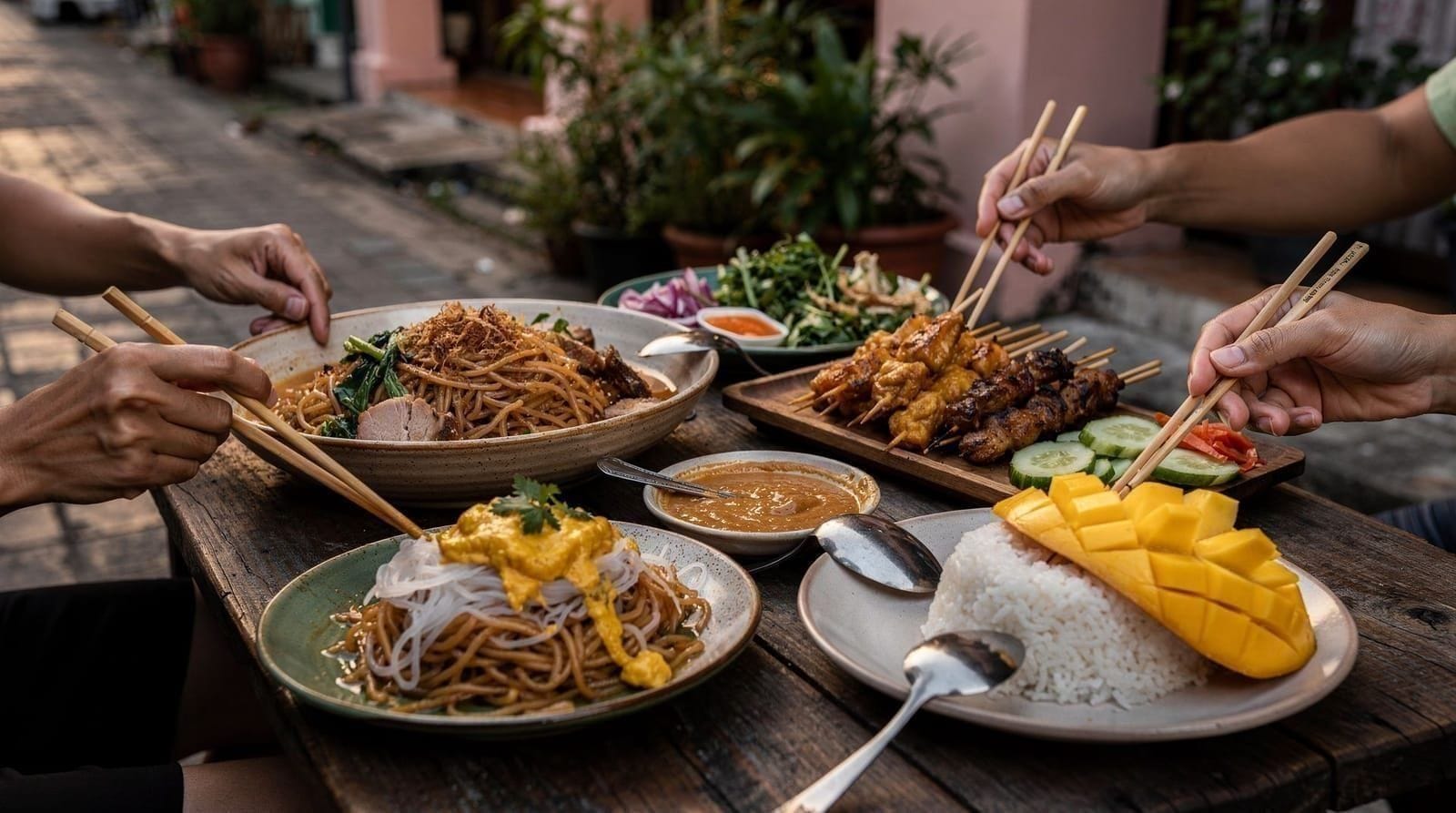
Curry paste from scratch: making a massaman, green, or red curry paste using a granite mortar and pestle. This is often the most memorable part of the class — the process of building a paste from galangal, lemongrass, kaffir lime zest, chili, garlic, and shrimp paste teaches you more about Thai flavor construction than any cookbook. The paste you make yourself will taste noticeably different from anything that comes in a jar.
Tom kha gai: coconut milk soup with chicken, galangal, lemongrass, kaffir lime leaves, and mushrooms. The dish is straightforward but calibrating the balance between the coconut richness and the galangal sharpness is a genuine skill. Most classes spend time on this calibration.
Pad thai: the technique here is the lesson — the sequence of adding ingredients to a very hot wok, the timing of the egg, the use of tamarind paste versus pre-made sauce (the latter is a shortcut that dramatically changes the result). A class that teaches you real pad thai technique using fresh tamarind is significantly more useful than one that opens a packet.
Massaman curry with beef or chicken: one of Thailand’s most complex curries, using spices (cinnamon, cardamom, cloves) that reflect the dish’s Muslim-influenced origins in southern Thailand. A good massaman takes time — the correct way to make it is not the same as the quick hotel version.
Sticky rice with mango (khao niao mamuang): the dessert most classes end with. The lesson is in the sticky rice preparation: washing, soaking, steaming over a double boiler, and finishing in warm coconut milk sweetened with palm sugar. The quality difference between properly prepared sticky rice and microwaved sticky rice is enormous.
The market visit in detail: Banzaan and local alternatives
Banzaan Fresh Market (in Patong, near Jung Ceylon): a two-level market with a full working wet market on the ground floor. The market visit component here exposes you to live seafood in tanks, fresh-cut herbs, whole spice stalls, and the full range of Thai vegetables. It’s within Patong, which means it’s convenient but also means the market has some tourist-facing stalls mixed with genuine wholesale and retail.
Local markets in Rawai and Chalong: more purely local, less visitor-facing, and generally more representative of how Thai households actually shop. The ingredient selection is often broader (more regional specialties, more southern Thai-specific herbs) and prices are lower. If your class is based in south Phuket, this is the better market visit.
What to pay attention to during the market visit:
- Galangal vs ginger: galangal is paler, firmer, and has a distinctly medicinal, citrus-pine note — it cannot be substituted with ginger without changing the dish. Most Western supermarkets carry it; knowing it by sight helps you buy the right thing.
- Kaffir lime vs regular lime: the kaffir lime in Thai cooking is used primarily for its leaves and zest, not the juice (the juice is very sour and rarely used). The leaves have a distinctive double-leaf shape.
- Bird’s eye chili vs long red chili: the small bird’s eye is for heat; the long red is for color and moderate heat. Understanding this helps you calibrate spice at home.
- Fish sauce quality: good fish sauce (Tiparos, Megachef) is pale amber, clear, and fragrant. Dark, murky fish sauce has usually been diluted or is of lower quality. Your instructor can show you what to look for.
Tips for getting the most from your class
Book in advance: the best small-group classes sell out, especially in high season (December–March). Book 2–3 days ahead at minimum; a week ahead for Blue Elephant and Pum during busy periods.
Arrive hungry: you’re going to eat everything you cook, and good classes produce 4–6 full dishes. Most classes end with sitting down to eat everything as a group, which is often the most enjoyable part.
Take notes or photographs of the process: recipe cards are provided, but the physical notes you take about technique (“add basil off heat, otherwise it blackens” — that kind of thing) will be more useful at home than a printed recipe.
Ask about dietary restrictions when booking: vegetarian and vegan adaptations are straightforward at most schools (fish sauce out, soy sauce in; shrimp paste out, fermented tofu in). Gluten and nut allergies require advance notice. Classes can generally be adapted; just communicate clearly before arriving.
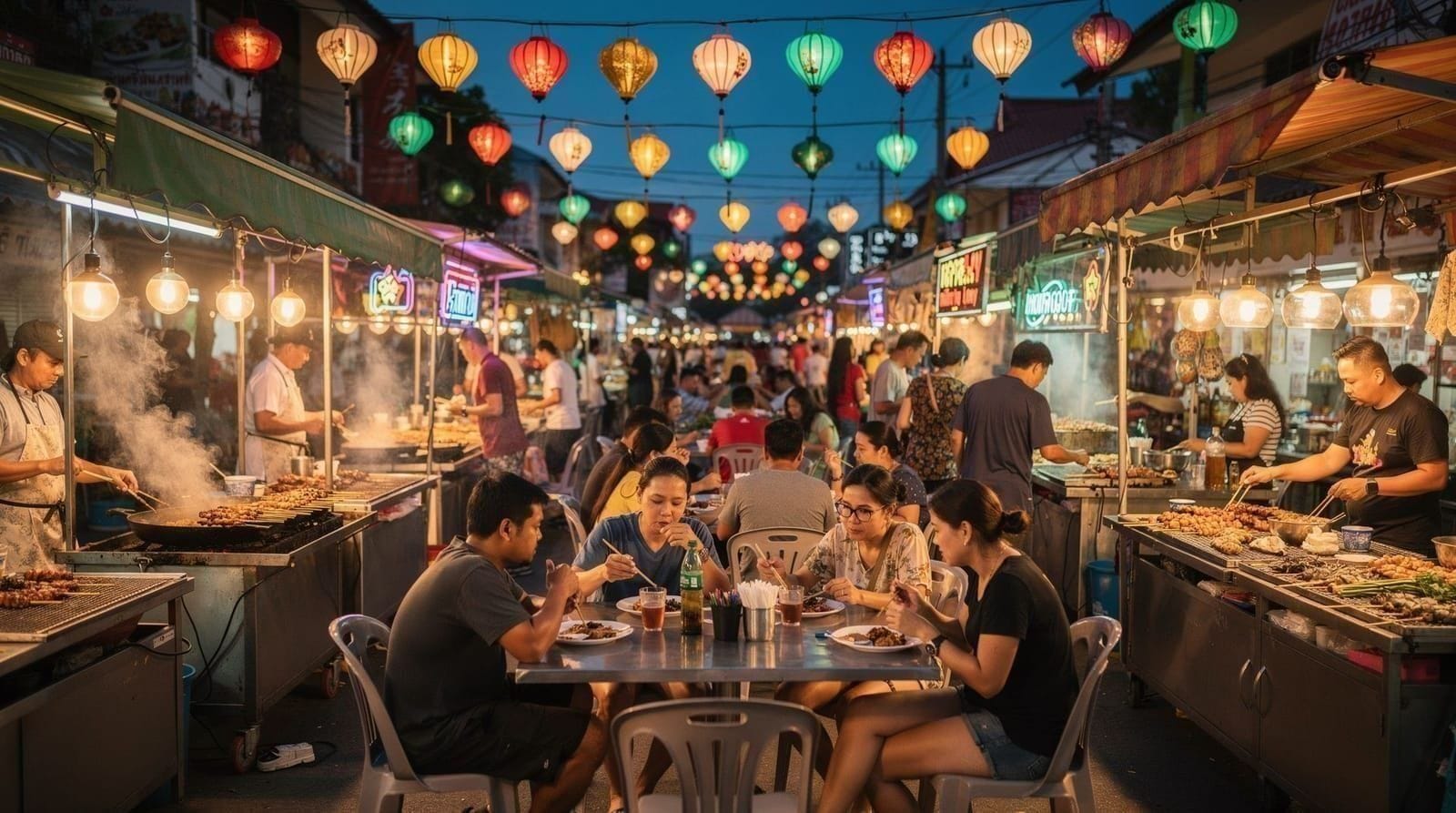
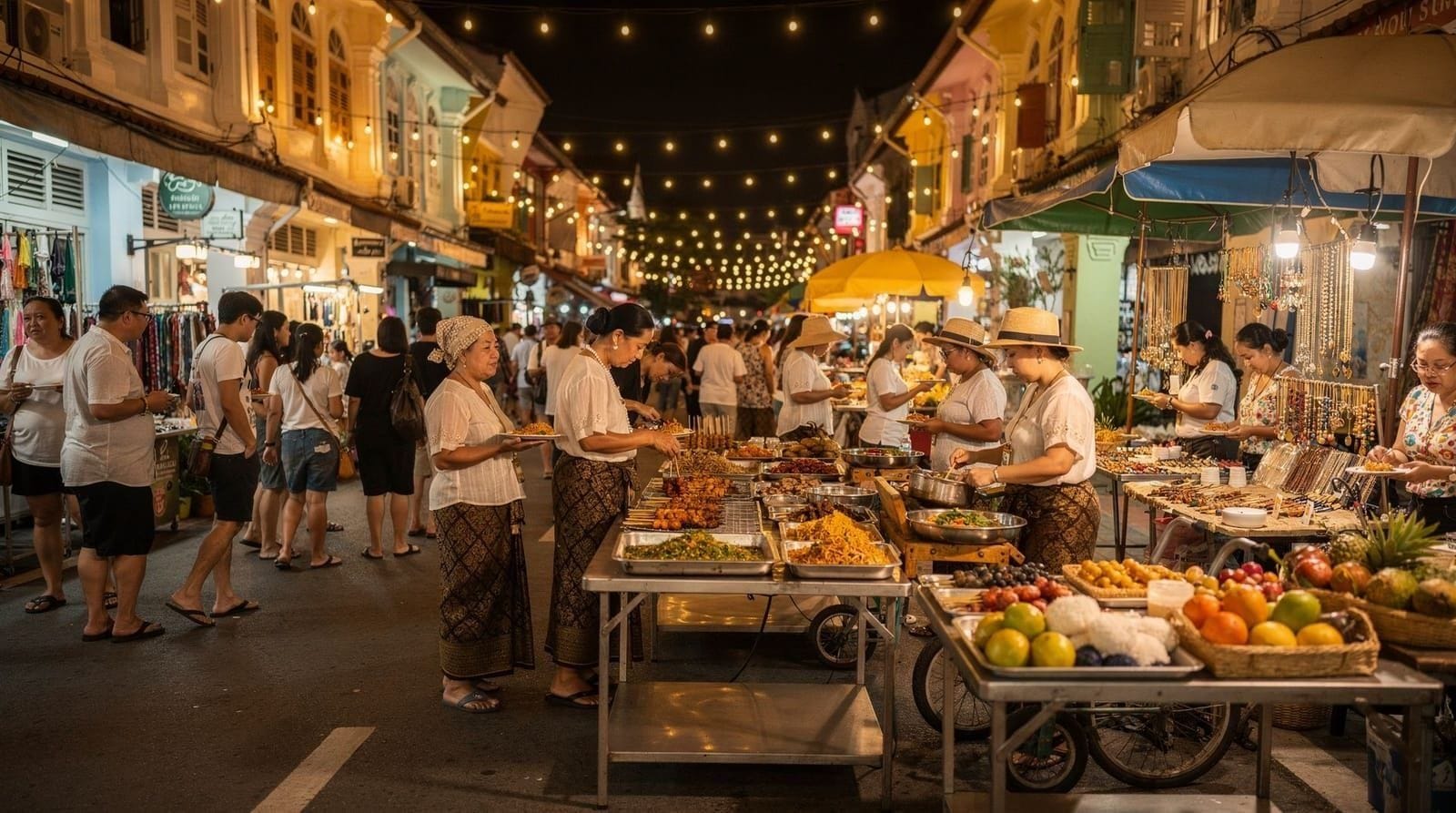
Combine with a food tour: if you have the time, doing an Old Town street food tour before or after your cooking class creates a complete food day — you see the dishes in their street context, then learn to cook them. The best night markets can fill an evening after a morning class.
Half-day class with market visit — quick reference
For visitors who want the core experience without committing to a full day:
Easy Thai cooking class with market visit — half day, small groupDietary restrictions and allergies in detail
Thai cooking relies heavily on fish sauce, shrimp paste, and often peanuts, which makes clear communication important for anyone with allergies or dietary restrictions. Vegetarian and vegan adaptations are genuinely straightforward at most Phuket schools — soy sauce and fermented tofu are standard substitutes for fish sauce and shrimp paste, and most curry pastes can be made without the animal-derived ingredients without materially changing the cooking lesson itself.
Gluten-free adaptation is also manageable, since most dishes are naturally gluten-free or close to it once soy sauce is swapped for a gluten-free version. Peanut and shellfish allergies require the most advance notice, since cross-contact in a shared teaching kitchen is a genuine risk; mention this clearly when booking, not on arrival, so the school can plan ingredients and workstations accordingly.
What a typical class schedule looks like hour by hour
A representative half-day morning class runs roughly as follows: 8:00–8:30am hotel pickup and arrival at the school, 8:30–9:30am market visit with the instructor explaining key ingredients as you shop, 9:30–10:00am a brief introduction to the day’s menu and any safety or kitchen orientation, 10:00am–12:30pm the cooking session itself moving through each dish in sequence, and 12:30–1:00pm sitting down together to eat what the group has made.
Full-day classes generally follow the same morning structure before extending into an afternoon session covering additional dishes or a deeper look at curry paste variations. Knowing this rhythm in advance helps you plan the rest of your day — most participants find they’re genuinely full by early afternoon and prefer a quiet beach session rather than another big meal.
Taking the recipes home
The recipe cards handed out at most classes cover measurements and steps but rarely explain ingredient substitutions for cooking outside Thailand. Galangal, kaffir lime leaves, and Thai basil are the hardest ingredients to source reliably at home; ask your instructor directly during the class which substitutions work reasonably well (ginger is an imperfect but workable galangal substitute; regular lime zest can stand in for kaffir lime in a pinch) so you have real answers rather than guessing once you’re back home and the class is a distant memory. Some schools also sell take-home spice kits with dried or frozen versions of the harder-to-find ingredients, which is worth asking about if you plan to cook the dishes again soon after returning.
Fitting a cooking class into your Phuket trip
A morning cooking class pairs naturally with a quieter afternoon — many visitors follow it with beach time or a spa session rather than another activity, since you’ll have eaten a substantial lunch by noon. Families travelling with older children can also consider it as a rainy-day activity; see the Phuket with kids guide for age guidance on which classes work best for younger participants. If you’re building a broader food-focused day, pair the class with an evening at one of the best night markets to see the same ingredients used in a completely different, faster-paced setting.
Frequently asked questions about Thai cooking classes in Phuket: honest guide to the best options
How much do cooking classes cost in Phuket?
What do you learn in a Thai cooking class in Phuket?
What is the best cooking school in Phuket?
Do Phuket cooking classes include a market visit?
Are private cooking classes available in Phuket?
Are cooking classes suitable for complete beginners?
What should I look for to avoid a tourist-trap cooking class?
Top experiences
Bookable activities with verified prices and instant confirmation on GetYourGuide.