Phuket with kids: practical family travel guide 2026
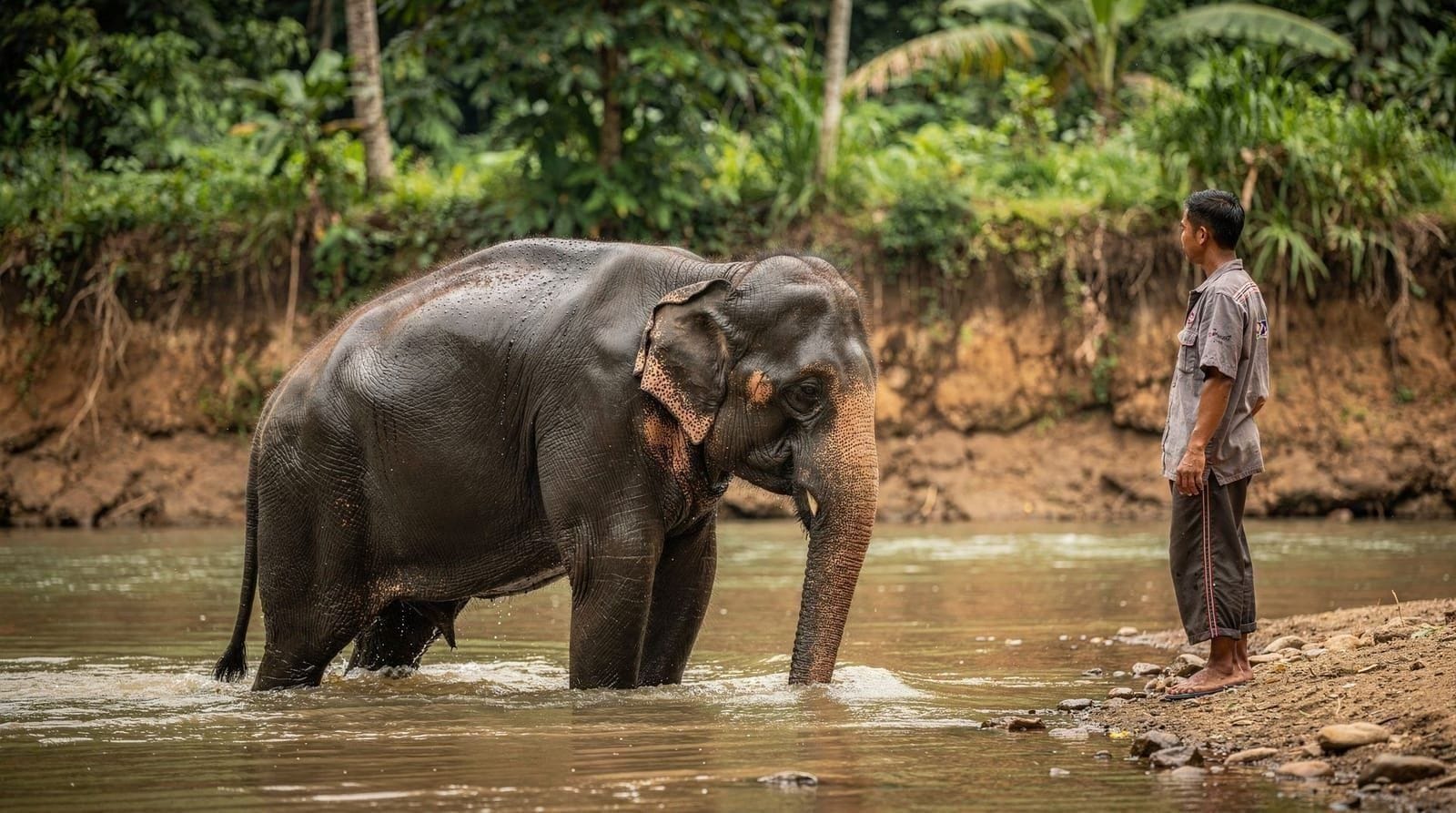
Phuket: Elephant Jungle Sanctuary — ethical feeding experience
Is Phuket good for families with young children?
Yes — Phuket is one of Southeast Asia's most family-friendly destinations. Calm beaches at Kata, Karon, and Bang Tao suit toddlers, ethical elephant sanctuaries and the aquarium keep older kids engaged, and the island has two international-standard hospitals for peace of mind. The key is picking the right beach area and avoiding Patong entirely with young children.
Is Phuket good for families with young children? Yes — Phuket is one of Southeast Asia’s most family-friendly destinations. Calm beaches at Kata, Karon, and Bang Tao suit toddlers, ethical elephant sanctuaries and the aquarium keep older kids engaged, and the island has two international-standard hospitals for peace of mind. The key is picking the right beach area and avoiding Patong entirely with young children.
| Best base | Kata, Karon, Bang Tao or Mai Khao |
| Avoid with young kids | Patong (rip currents, noise, traffic) |
| Minimum trip length | 7 nights, unrushed |
| Best months | November–February (calm sea, low heat risk) |
| Daily budget (family of 4) | around 8,000–14,000 THB, mid-range |
| Nearest paediatric ER | Bangkok Hospital Phuket, 24-hour |
Why Phuket works well for families
Phuket has something most other Thai islands lack: genuine infrastructure for families. There are international hospitals, reliable Grab coverage across the entire island, well-maintained roads connecting all major beaches, and a large enough tourism economy that child-friendly restaurants, baby gear shops, and activity providers have all been here for decades.
The island is large enough that the party scene in Patong and the calm family beaches at Kata and Karon essentially co-exist without interfering. You can spend an entire 10-day family holiday on Phuket and never feel like you’re in the wrong place — provided you choose your base carefully.
The single biggest mistake families make is booking accommodation in Patong because it appears at the top of hotel searches. The next section explains which areas to choose instead.
Best beach areas for families
Kata Beach — the top family pick
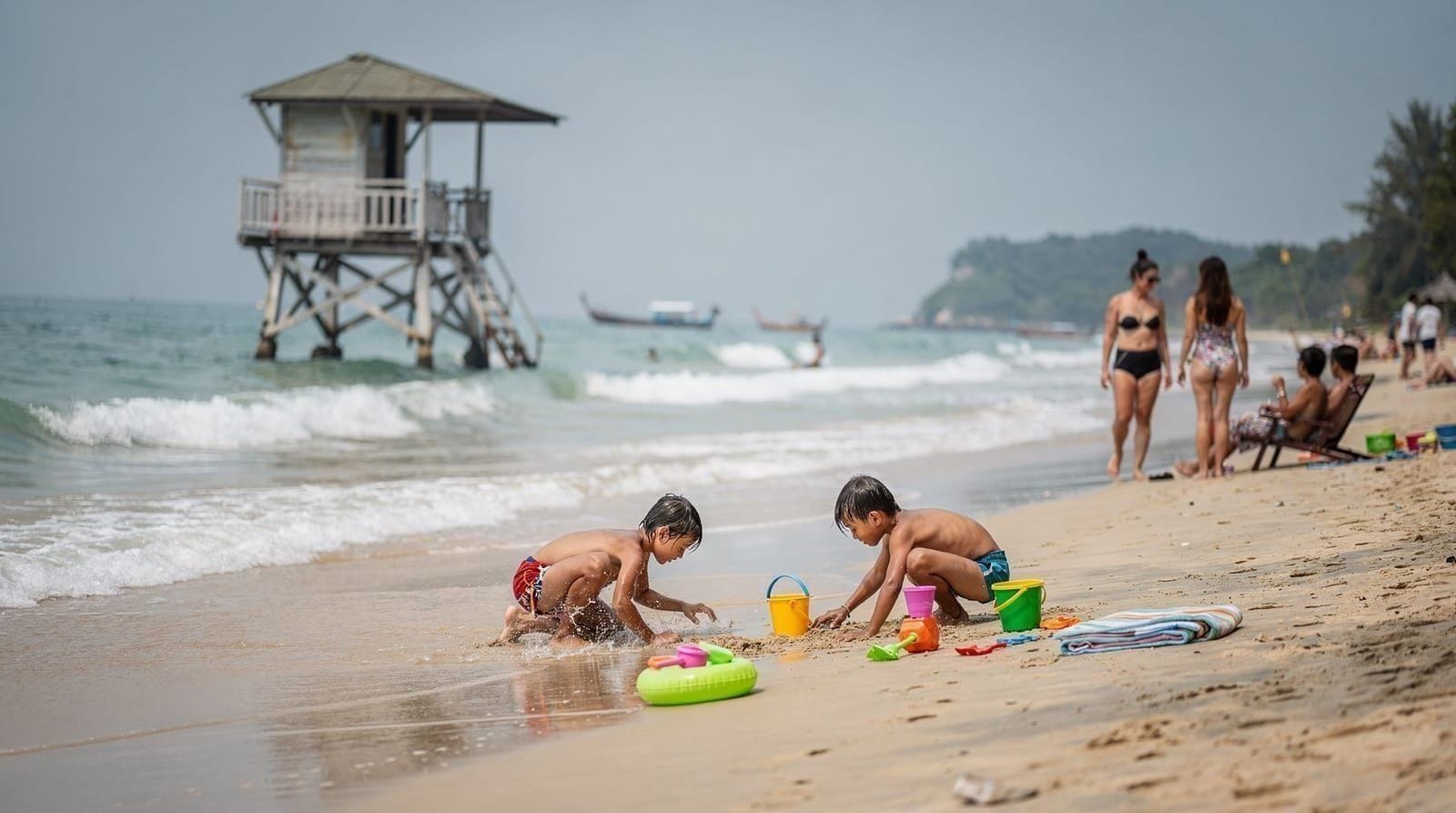
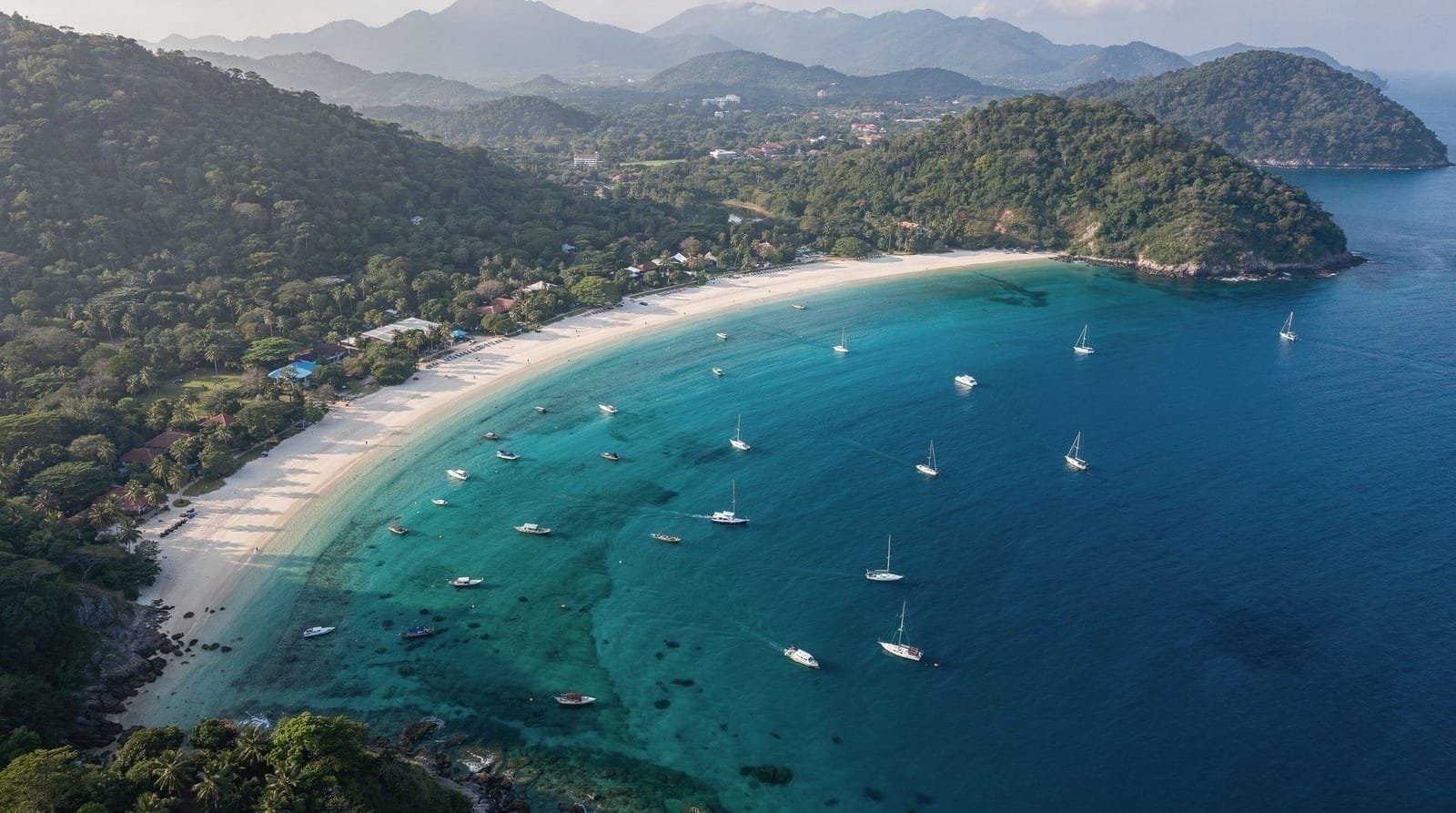
Kata Beach is consistently rated the best overall beach for families visiting Phuket. The sea is calm and shallow from November through April thanks to the natural curve of the bay, making it safe for young children to swim and wade. A small but effective lifeguard operation works the main beach during high season.
The beach village itself is walkable. You can leave your hotel, reach the sand in under five minutes, find a dozen restaurants within a short stroll, rent beach chairs, and grab a tuk-tuk for the evening — all without needing transport. Accommodation ranges from budget guesthouses at around 1,800–3,000 THB per night to mid-range family hotels at 4,000–8,000 THB with proper pools. Kata avoids the worst of Patong’s noise while remaining genuinely lively with good food options.
One caveat: Kata’s beach can develop surf in low season (May–October), which makes it less ideal for toddlers during those months. In that case, move to Bang Tao’s lagoon end or Nai Yang.
Karon Beach — wider, quieter, underrated
Karon Beach sits immediately north of Kata and is longer (3 km), flatter, and noticeably less crowded. The sand is finer and softer than Patong. A shallow sandbar forms near the waterline at low tide, creating a natural wading pool that toddlers love.
Karon town is smaller and less busy than Kata village. The selection of restaurants is narrower but still adequate — you’ll find Thai food, pizza, and Western-style breakfast without difficulty. Hotel prices run slightly lower than Kata for equivalent quality. The main drawback is that Karon can feel very quiet in low season, with many businesses closing. For families visiting November–March, it’s an excellent and underrated choice.
Bang Tao Beach and the Laguna complex
Bang Tao Beach in the north hosts the Laguna Phuket resort complex — a 1,000-acre integrated development linking five luxury resorts, a golf course, and a lagoon. The lagoon is connected to the beach by a free boat shuttle and has almost zero wave action, making it genuinely ideal for very young children. This is the best address in Phuket if budget is not the primary concern.
Outside the Laguna bubble, the rest of Bang Tao Beach is long, underdeveloped by Phuket standards, and calm. Independent restaurants and mid-range guesthouses cluster at the southern end near the Boat Lagoon area. The northern end is quieter still. Bang Tao is a good choice for families who want a beach with resort amenities but don’t want the corporate Patong feel.
Mai Khao — for airport-proximity and Splash Jungle
Mai Khao is Phuket’s northernmost beach, just 10 minutes from the airport. The sea here is shallow and wave-free year-round (the water is not as clear as southern beaches, but perfectly clean). The main reason families choose Mai Khao is Splash Jungle Waterpark — one of Thailand’s best waterparks, directly on the beach road, open daily. The Anantara resort and a handful of other properties line this stretch.
The downsides: it is 45 minutes by Grab to Kata or the main sightseeing areas, so this base works best if you’re making Splash Jungle and beach time the core of the holiday rather than island day trips.
Kamala Beach — the middle ground
Kamala Beach sits between Patong and Surin and splits the difference neatly. The sea is calmer than Patong, the village has a local Thai character, and there’s almost no nightlife. It’s also where Phuket FantaSea and Carnival Magic are located — a practical bonus if you’re planning to attend evening shows. A good secondary choice if Kata is fully booked.
Why to avoid Patong with young children
Patong is explicitly not recommended for families with children under 12. The reasons are practical, not moralistic:
- Rip currents regularly develop between jetski lane buoys, and young swimmers can be caught. Lifeguard coverage is inconsistent.
- Bangla Road and surrounding sois produce noise until 3–4 am. Rooms within 400 metres of Bangla are effectively impossible to sleep in with tired children.
- The beach is covered in sunbeds, boats, and jetski operators with near-zero quiet swimming space.
- Traffic in Patong is Phuket’s worst — crossing the road with a pushchair is a genuine challenge.
If you end up staying in Patong for other reasons, keep beach time to early morning (before 9 am) and plan all activities well away from Bangla Road.
Family beach areas compared
| Area | Best for | Sea calmness | Nightlife nearby |
|---|---|---|---|
| Kata | First-timers, walkable village | High (Nov–Apr) | Low-moderate |
| Karon | Wide flat sand, quieter budget | High | Low |
| Bang Tao | Toddlers, resort amenities | Very high (lagoon) | Low |
| Mai Khao | Airport proximity, waterpark | Very high | None |
| Kamala | Middle ground, evening shows | Moderate-high | Low |
| Patong | Not recommended under 12 | Low (rip currents) | Very high |
Activities for children in Phuket
Ethical elephant sanctuaries
Visiting an elephant sanctuary is often the highlight of a Phuket family trip for children. The critical thing is choosing an ethical operation — one where elephants are not ridden, not chained, and are free to walk and socialise. Several good sanctuaries operate within 45–60 minutes of the main beach areas.
Feeding sessions typically last 2–3 hours. Children can hand-feed the elephants, watch them play in the mud pool, and learn about conservation. Ages 3 and up generally manage this well. Under-3s can come but may find the scale of the animals overwhelming.
The ethical elephant sanctuaries guide covers how to identify responsible operators versus riding camps.
Phuket Aquaria — Cape Panwa
Phuket Aquaria at Cape Panwa opened in late 2024 and is now the island’s best indoor family attraction. The main tunnel walk-through tank gives children eye-level views of rays, sharks, and large reef fish. There’s an interactive touch pool, a jellyfish gallery, and a 4D cinema. Air-conditioned throughout. Budget roughly 600–900 THB per adult, 400–600 THB per child depending on package.
Allow 2–3 hours for a proper visit. The combination ticket that includes the Trick Eye Museum next door is good value if your children are 6 and up (younger children often don’t engage with optical illusion photography).
Splash Jungle Waterpark — Mai Khao
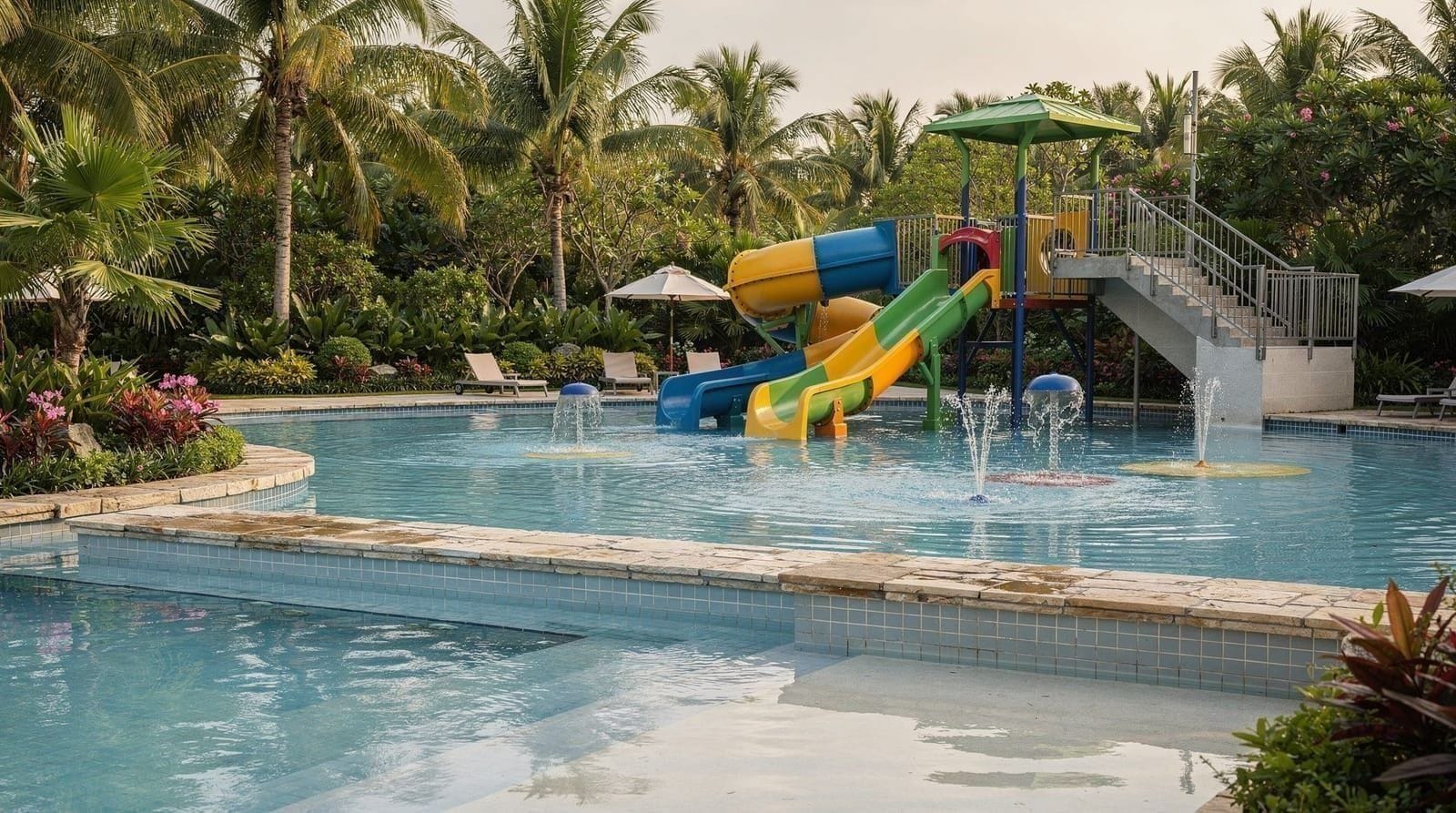
Splash Jungle is the best waterpark in Phuket and one of the better ones in Thailand. Facilities include multiple waterslides (including a family raft ride and a lazy river), a wave pool, a children’s zone with low-speed slides for toddlers, and a large pool area with sunbeds and a swim-up bar. Day tickets run roughly 1,600 THB for adults and 1,100 THB for children (under 90 cm is often free — check current terms on arrival). From Kata or Karon, expect a 40–50 minute Grab journey.
Coral Island day trips
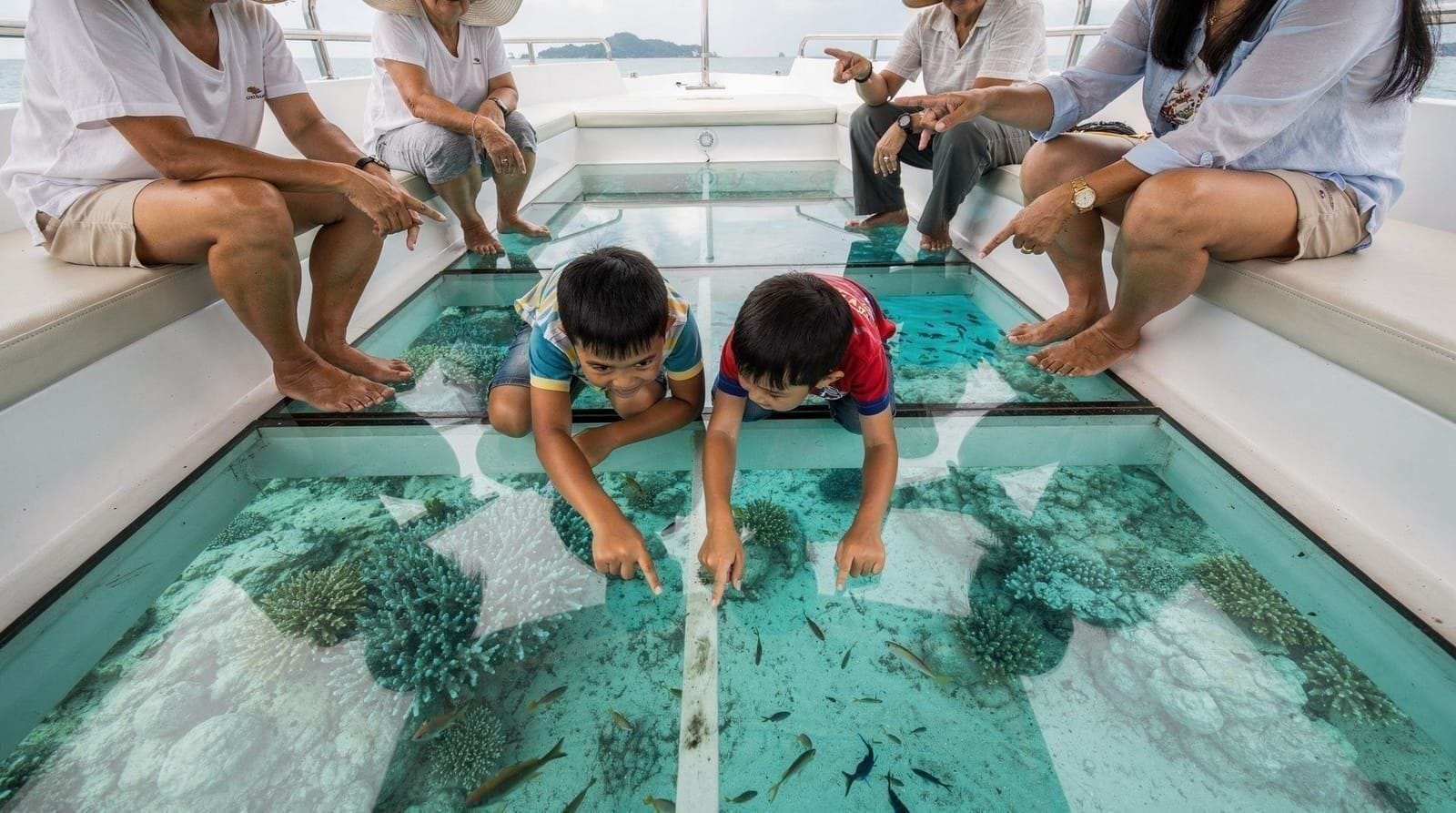
Coral Island (Koh Hae) is the most accessible island day trip from Phuket, 20 minutes by speedboat from Chalong Pier. The sea is clear enough for snorkeling, and the beach has a range of water activities including banana boats, parasailing, and sea walking that work for older children. The snorkeling area is shallow and well-suited to beginners and children aged 6 and up.
For families with very young children (under 5), the boat ride and heat can be challenging. A half-day trip (leaving around 9 am, returning before lunch) is easier than a full-day outing.
Carnival Magic evening show
The Carnival Magic show at Kamala is a 90-minute family-friendly cultural production with acrobatics, Thai dance, fire shows, and a buffet dinner. This is particularly good for families with children aged 5–15. The production values are high and the content is completely appropriate for children.
The show runs several times per week (check current schedule). Seats with buffet dinner are around 1,800–2,500 THB per adult, with children’s pricing available. Book the table closest to the stage for younger children’s sightlines.
Phuket highlights tour
A half-day tuk-tuk or minivan tour of Big Buddha, Wat Chalong, and Phuket Old Town is a good introduction to the island and manages well with children aged 4 and up. Keep expectations calibrated — children generally spend 10–15 minutes at temples before losing interest, but Big Buddha’s scale and the panoramic views hold attention longer.
Other activities worth knowing about
Dinosaur Valley (Chalong area): A dinosaur-themed amusement area with life-size animatronic dinosaurs in an outdoor trail. Very popular with children aged 3–10. Entry around 200–400 THB per person.
Pirate Island Water Park (Cape Panwa): A dedicated children’s water playground with pirate theming, water cannons, slides, and a shallow splash area. Smaller than Splash Jungle but closer to the southern beach areas and better suited to toddlers. Usually open high season only — confirm before making a special trip.
Thai cooking classes for children: Several operators in Kata and Old Town run family-friendly cooking sessions where children make 2–3 dishes. The Thai cooking classes guide covers the best options. Children aged 7 and up typically engage well; younger ones can participate with close parental supervision.
The family activities guide covers age-by-age breakdowns and booking tips in more detail.
Health and safety practicalities
Sun and heat
Phuket sits 8 degrees north of the equator. UV radiation is severe year-round. Children burn faster than adults here, and heatstroke in young children is a real risk on hot, still days (March–May are the worst).
Practical rules: reef-safe SPF 50 on all exposed skin before leaving the hotel, reapply every 90 minutes in and out of water. Rash guards are the norm for children in Phuket — buy one before you travel. Avoid beach time between 11 am and 3 pm in hot season. Keep hydrated with bottled water (never tap water).
Dengue and mosquitoes
Dengue fever is endemic in Thailand and transmitted by the Aedes mosquito, which bites during daylight hours (unlike malaria mosquitoes). There is no vaccine routinely available for travellers; prevention is entirely through mosquito repellent. Use DEET-based repellent (20–30% concentration for children over 2 months) especially in the morning and late afternoon. Long sleeves and trousers at dusk help.
Dengue symptoms in children include high fever, severe headache, muscle and joint pain, and sometimes a rash appearing 2–5 days after fever onset. If your child develops a high fever in Phuket or within 2 weeks of returning home, mention the destination to your doctor.
Jellyfish
Box jellyfish are present in Phuket waters, most prominently in October and November at some beaches. Kata and Karon are more prone than Bang Tao and Mai Khao. Most encounters are with common jellyfish (painful but not dangerous); box jellyfish stings are rare but require immediate medical attention. Vinegar (not urine, not freshwater) is the correct first response to a suspected box jellyfish sting. Beaches post warning signs when jellyfish are present.
Water safety beyond jellyfish
Rip currents are the more common danger. Teach children never to swim outside the flagged area and to swim parallel to shore if caught in a current rather than fighting it. Never leave young children unattended in the sea. All sea swimming should be within depth.
Food and allergies
Thai food frequently contains tree nuts (peanuts in satay sauce, pad thai, curries) and shellfish. Soy and fish sauce are near-universal in Thai cooking. If your child has a severe nut allergy, carry a Thai-language allergy card that lists your child’s allergens clearly — staff in most restaurants will make a genuine effort to accommodate. The Phuket food guide covers allergy communication in more detail.
For children who won’t eat Thai food, Kata and Karon both have Western restaurants serving familiar options. Italian, pizza, and burgers are easy to find. Fruit stalls at markets are a reliable, safe option — pre-cut fruit sold in sealed bags from established stalls is generally fine.
Getting around with children
Grab — the safest option
Grab (Southeast Asia’s ride-hailing app equivalent to Uber) is the most practical and safest way to move children around Phuket. Prices are metered, drivers are rated, and the app shows your route — no haggling. A Grab from Kata to Patong costs roughly 150–200 THB; Kata to Big Buddha is around 250–350 THB depending on traffic.
The one limitation: Grab cars do not carry car seats. If you have a child who legally requires one, rent a car instead.
Car rental — the car seat solution
For families with infants or toddlers who need a car seat, renting a car from the airport is the most practical approach. Sixt and Thai Rent A Car both operate at Phuket Airport. Car seats must be requested at booking — do not assume they’ll be available on arrival. A standard small car with car seat runs roughly 1,200–2,000 THB per day depending on season. The getting around Phuket guide covers rental options in detail.
Songthaews and tuk-tuks
Shared songthaews (covered pickup trucks with bench seating) are Phuket’s local bus equivalent and run fixed routes between Patong, Kata, and Karon for 30–60 THB. They work fine for families with older children who can hold on and hop in and out. With a pushchair or young toddler, they’re impractical. Tuk-tuks are negotiated — always agree on price before getting in — and are technically more fun for children but slower and less comfortable than Grab for longer journeys.
Not scooters
Renting scooters with children on board is strongly discouraged. Phuket’s roads have a higher accident rate than most of Europe, helmets for young children are almost never available, and the legal and insurance complications of an accident involving a child are severe. The scooter rental safety guide is written for adults — none of its recommendations change this conclusion.
Medical facilities
Bangkok Hospital Phuket — on Yaowarat Road, central Phuket. The island’s best private hospital. Full paediatric department, 24-hour emergency, English-speaking staff throughout. Most international travel insurance policies have direct billing arrangements. This is the first choice for anything other than a minor scrape.
Mission Hospital Phuket — on Thepkrasattri Road near Phuket Town. Smaller, slightly less expensive for straightforward cases. Good for 24-hour urgent care when Bangkok Hospital feels like overkill.
Pharmacies: All over the island. Pharmacists speak adequate English and can advise on common children’s medications. Basic paediatric paracetamol, antihistamines, oral rehydration salts, antiseptic cream, and hydrocortisone are universally stocked. Prescription medications from home should be brought in sufficient supply — availability in Phuket varies.
Accommodation with families
The best family resorts and areas guide covers this in full, but a quick summary: choose Kata, Karon, Bang Tao, or Mai Khao as your base. Look for accommodation with a shallow pool or a dedicated children’s pool, direct or very close beach access, and a washing machine or laundry service (families with young children generate laundry quickly). Private pool villas in Kata and Karon offer excellent value for families of 4–6 compared to booking two hotel rooms.
Budget families can find decent family rooms in Kata and Karon from 2,500–4,000 THB per night. Mid-range villa rental runs 4,500–9,000 THB for a two-bedroom private pool villa. Luxury resorts in Laguna and Mai Khao start around 12,000 THB and rise sharply.
Planning your Phuket family trip
The ideal Phuket family itinerary combines 2–3 beach days, one or two activity days (elephant sanctuary, Aquaria, or a day trip), one evening show, and a half-day cultural visit. A minimum of 7 nights is recommended to do this without feeling rushed. For a fuller picture of timing and pacing, the Phuket itinerary ideas guide offers sample schedules across different holiday lengths.
The best time to visit Phuket matters for families: November through February is the optimum window — calm seas, minimal rain, and manageable heat. March and April are hotter and more crowded around Songkran. Rainy season (May–October) is workable with adjusted expectations: beaches are less reliable, but activities, prices, and crowds all improve.
For budget planning, the Phuket travel budget guide has family-specific cost breakdowns.
What to pack that’s easy to forget
A basic family first-aid kit (children’s paracetamol, plasters, antiseptic wipes, a thermometer) is worth packing rather than sourcing on arrival, even though pharmacies are plentiful — it saves a stressful pharmacy trip on day one if a child spikes a fever from the flight or the heat. A few reusable water bottles with clip attachments make Grab rides and beach days easier to manage. Bring more sunscreen than you think you’ll use; reef-safe formulations are available locally but not always in every size, and application every 90 minutes adds up over a 10-day trip.
Feeding picky eaters and managing mealtimes
Even families excited about Thai food often travel with at least one child who eats a narrower range than the adults. This is manageable in Phuket without resorting only to Western chains. Plain steamed rice, grilled chicken skewers without sauce, fresh fruit, and khao man gai (Hainanese chicken rice, usually mild) are widely available and generally well tolerated by children unfamiliar with spice. Ask for dishes “mai phet” (not spicy) — staff in tourist areas are used to the request and will adjust accordingly rather than serving a token amount of chili on the side. Breakfast buffets at family hotels in Kata and Karon typically include a genuine mix of Thai and Western options, which takes the pressure off the rest of the day.
For longer stays, self-catering becomes a real option. Villas and serviced apartments in Karon and Bang Tao often include a kitchenette, and supermarkets like Big C and Tesco Lotus stock familiar Western baby food, formula, and packaged snacks alongside local produce. This matters particularly for families with toddlers who need consistent, familiar food rather than daily restaurant meals.
Naps, routines, and managing jet lag
Most long-haul flights to Phuket land in the evening or early morning, which throws young children’s schedules off for several days. Building the first two or three days around flexibility — no fixed activities before 10am, an early dinner, and accepting that bedtime will shift — pays off for the rest of the trip. Villas and family rooms with a separate bedroom or at least a partition let parents stay up after children sleep, which matters over a 7–10 night stay. Air conditioning strong enough for comfortable sleep is worth checking before booking; some budget guesthouses in Kata and Karon have underpowered units that struggle in April and May.
Swimming pools and safety around villas
Private pool villas are popular with families in Phuket, and they come with a genuine safety consideration: many rental villas do not have fenced or gated pools, unlike what parents from Australia, the US, or parts of Europe might expect as standard. If a pool is unfenced, treat the area exactly as you would an unfenced natural water feature — constant adult supervision whenever children are near it, regardless of how shallow it looks.
When booking, ask specifically about pool depth, whether there’s a shallow end or step entry suitable for small children, and whether fencing or a pool alarm is fitted. This is worth a direct question to the host or agent rather than assuming from photos alone. Consider bringing a compact travel pool alarm if you have a strong-swimming toddler and know you’ll be staying somewhere with an open pool — it’s a small addition to your luggage that removes a genuine source of anxiety during the trip and is one of the more overlooked practical items on a family Phuket packing list.
If you want fewer crowds
Families who’ve done a busy Phuket trip before sometimes prefer a quieter second visit. The quiet beaches Phuket guide lists stretches of sand with far fewer sunbeds and hawkers than Kata or Karon at peak times — useful if your children need more space to run around than a packed high-season beach allows. For a longer trip, pairing Phuket with a calmer island such as those covered in the best islands near Phuket guide can break up a two-week holiday nicely, though the extra transfers are only worth it for children old enough to tolerate a boat ride comfortably.
Frequently asked questions about Phuket with kids: practical family travel guide 2026
What is the best age to bring children to Phuket?
Are there health risks for children in Phuket?
Which beaches are safest for young children?
Is it safe to take children on scooters in Phuket?
How much does a family holiday in Phuket cost?
What should I do if my child gets sick in Phuket?
Are water parks and indoor attractions worth it in rainy season?
Do children need a visa for Thailand?
Top experiences
Bookable activities with verified prices and instant confirmation on GetYourGuide.