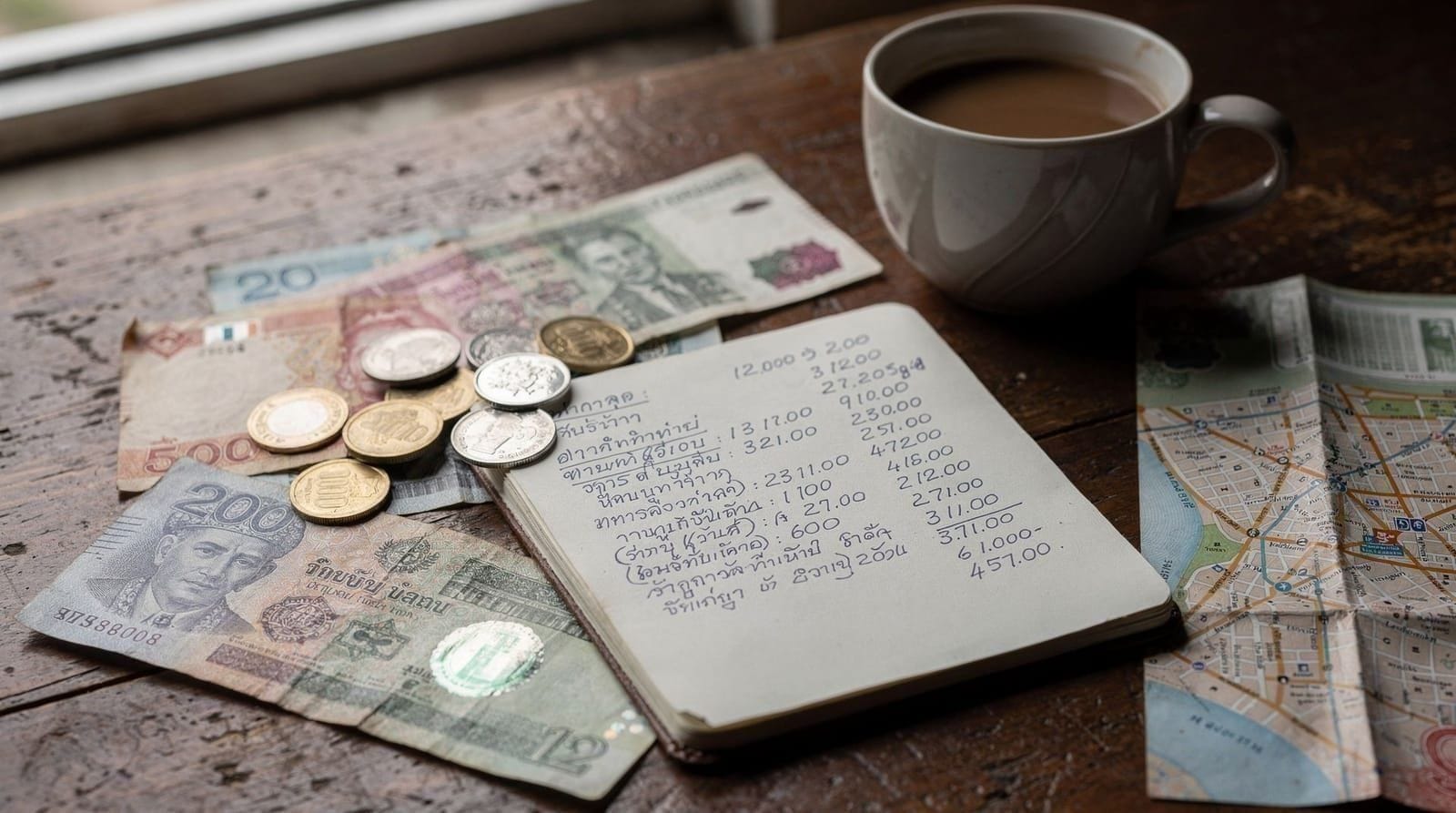
Phuket food guide: what to eat, where, and what to avoid
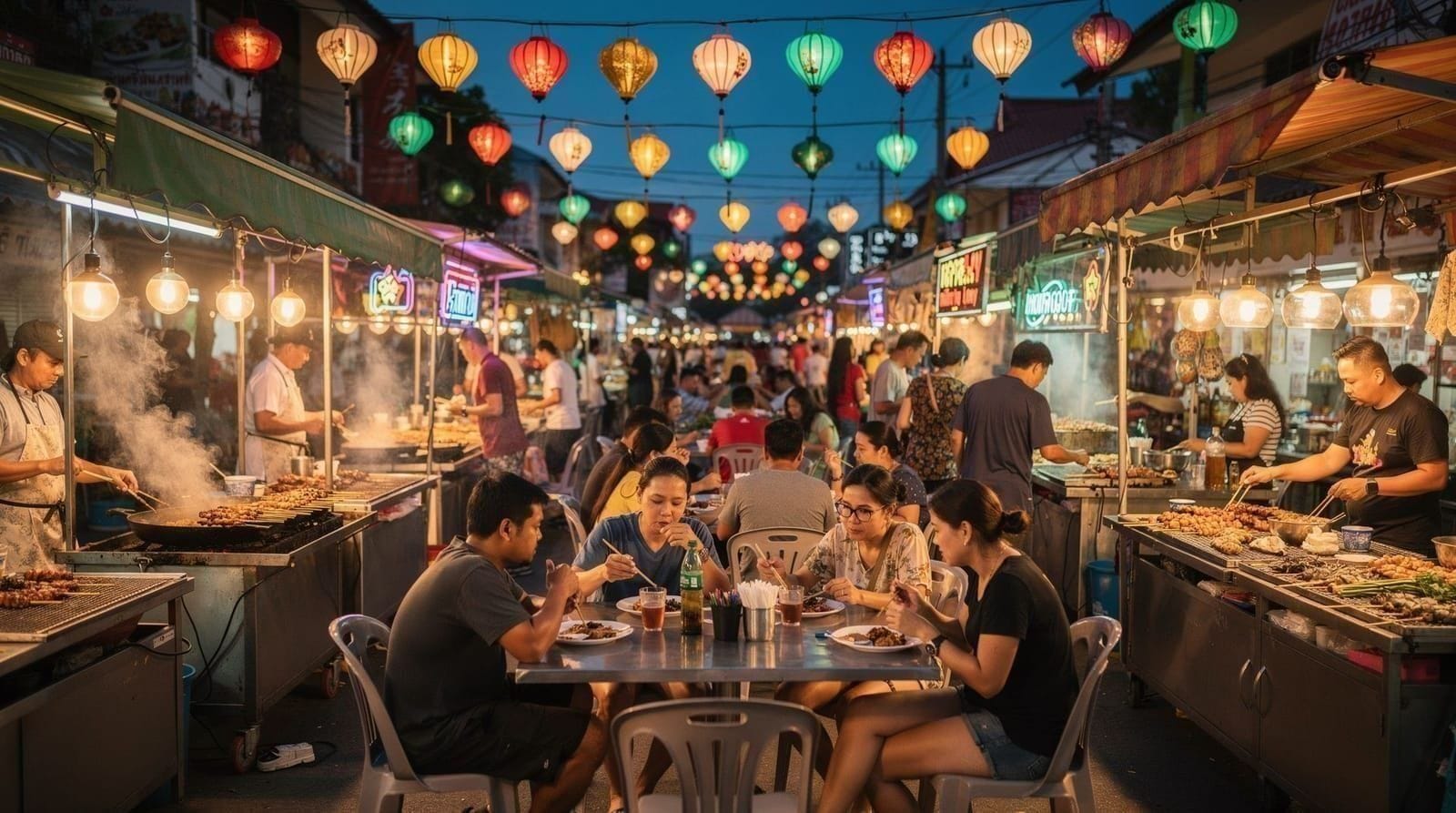
Phuket: Old town street food walking tour
What is Phuket famous for food-wise?
Phuket has a distinct Hokkien Chinese-Thai fusion cuisine shaped by centuries of Peranakan and Baba-Nyonya settlement. Signature dishes include moo hong (slow-braised pork belly), oh tao (oyster and taro cake), and massaman curry. Add Andaman seafood and one of Thailand's best street-food scenes centred on Phuket Old Town, and you have a food culture that stands apart from Bangkok or Chiang Mai.
Phuket’s food scene is the single most underrated thing about the island. Visitors who never stray from Bangla Road restaurants leave thinking Thai food is mediocre — which is a profound misreading. The real eating happens in Phuket Old Town, at roadside stalls in Rawai, and at the markets that most package tourists never find. This guide covers what to eat, where to find it, and where the tourist traps are.
| Where | Best eating: Old Town, Rawai; skip: Bangla Road |
| Cost | Around 60–200 THB local, 300–900 THB sit-down for two |
| Time needed | An evening for Old Town, a full day to cover several zones |
| Getting there | Scooter or Grab between zones; Old Town is walkable once there |
| Best time | Evenings after 5 pm, Sunday for the Walking Street market |
Phuket’s Hokkien Chinese-Thai food heritage
The food you eat in Phuket is different from what you’ll find in Bangkok, Chiang Mai, or even the Thai mainland. The island’s cuisine was shaped by Hokkien Chinese immigrants who arrived as tin miners and traders from the 18th century onward, integrating with local Malay and Thai communities to create something genuinely distinctive.
This produced dishes like moo hong — slow-braised pork belly simmered in soy sauce, cinnamon, pepper, and palm sugar until the collagen breaks down into a sticky, deeply savoury glaze. It’s one of those dishes that sounds simple on a menu and then quietly becomes the thing you’re thinking about on the flight home.
Oh tao (also written o-tao) is another Phuket original: a crispy-edged pancake made with oysters, taro, and bean sprouts bound with egg and a starchy batter. The texture is unlike anything else in Thai cuisine — crispy outside, yielding and slightly gelatinous inside — and it’s almost impossible to find in the same form elsewhere.
The Baba-Nyonya (Peranakan) heritage also produced khanom jeen served with a fish-based gaeng kua curry that is noticeably different from the coconut-milk-heavy versions tourist restaurants tend to serve, and popiah — fresh spring rolls filled with jicama, prawn, and egg that turn up at Old Town night markets.
What tourists typically encounter — pad thai, green curry, massaman — is here too, and done well at good local places. But chasing only those dishes in Phuket is like visiting Rome and eating only pizza.
The essential dishes to try
Moo hong (หมูฮ้อง): slow-braised pork belly, soy, cinnamon. Find it at shophouses in Old Town. Tu Kab Khao on Phang Nga Road is the most celebrated, but smaller stalls do credible versions at a fraction of the price.
Oh tao (โอ้เตา): oyster-taro pancake. Available at Malin Plaza in Patong (a rare genuine market amid the tourist zones) and at the Sunday Walking Street on Thalang Road.
Gaeng som (แกงส้ม): a sharp, sour, turmeric-yellow curry with fish or prawns. The Phuket version is distinctly more sour and less sweet than the tourist-friendly versions. Roughly 80–120 THB (2.50–3.70 USD) at local restaurants.
Khanom jeen nam ya: rice noodles with fish curry sauce, served with fresh vegetables and herbs. A classic morning market dish, 50–80 THB (1.50–2.50 USD).
Massaman curry: Phuket’s version uses local aromatics and is often made with beef short rib rather than the chicken used in tourist-friendly adaptations. A good portion with rice is 150–200 THB (4.60–6.15 USD) at a proper restaurant.
Roti with banana and condensed milk: not unique to Phuket but done exceptionally well at the mobile carts that appear in Old Town from around 5 pm. One roti costs 40–60 THB (1.25–1.85 USD) and the technique — stretching dough paper thin, frying in clarified butter, folding around filling — is worth watching.
Pad see ew and pad kee mao (drunken noodles): flat rice noodles stir-fried at high heat, common at local shophouses. When cooked over a real flame by a cook who knows what they’re doing, the smoky “wok breath” is something mass-produced versions can’t replicate.
Where to eat by zone
Phuket Old Town
Old Town is where the real food scene is. The core area around Thalang Road, Phang Nga Road, and the adjacent sois has the highest concentration of good eating on the island.
Tu Kab Khao (Phang Nga Road): a restored Sino-Portuguese shophouse serving traditional Phuket cuisine. Moo hong, gaeng som, and por pia tod (fried spring rolls) are all well executed. Budget around 600–900 THB (18.40–27.60 USD) for two with drinks. A bit upscale for Old Town but worth it once.
Kopitiam by Wilai (Thalang Road): a genuine kopitiam (coffee shop) run by the same family for generations. The kopi (robust robusta coffee brewed through a sock filter) and the morning noodle dishes are the point. Arrive before 10 am for the best selection. Under 150 THB (4.60 USD) per person.
Random roti carts on Thalang Road after 6 pm: no specific name needed — follow the smell of clarified butter. These operate from small carts and serve both savoury (egg, cheese) and sweet (banana, Nutella, condensed milk) versions.
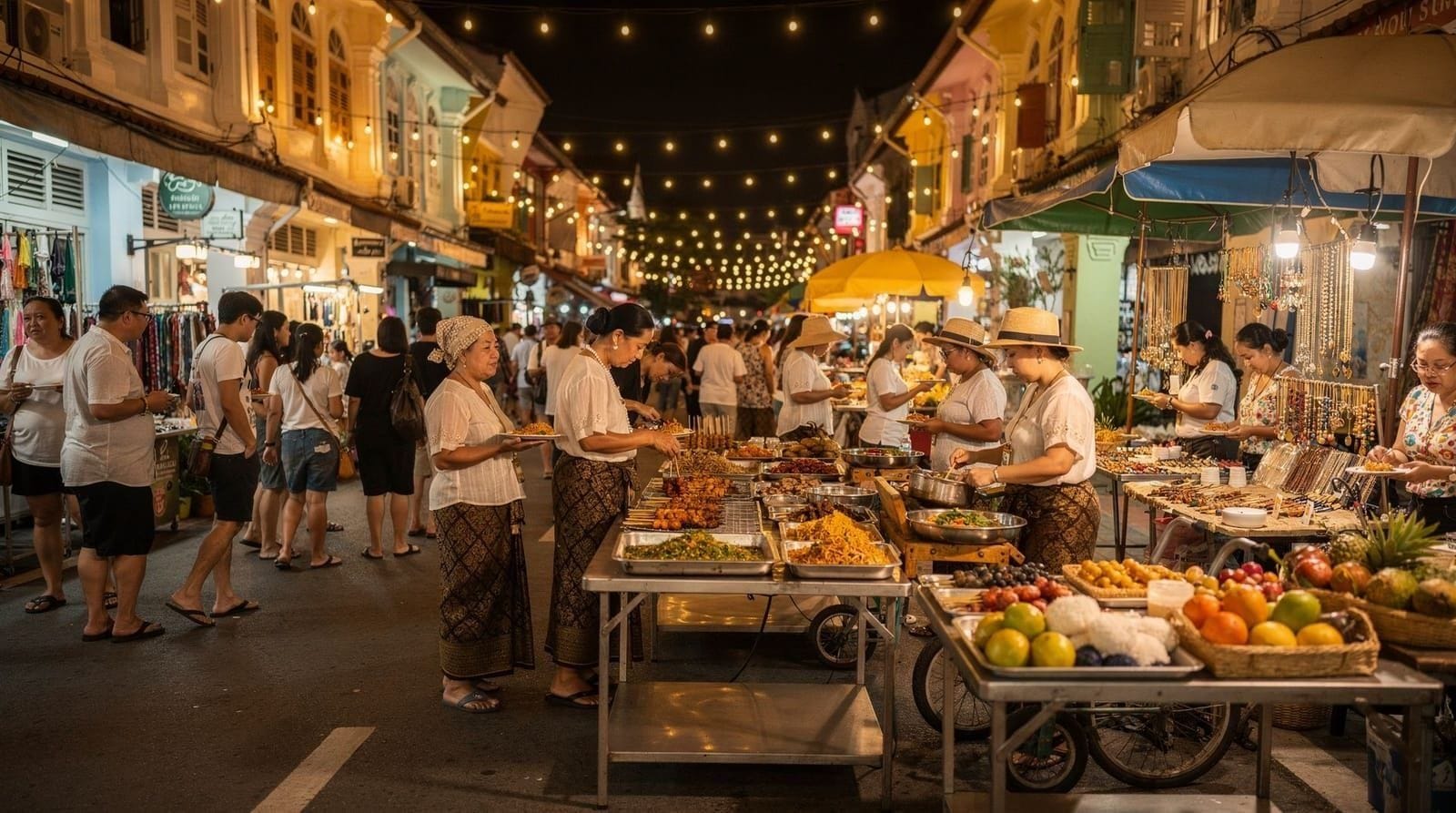
Sunday Walking Street / Thalang Road market: every Sunday from roughly 4 pm until 10 pm, the street closes to traffic and becomes a food market covering oh tao, khanom jeen, satay, fresh fruit, and more. This is the single best value food experience on the island for most visitors.
Phuket Old Town street food walking tour (evening)Rawai and the south coast
Rawai is where many of Phuket’s long-term expats and non-tourist residents eat. The area around Rawai Seafood Market is the exception to the by-weight tourist trap rule: it’s a working fishing community where the seafood is genuinely fresh and prices are more transparent than at tourist beaches.
The model at Rawai Seafood: you choose your fish, crab, or prawns from the vendors on the pier, agree a price per kilo before purchase, then take your haul to one of the adjacent restaurants that will cook it for you for a flat fee (usually 50–100 THB per dish). Total cost for two people including rice and vegetables: 500–900 THB (15.30–27.60 USD) depending on what you pick.
This is different from the tourist-trap version at Patong or Karon beaches, where prices are opaque and the weight is sometimes manipulated. Always agree the price per kilo in writing (or photograph the scale) at any seafood-by-weight setup.
Nikita’s (Rawai beachfront): reliable Thai and international, consistent quality, honest pricing. Roughly 300–500 THB (9.20–15.30 USD) per person.
Kata and Karon
Kata Beach and Karon Beach have decent local eating away from the main tourist strip. The residential streets behind both beaches have shophouses serving standard Thai at 80–150 THB (2.50–4.60 USD) per dish. These are unmarked, generally cash only, and usually signposted only in Thai — the translation apps on your phone work fine for menus.
Kata itself has a small night market near the beach road on certain nights (irregular schedule — locals will know). It’s much less touristic than the Sunday Walking Street and serves genuine local food.
Patong and Bangla Road
Be honest with yourself here: Patong is not where you go to eat well. The restaurants on and immediately adjacent to Bangla Road charge 2–4× local prices for food that is calibrated to tourist expectations of what “Thai food” tastes like — sweeter, milder, more photogenic. This isn’t necessarily bad if you want a predictable experience, but it represents poor value compared to alternatives 15 minutes away.
The exception within Patong: Malin Plaza (off Rat-U-Thit Road) operates as a local-ish market with food stalls serving oh tao, noodle soups, and grilled meats at genuine prices. It’s in the heart of Patong and easy to miss among the tourist-facing restaurants.
Kamala Beach and Bang Tao Beach to the north of Patong are both slightly better for eating honestly, with local shophouses mixed into the resort infrastructure.
The seafood-by-weight tourist trap
This deserves its own section because it catches so many visitors. The setup looks appealing: a display of fresh seafood on ice, you point at what you want, and they cook it. But at tourist-facing restaurants on Patong, Karon, and some spots on Kata Beach:
- Prices per kilo are often posted in small print and are 3–5× what the same seafood costs at Rawai market
- Crab and lobster in particular are weighed “live” (including shell weight, which varies considerably)
- The cooking fee is additional
- The final bill regularly surprises visitors
This is not illegal and the food is not necessarily bad — but the experience of agreeing to “fresh catch” and receiving a 2,000 THB (61.35 USD) bill for one crab is extremely common. If you want to eat seafood this way, do it at Rawai (where the market dynamic keeps prices more honest) or verify prices in writing before committing.
Phuket Old Town food tasting — 14 dishes walking tourMarkets worth visiting for food
Banzaan Fresh Market (Patong): the ground floor is a working wet market with fresh produce, spices, and seafood at local prices — one of the few genuinely local experiences within Patong. The upper floor is a food court. Worth a morning visit even if you’re not buying.
Chillva Market (Yaowarat Road, near Phuket Town): a covered night market that runs Tuesday through Sunday, with a good mix of food stalls, clothing, and handicrafts. More young-local than tourist in character.
Naka Weekend Market (Saturday–Sunday near Central Festival): large, sprawling, and primarily local. Cooked food stalls are cheap and very good. Requires a scooter or Grab to reach.
For a guided introduction to the markets and Old Town eating, a food tour is genuinely useful for first-timers who don’t know what they’re looking at:
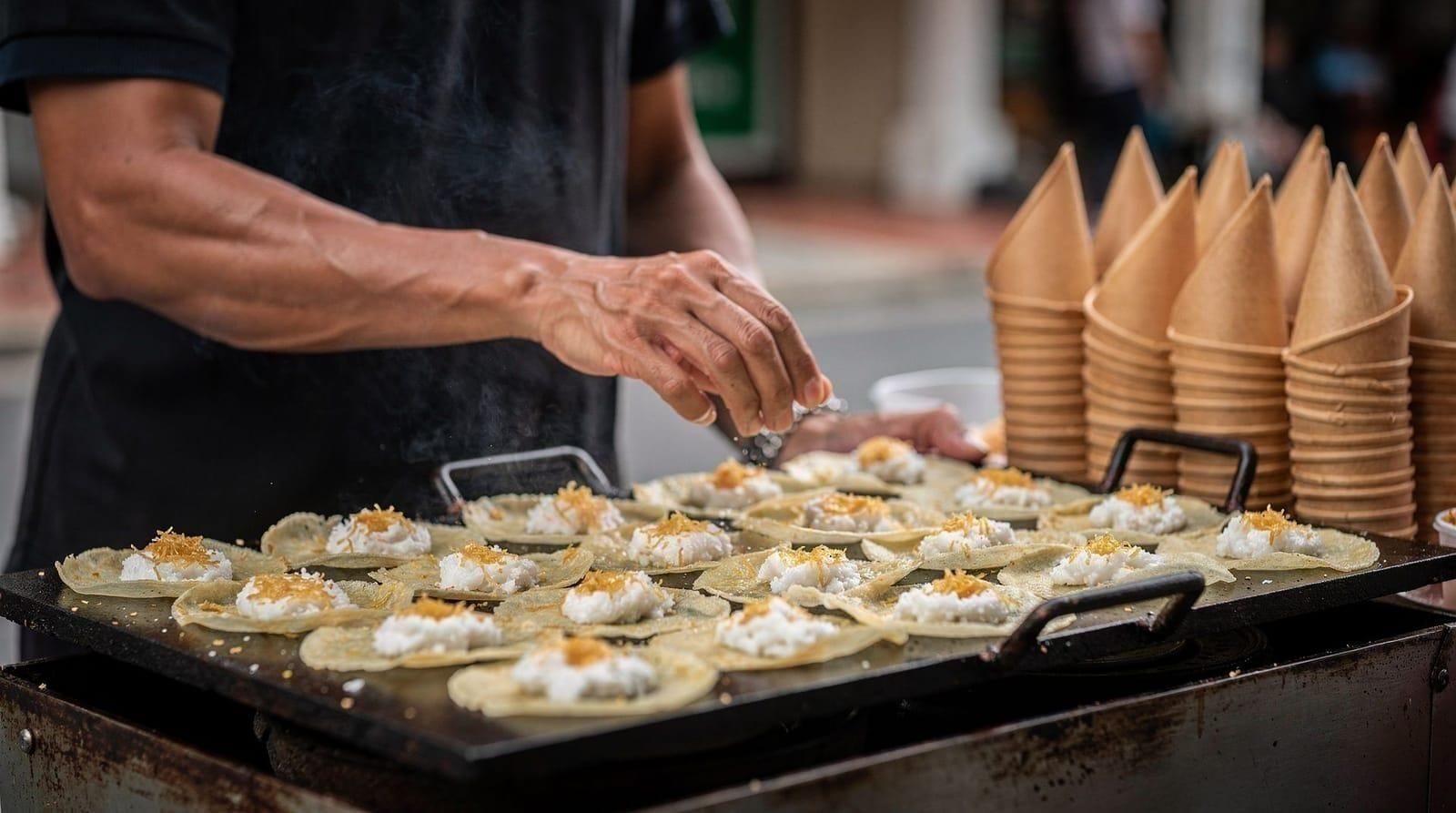
Southern Thai flavors food tour — local markets and heritage dishesCooking classes as food education
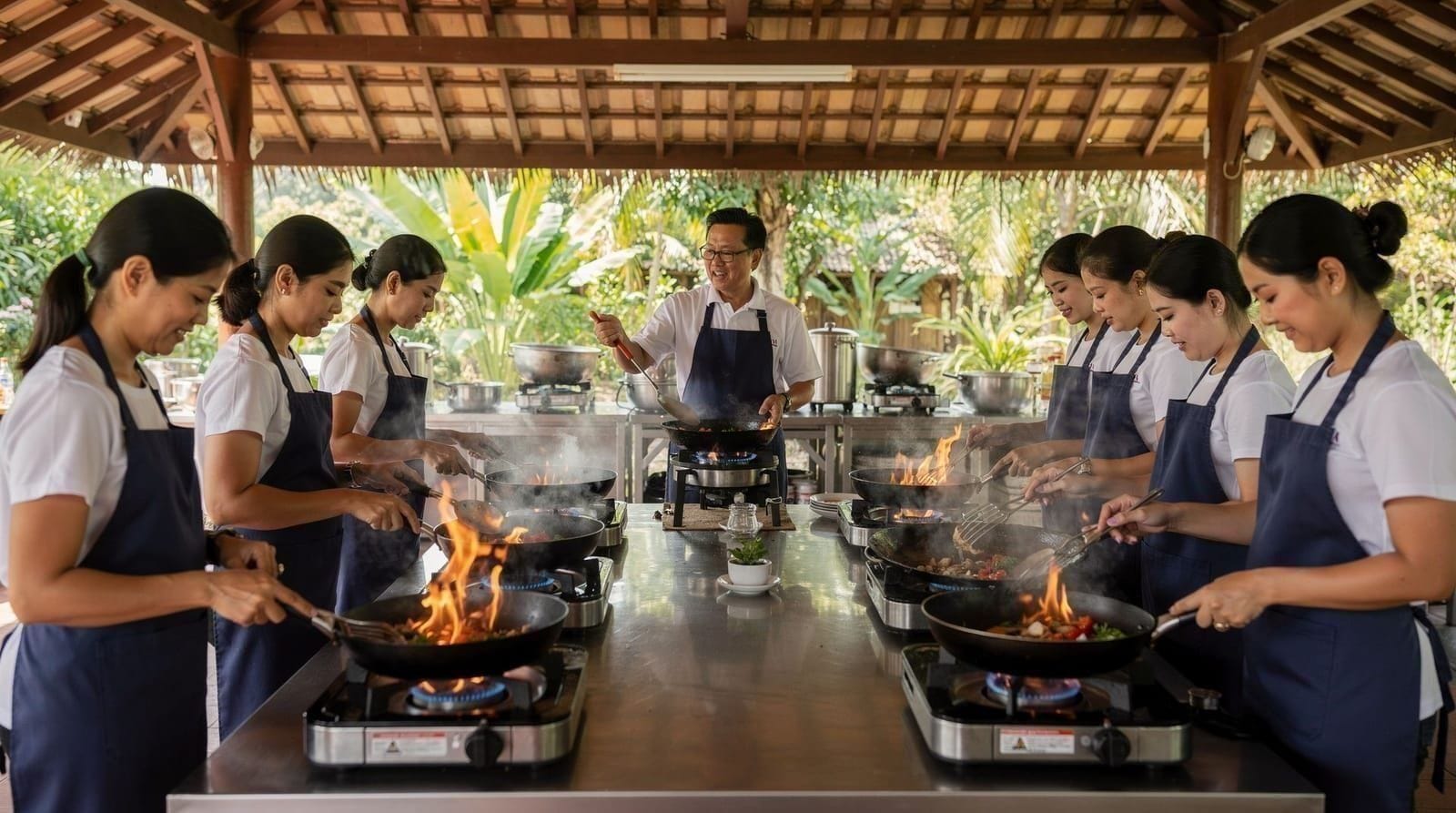
Taking a half-day cooking class that includes a market visit is one of the most efficient ways to understand the local cuisine and take something useful home. Good classes at places like Chalong or Rawai will walk you through identifying fresh galangal versus ginger, why Thai basil is not Italian basil, and how massaman paste is built from scratch.
Classes run from around 1,500 THB (46 USD) for a half-day to 3,500 THB (107 USD) for a full day at upscale schools. The full Thai cooking classes guide covers the specific options in detail.
Easy Thai cooking class with market visit — half dayPractical food notes
Prices to benchmark: a bowl of noodle soup or a rice dish at a genuine local shophouse costs 60–100 THB (1.85–3.07 USD). Anything significantly above that on a street-facing menu, in a tourist area, without explanatory reason, is tourist pricing. Use 7-Eleven for snacks and water — iced coffee from the machine is 25 THB (0.77 USD) and genuinely decent.
Spice: Thai food in tourist areas is routinely dialled down for international palates. If you want authentic heat, say “phet mak” (very spicy) or simply ask for it “Thai style.” The kitchen will often look pleasantly surprised and produce something much better.
Allergies: peanuts appear in many dishes without being listed; fish sauce and shrimp paste are near-universal in sauces. Shellfish appear in many pastes even in “vegetable” dishes. The Buddhist “jay” designation means genuinely animal-free.
Cash: street stalls and markets are cash only. ATMs are widely available. The standard tourist-area trap of using an ATM that charges 220 THB (6.75 USD) in fees applies — use a Kasikorn or Bangkok Bank ATM and check your home bank’s international fee situation before you go. Full details in the money guide for Phuket.
Getting around to eat: a scooter is the most efficient way to reach good food in different parts of the island. Grab works well for point-to-point trips but can be slow to match in low-traffic periods. The getting around Phuket guide covers options.
A one-day eating itinerary for first-timers
If you only have one day to prioritise food, this order works well without excessive backtracking. Start with breakfast noodles or kopi at a Thalang Road kopitiam around 8–9 am, before the heat and crowds build. Spend the late morning at Banzaan Fresh Market in Patong to see the produce and seafood that actually stocks local kitchens — go hungry, since the food court upstairs is a good lunch option.
In the afternoon, head south to Rawai for the seafood market model: pick your catch, agree the price per kilo, and have it cooked to order. Finish back in Phuket Old Town in the evening, timed for the Sunday Walking Street if your visit lines up with a Sunday, or the regular Thalang Road roti carts on any other night. This loop covers the four most distinct eating experiences on the island in a single day without needing to double back across town.
Vegetarian and dietary considerations in more depth
Beyond the October Vegetarian Festival, Phuket’s everyday vegetarian scene is genuinely workable if you know the right phrase and the right places. Say “jay” (เจ) rather than just “vegetarian” — it signals the strict Buddhist standard that excludes fish sauce, shrimp paste, and even garlic or onion in the most traditional interpretation, and most cooks understand it as a firm request rather than a suggestion. Old Town has several permanently jay restaurants recognisable by yellow “เจ” banners, most visible in the run-up to the Vegetarian Festival but often open year-round in a reduced form. For gluten concerns, soy sauce is the main hidden risk in braised dishes like moo hong; grilled and steamed dishes are generally safer defaults.
Drinks worth trying alongside the food
Phuket’s drink scene deserves a mention beyond the standard Chang or Singha beer. Thai iced tea (cha yen) — strong black tea, condensed milk, and ice — is a genuine local staple and pairs surprisingly well with spicy dishes. Fresh coconut water, sold whole with a straw for around 40–60 THB from roadside carts, is both hydrating and refreshing in the heat, and the young coconut flesh is worth scooping out once you finish the water.
For something stronger, Sang Som and Hong Thong are the standard Thai rums, usually mixed with soda and lime as a “Sangsom bucket” in beach bars — cheap and effective, if not exactly refined. Old Town’s café scene has also produced a handful of genuinely excellent specialty coffee shops in recent years, a contrast to the traditional kopitiam robusta brew, worth seeking out if you want a modern coffee alongside the heritage version.
Frequently asked questions about Phuket food guide: what to eat, where, and what to avoid
What is the most iconic Phuket dish?
Where is the best street food in Phuket?
Is seafood by weight worth it in Phuket?
How much does street food cost in Phuket?
What should I absolutely eat in Phuket?
Are cooking classes worth doing in Phuket?
What food should I avoid in Phuket?
Is vegetarian food easy to find in Phuket?
Top experiences
Bookable activities with verified prices and instant confirmation on GetYourGuide.