Best night markets in Phuket: Chillva, Sunday Walking Street, and more
Phuket: Thalang Road Sunday night market tour
Which night market is best in Phuket?
The Sunday Walking Street on Thalang Road in Phuket Old Town is the best all-round market — atmospheric Sino-Portuguese streetscape, genuine local food at street prices, and a healthy mix of locals and tourists. For a more purely local experience with lower prices and almost no tourist footprint, the Naka Weekend Market near Central Festival on Saturday and Sunday evenings is the better option.
Night markets are the best cheap-eat, people-watching infrastructure Thailand has and Phuket’s version is better than most visitors expect. The island has six markets worth knowing about, ranging from a genuinely atmospheric street fair in a UNESCO-recognized heritage zone to a sprawling local weekend market that most tourists never find. This guide covers all of them with honest assessments of tourist-to-local ratios, prices, and what to eat.
| Best overall | Sunday Walking Street, Thalang Road |
| Most local | Naka Weekend Market |
| Most convenient (Patong) | Malin Plaza |
| Cost | Free entry; meals typically 40–150 THB |
| Payment | Cash strongly preferred at every market |
The Sunday Walking Street — Old Town, Thalang Road
When: Every Sunday, 4 pm – 10 pm Where: Thalang Road, Phuket Old Town (the road closes to traffic from late afternoon) Tourist/local ratio: about 40% tourist, 60% local — the most balanced of all Phuket’s markets
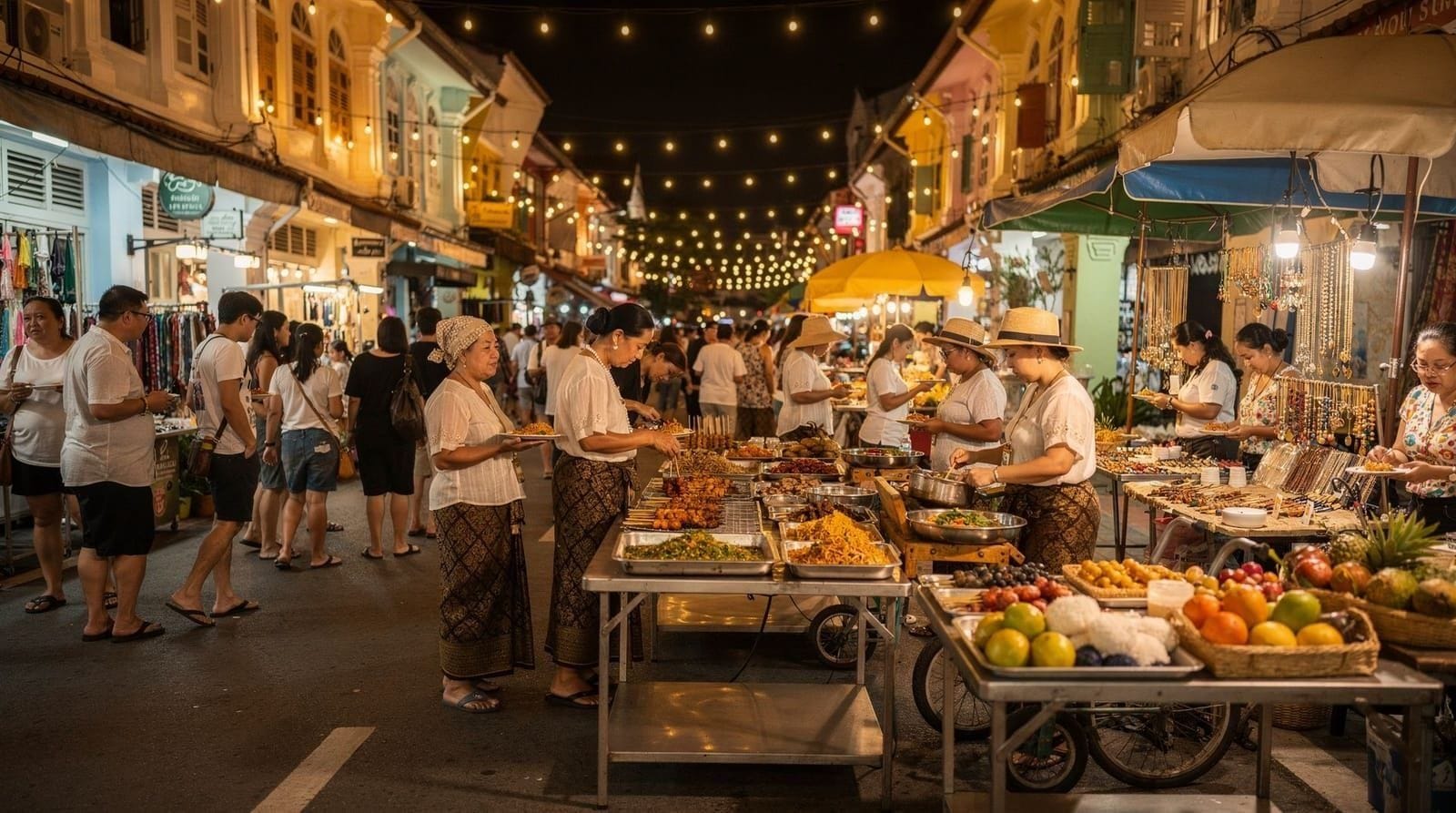
The Sunday Walking Street is the best single evening activity in Phuket for most visitors. Thalang Road is the main artery of the Sino-Portuguese Old Town — a UNESCO-recognized historic district of shophouses built by Hokkien Chinese merchants in the 19th century. On Sunday evenings the street closes to traffic, stalls set up along both sides, and the neighbourhood transforms into a food-forward night fair with a genuine local crowd mixed in.
The food here is substantially better than at any tourist restaurant in Patong, at prices that feel almost absurdly low. Expect:
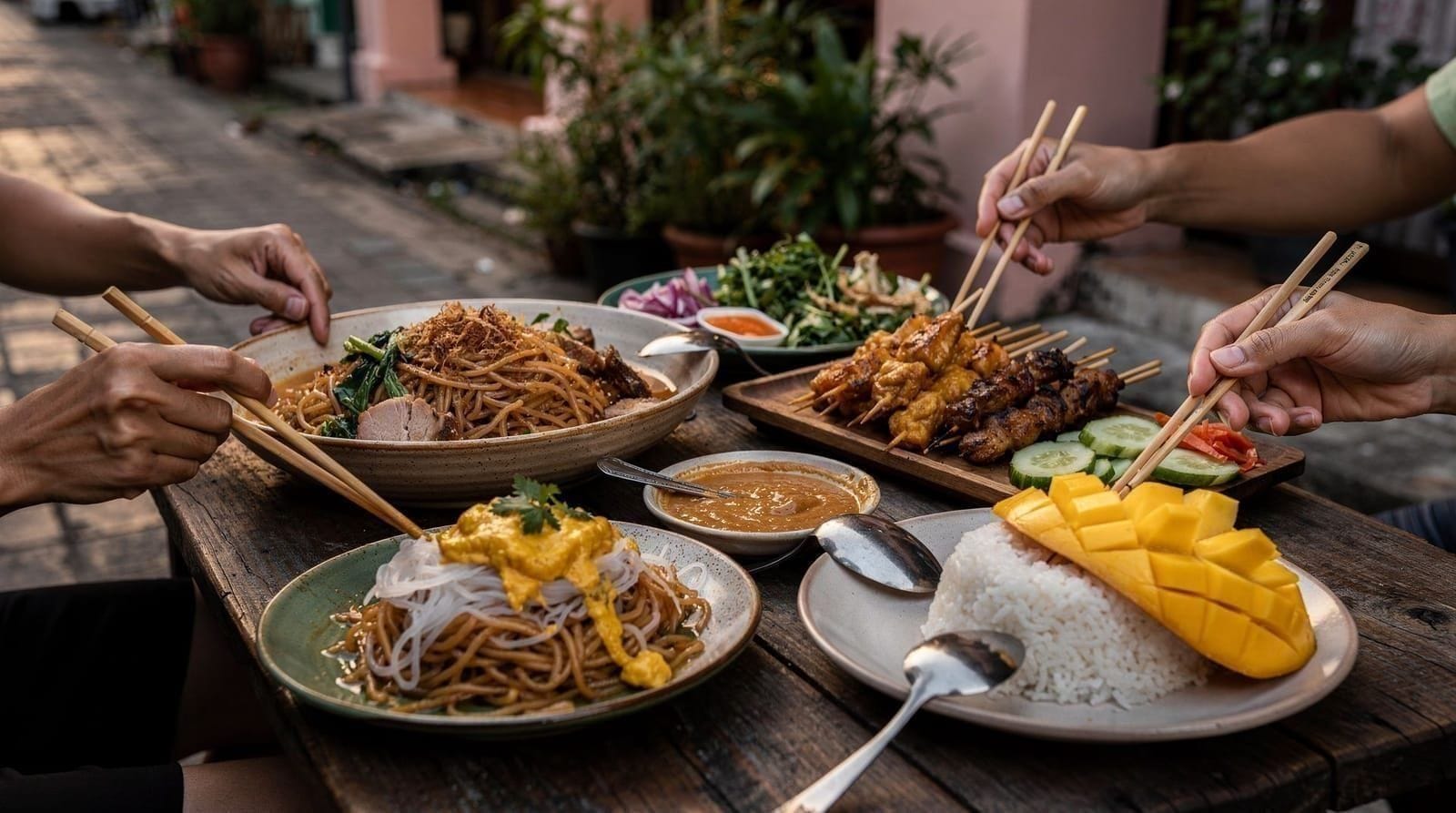
- Oh tao (oyster-taro pancake): 60–80 THB (1.85–2.45 USD) per portion
- Moo ping (grilled pork skewers on bamboo sticks): 10–15 THB (0.30–0.45 USD) per skewer
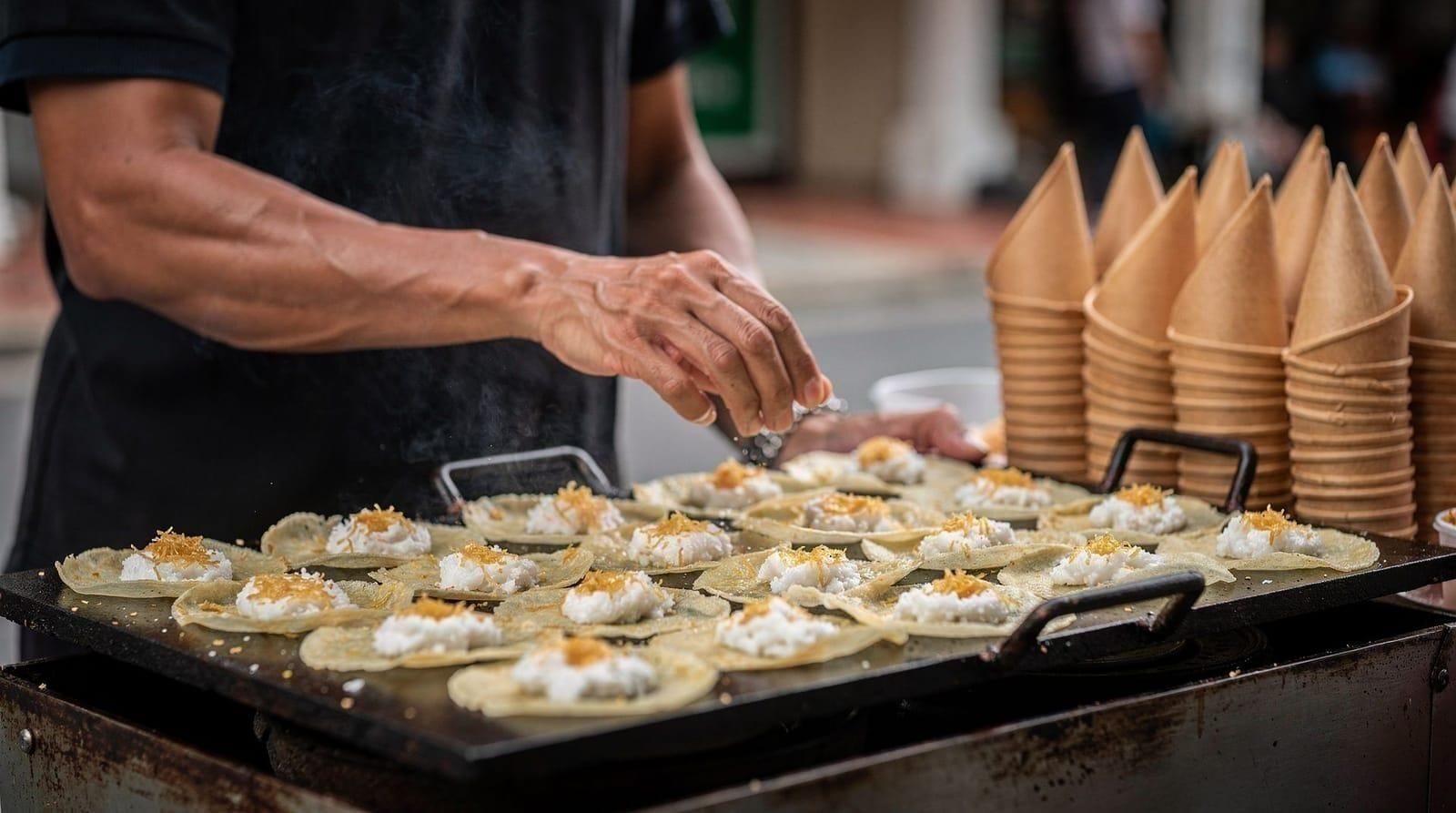
- Khanom krok (small coconut rice cakes cooked in a cast-iron mould): 50–70 THB (1.55–2.15 USD) for a tray
- Fresh-cut fruit with chili-salt powder: 40–60 THB (1.25–1.85 USD)
- Moo hong (braised pork belly) in small portions: 80–120 THB (2.45–3.70 USD)
- Rotee (thin fried pancake with various fillings): 40–60 THB (1.25–1.85 USD)
Beyond food, the street has stalls selling local crafts, vintage-style posters, fabric, herbal products, and handmade jewellery. Quality varies — the best craft items are genuinely local; the worst are the same tourist-market fare available everywhere. The Sino-Portuguese shophouse backdrop is reliably photogenic: faded pastel facades, wooden shutters, and lantern-lit alleys that reward a short detour off the main road.
Practical notes: arrive by 5:30 pm to avoid the densest crowds and get the widest food selection. By 8:30–9 pm some stalls begin packing up. There is no entry fee. Parking is limited — come by Grab, scooter, or on foot from anywhere in Old Town.
Sunday Walking Street guided food tour — Thalang Road, Old TownChillva Market — Yaowarat Road
When: Tuesday through Sunday, approximately 5 pm – 10 pm (closed Mondays) Where: Yaowarat Road (Phuket Town, not far from the town centre) Tourist/local ratio: roughly 25% tourist, 75% local
Chillva Market is a covered container-style market with a deliberately hip design — shipping containers converted into bar units and food stalls, string lighting overhead, and a young-local crowd that is notably different from the tourist markets on the west coast. This is where Phuket’s university students and young professionals eat on weekday evenings. It’s a useful complement to the Phuket food guide if you want to sample the full range of local eating beyond Old Town.
The food at Chillva skews more diverse than the traditional-focused Old Town market: besides Thai stalls you’ll find Japanese street food, Korean fried chicken, craft cocktail bars, and fusion dishes. If you want to experience what young Thais actually eat on a Tuesday night, Chillva is the answer.
Prices are genuinely low:
- Pad kee mao (drunken noodles): 70–100 THB (2.15–3.07 USD)
- Grilled corn: 30–50 THB (0.92–1.55 USD)
- Fresh-squeezed juice: 40–60 THB (1.25–1.85 USD)
- Craft beer from local vendors: 80–150 THB (2.45–4.60 USD)
There is also a secondary section with clothing, accessories, and handmade goods — skewing younger and trendier than the Old Town market’s craft stalls.
Practical notes: Chillva is about 10–15 minutes by Grab from the central Patong hotel strip, and is far enough from the tourist core that you’ll primarily meet Thai visitors and Phuket residents. It’s a useful option on non-Sunday evenings when the Walking Street is closed. Cash strongly preferred, though a few stalls accept QR payment.
Naka Weekend Market (Naka Market / Phuket Weekend Market)
When: Saturday and Sunday, roughly 4 pm – 9 pm Where: Near Central Festival Phuket (north of Phuket Town), junction of Wichitkasem and Chao Fa West roads Tourist/local ratio: approximately 10% tourist, 90% local
Naka is the market most visitors to Phuket never reach — which is a mistake, because it’s one of the best. It operates on an open field, covering hundreds of stalls across food, clothing, plants, pets, electronics, and household goods. Think of it as a genuinely functional weekly market serving Phuket’s permanent residents, with food stalls embedded throughout.
The food at Naka is exceptional value: this is where you’ll find the most honest prices on the island because the clientele is primarily local Thai families doing their weekend shopping. Dishes that cost 100–150 THB on the tourist strip cost 50–80 THB here. A full meal for two — grilled seafood, rice, vegetables, dessert, drinks — can easily come in under 400 THB (12.30 USD).
The scale can feel overwhelming on a first visit. A practical approach: enter, walk the full perimeter once to map what’s there, then double back to eat. The food section concentrates toward the centre and one of the ends.
Practical notes: a scooter or Grab is required — Naka is not walkable from most hotel areas. The scooter rental guide covers what to know before hiring one. The market gets very busy after 5 pm on Sundays. The ground is uneven in places; wear shoes rather than flip-flops. Bring a bag for any shopping — vendors have plastic bags but the etiquette is to bring your own.
Malin Plaza — Patong
When: Nightly, approximately 5 pm – midnight (some stalls open earlier) Where: Off Rat-U-Thit 200 Pi Road, central Patong Tourist/local ratio: about 50% tourist, 50% local
Malin Plaza is the best eating option within walking distance for most Patong-based visitors. It’s a permanent covered market that has operated for years as a counterweight to the overpriced tourist restaurants on the main beach strip — real Thai food at close-to-local prices.
The layout is a single large covered hall with stalls on both sides and plastic tables in the centre. The atmosphere is casual, slightly cramped, and entirely without pretension. This is what the tourist restaurants around Bangla Road are not: honest, functional, and good value.
Signature items at Malin Plaza:
- Oh tao: one of the best versions in Patong, 60–80 THB (1.85–2.45 USD)
- Pad thai with fresh prawns: 80–120 THB (2.45–3.70 USD), significantly better than the same dish at tourist restaurants charging 200+ THB
- Tom yum soup: 100–150 THB (3.07–4.60 USD) for a full bowl
- Grilled whole fish: priced by weight but at notably more honest rates than beach restaurants — ask the price before ordering
The market is within walking distance of most central Patong hotels. It’s the most convenient genuine food option if you’re based in Patong and don’t want to travel across town to eat well.
Phuket Old Town street food walking tour — guided eveningIndy Market — Saphan Hin area
When: Friday through Sunday evenings (hours vary seasonally, roughly 5 pm – 10 pm) Where: Near Saphan Hin public park, south Phuket Town Tourist/local ratio: approximately 20% tourist, 80% local
Indy Market is smaller and less well-known than Chillva or Naka but has developed a loyal following among Phuket Town residents for its mix of live music, street food, and craft goods. It’s associated with the creative community around Phuket Old Town and attracts a slightly more arts-oriented crowd than the purely food-focused markets.
Live acoustic music is common (varies by weekend — some evenings have a scheduled act, others don’t). Food stalls are authentic and cheap. It’s a good option if you’re spending a Friday or Saturday evening in Phuket Town and want something more relaxed than the Sunday Walking Street.
Indy Market is irregular enough in its scheduling that checking locally (ask your hotel, or search the market’s social media) before making a trip is worthwhile. It does not always operate during low season.
Weekend Night Bazaar — Saphan Hin
When: Weekend evenings (primarily Saturday), variable hours Where: Saphan Hin waterfront park
The Weekend Bazaar near Saphan Hin is a looser, less organised weekend market that combines food stalls with local vendors selling miscellaneous goods. It’s primarily a neighbourhood event rather than a destination market — most visitors who end up here arrive as part of a broader evening in the Phuket Town area rather than making a dedicated trip.
Worth adding to an evening if you’re already at Saphan Hin, but not worth a special journey from the west-coast beach zones.
Night market strategy: what to actually do
For a first-time visitor with limited time, the optimal market plan is straightforward:
- Sunday evening: Sunday Walking Street, Thalang Road. Arrive at 5 pm, eat as you walk, spend two hours. Best introduction to Old Town food culture. Pair with the Phuket Old Town guide to make an evening of it.
- Any other evening: Chillva Market (Tue–Sun) for a more local, more casual experience.
- If you have a scooter or are willing to Grab: Naka Weekend Market on Saturday or Sunday for the most authentically local shopping and eating experience on the island.
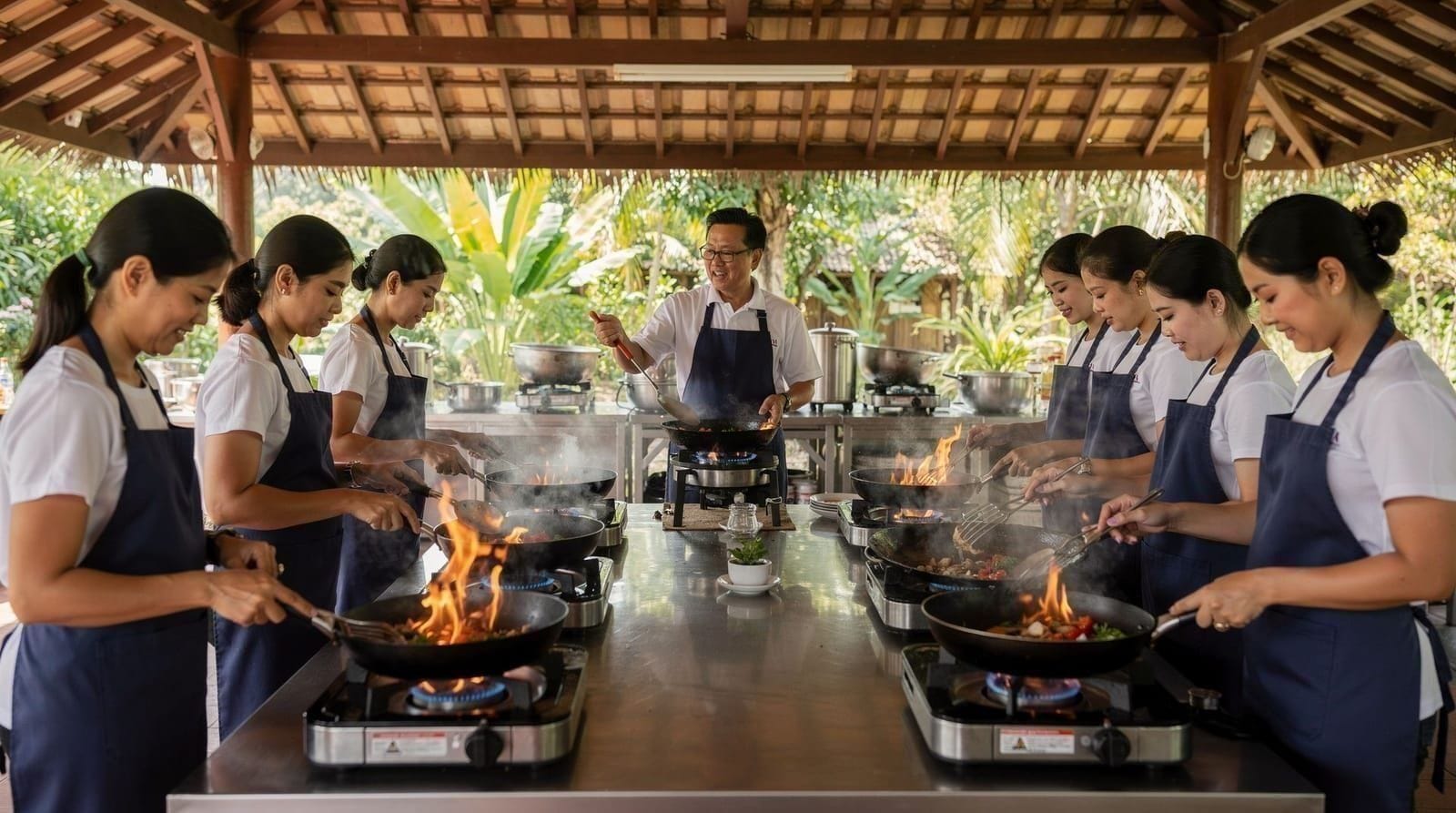
Markets pair naturally with other evening activities. Patong nightlife is nearby if you want to continue the evening after Malin Plaza; or end a market evening with a Thai cooking class the following morning to learn how the dishes you just ate are made.
Phuket city tour with night market visit — full dayPractical tips for all Phuket markets
Cash: bring more than you think you need in small denominations. Vendors change notes up to 100 THB easily; 500 THB and above can be difficult to break at smaller stalls.
Reusable bag: markets generate significant plastic waste and a reusable bag is genuinely useful for any food or shopping you accumulate.
Timing: arrive at the start time for best food selection and fewer crowds. The final hour before closing has the lowest crowd density but the most depleted stalls.
Eating etiquette: standing and eating while walking is completely normal at Thai night markets. Find a plastic stool at a communal table if you want to sit — these are almost always available and free. Don’t reserve tables with bags when you’re not sitting.
Pointing and ordering: Thai market vendors in tourist-adjacent markets usually manage basic English. For purely local markets like Naka, a translation app works fine — the menus are primarily visual anyway (most stalls display food, not written menus). Reading the Thai culture and etiquette guide before visiting helps with basic interactions.
Transport: Getting around Phuket without a scooter requires planning — Grab is reliable but can have surge pricing after 9 pm when everyone leaves the markets simultaneously. Book your return ride before you’re ready to leave.
Weather: open-air markets like Naka can be affected by heavy rain. Chillva and Malin Plaza are covered. The Sunday Walking Street continues in light rain (vendors have canopies) but closes in storms.
For a guided introduction to the market circuit — especially useful if you want context on what you’re eating:
Customised Phuket night market tour — tailored to your interestsWhat makes Phuket’s markets different from Bangkok’s
Visitors arriving from Bangkok sometimes expect a scaled-down version of Chatuchak and are surprised by how different the experience actually is. Phuket’s markets are smaller in stall count but denser in food quality relative to shopping — the ratio here leans heavily toward eating rather than browsing for goods.
The Sunday Walking Street, for instance, can be walked end to end in about 20 minutes, which makes it far easier to orient yourself than in a sprawling Bangkok market where getting lost is part of the experience. This scale difference is a genuine advantage for a short island trip: you can realistically “do” two or three of Phuket’s markets across a week without any single visit eating an entire evening, something that isn’t practical with Bangkok’s larger markets.
Which market fits which trip
If you only have one evening free, the Sunday Walking Street is the safest bet — but it only runs on Sundays, so plan your week around it if possible. If your dates don’t line up with a Sunday, Chillva Market runs six nights a week and delivers a similarly local, low-pressure atmosphere without the Old Town crowds.
Travellers staying in Patong without a scooter should default to Malin Plaza on nights they don’t want to travel, and save Naka for a day when a Grab ride or scooter trip is already planned. Solo travellers and couples tend to enjoy Naka’s scale and anonymity; families with young children generally do better at the more contained Sunday Walking Street or Malin Plaza, where distances between stalls and toilets are shorter.
Frequently asked questions about Best night markets in Phuket: Chillva, Sunday Walking Street, and more
What are the best night markets in Phuket?
What days and hours do the Phuket night markets operate?
Is cash the only payment option at Phuket night markets?
Are night markets safe in Phuket?
What should I buy at Phuket night markets?
How do the Phuket night markets compare to Bangkok's markets?
Is the Sunday Walking Street worth visiting for tourists?
Top experiences
Bookable activities with verified prices and instant confirmation on GetYourGuide.