Phuket travel guide for first-timers (2026)
Phuket: Phi Phi, Maya Bay & Khai Island day tour by speedboat
What do first-time visitors to Phuket need to know?
Base yourself near Kata or Karon beach for the best balance of access and calm. Budget 2,500–3,500 THB/day mid-range, use Grab for transport, and book your Phi Phi day trip at least a day ahead in high season. Complete your Thailand Digital Arrival Card (TDAC) online before flying.
Your first trip to Phuket involves more decisions than most Southeast Asian destinations: which beach to base at, how to reach the islands, when to book, and how to navigate a place that’s simultaneously a genuine tropical paradise and a well-oiled tourist machine. This guide cuts through the noise.
| Best base for first-timers | Kata Beach |
| Budget (mid-range) | 2,500–3,500 THB/day |
| Transport | Grab for point-to-point, songthaews for budget routes |
| Book ahead in high season | Phi Phi / Phang Nga day trips, 1–2 days ahead |
| Before you fly | Complete the Thailand Digital Arrival Card (TDAC) online |
Before you leave home
Visa and TDAC. Since June 2026, EU, UK, US, Canadian, Australian, and New Zealand passport holders enter Thailand for 30 days visa-free. You must complete the Thailand Digital Arrival Card (TDAC) online within 72 hours before your flight. It’s free and takes 10 minutes — don’t skip it or you’ll face delays at immigration. For stays over 30 days, apply for a Thailand e-Visa in advance.
Health prep. Book appointments for hepatitis A/typhoid if you haven’t had them. Carry mosquito repellent with DEET — dengue is present year-round, especially in the rainy season. Drink only bottled or filtered water.
Travel insurance. Essential. Medical evacuation from Phuket to Bangkok or home is extremely expensive without coverage. Check that your policy covers scooter riding if you plan to rent one (many standard policies exclude it).
Choosing where to stay
The beach you pick shapes your entire trip. Phuket’s main beaches run down the west coast, each with a distinct character:
Kata Beach — Best overall for first-timers. The village is walkable, the water is calmer than Patong, there are good restaurants at every price point, and tour pickups are easy to arrange. Accommodation ranges from 600 THB guesthouses to 5,000 THB boutique hotels.
Karon Beach — Phuket’s longest beach, with softer sand and fewer beach hawkers than Patong. Quieter in the evenings, but fewer restaurant options within walking distance.
Patong — The island’s main tourist hub. Maximum amenities, maximum noise, maximum people. Suits party travellers and those who want to be in the middle of everything. Not relaxing.
Kamala — Between Patong and Surin, noticeably more upscale and quieter. Good if you want beach clubs and boutique restaurants without Patong’s chaos.
Bang Tao — Long quiet beach in the north, anchored by luxury resorts. Less to walk to, but peaceful and good for families. Laguna Phuket complex has multiple hotels.
If you’re primarily planning island day trips, Rawai in the south is close to Chalong Pier but has limited beach appeal. Kata or Karon give better beach access combined with pier access via Grab.
Getting from the airport
Phuket International Airport (HKT) is in the north of the island. Getting to southern beaches takes 45–75 minutes by road.
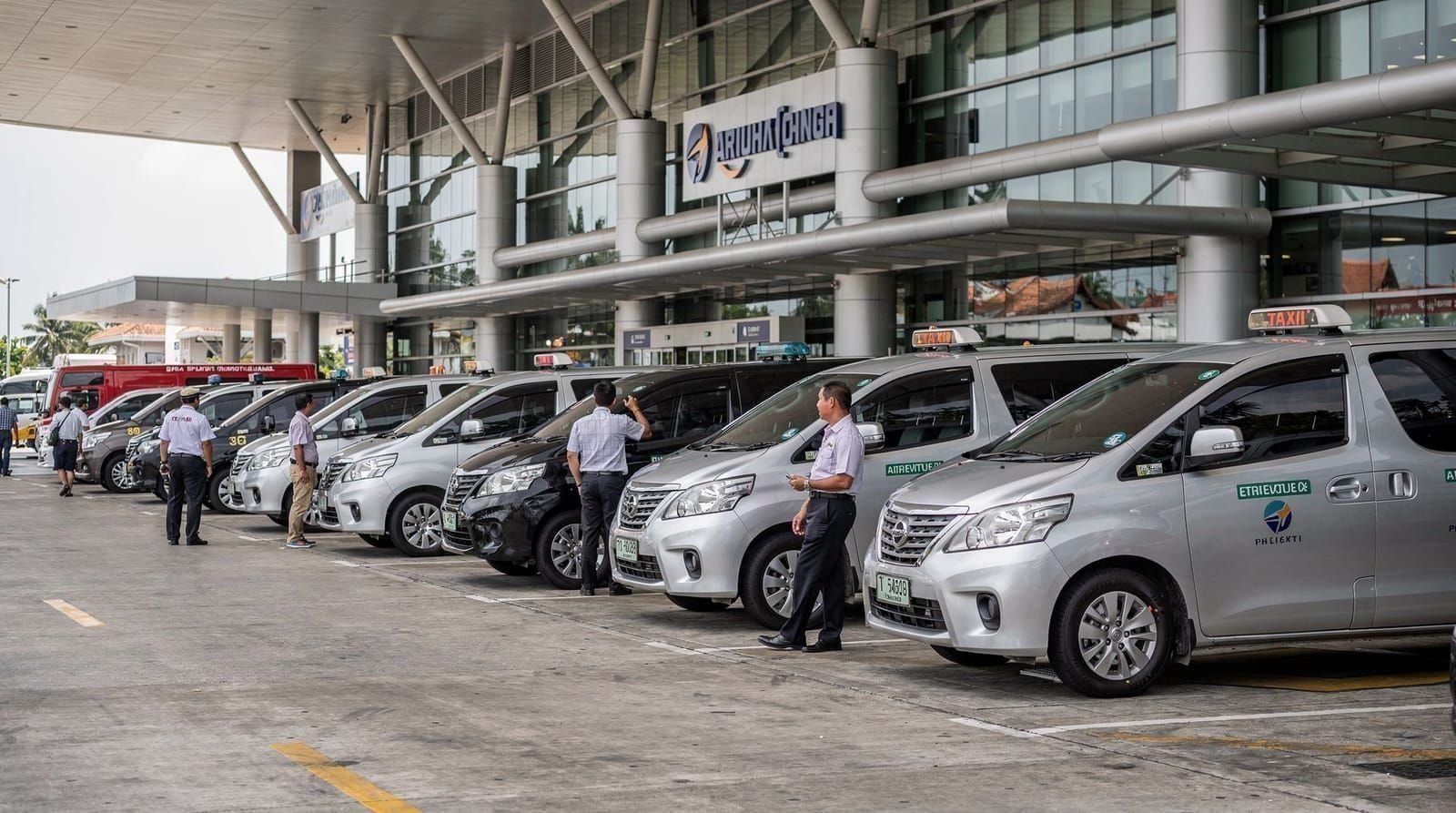
- Grab — 400–700 THB to Kata/Karon, book through the app. Safest and fairest option.
- Airport minivan — shared service, 150–200 THB/person, drops multiple hotels, slower.
- Official metered taxi — 500–700 THB + expressway toll. Ask for meter; some drivers negotiate fixed prices.
- Avoid — touts offering “fixed price” rides before you exit arrivals. Walk to the official taxi rank or open Grab outside.
The full airport transfer guide covers all options with current prices.
How to get around the island
Grab is the default for point-to-point travel. Expect 100–300 THB for most beach-to-beach rides. Always book through the app — never accept verbal prices from drivers without a meter.
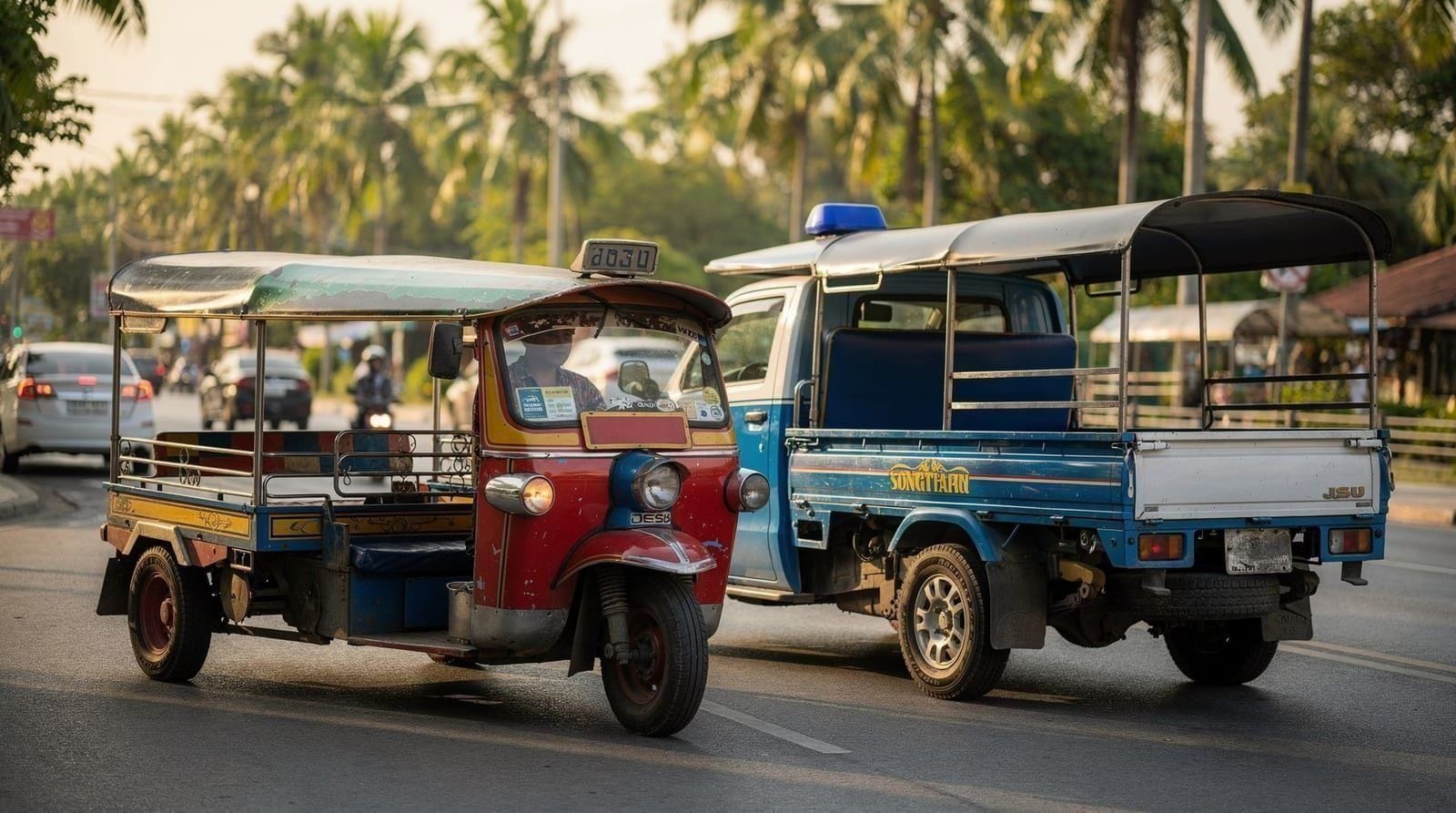
Songthaews (shared red vans) run fixed routes, mostly between Phuket Town and the main beaches, for 30–60 THB. Useful for budget travel but not door-to-door.
Scooter rental costs 300–600 THB/day and gives genuine freedom to explore lesser-known beaches and viewpoints. The risks are real — Thailand has some of the highest road injury rates in the world. If you rent, wear a helmet (it’s required and genuinely saves lives), photograph every scratch before riding, and never surrender your passport as a deposit. See the scooter rental safety guide.
Tuk-tuks work for short hops but have no meters — agree a price before getting in. Expect 150–300 THB for most short trips.
The must-do day trips
Phuket’s real value is its position as a launch pad for Andaman island trips. The following are consistently worth the price:
Phi Phi Islands — 45 km southeast, 45–90 minutes by speedboat. Most tours combine Phi Phi Don (viewpoint, snorkelling, village), Maya Bay on Phi Phi Leh (limestone walls, emerald water, limited entry), and Bamboo Island. Cost: 1,000–2,200 THB/person for group speedboat tours.
Phi Phi, Maya Bay and Khai Island speedboat tourPhang Nga Bay — 90 minutes north by speedboat. James Bond Island (Khao Phing Kan), sea cave kayaking, and the Koh Panyi stilt village. One of the most photogenic trips available from Phuket.
Coral Island (Koh Hae) — 30 minutes from Chalong Pier. Best option if you want snorkelling close to Phuket without a full day trip. Good for families.
Coral Island snorkelling and water activities half-dayWhat to eat and where
Phuket’s food scene splits cleanly between tourist restaurants (overpriced, mediocre) and local spots (cheap, excellent):
Local favourites to find:
- Khao tom (rice soup) — breakfast staple, 60–90 THB
- Moo hong — Phuket’s signature slow-braised pork, Sino-Portuguese heritage, 80–150 THB
- Pad see ew and pad thai at local shophouses — 70–100 THB
- Roti with condensed milk or banana — 30–50 THB from street carts
Phuket Old Town at night is the best food district. The Sunday Walking Street on Thalang Road is specifically good for one evening; otherwise the permanent night market area around Ranong Road has consistent quality.
Phuket Old Town street food walking tourFor orientation, a food walking tour with a local guide on your first evening in Old Town is money well spent.
Cultural essentials
Temple etiquette. Cover shoulders and knees at every temple — bring a scarf or sarong. Remove shoes before entering shrine buildings. Don’t touch monks or hand anything directly to them (women especially).
The monarchy. Thailand’s lèse-majesté laws are actively enforced. Never make critical comments about the royal family in any context, including online.
Bargaining. Expected at markets and for tuk-tuk rides. Not appropriate in restaurants or shops with fixed price signs.
Tipping. Not mandatory but appreciated. 20–50 THB for meals at local restaurants, 10% at hotel restaurants, round up for Grab drivers if they helped with bags.
The temples and landmarks first-timers always miss
Most first-timers spend their entire trip between the beach and the pier. That’s understandable, but it means missing some of the most memorable things on the island — and the ones that cost nothing.
Big Buddha is the single most impressive landmark in Phuket, and it’s free. The white Burmese marble statue stands 45 metres tall on top of Nakkerd Hill at 381 metres above sea level. From the hilltop platform you can see Kata Beach, Karon Beach, Chalong Bay, and on clear days, the offshore islands. The drive up from Kata takes about 20 minutes by scooter or 150–200 THB by Grab. The dress code is enforced — shoulders and knees must be covered; sarongs are available to borrow at the entrance. Go before 10 am to avoid the worst of the heat and the tour group convoys that arrive mid-morning. Budget 45–60 minutes on site.
Wat Chalong is the most important Buddhist temple in Phuket and one of the most-visited sites on the island, yet it maintains genuine religious activity rather than existing purely for tourism. The complex comprises several ornate buildings, including a multi-tiered pagoda said to enshrine a relic of the Buddha. Entry is free. Thai worshippers arrive throughout the day to make offerings, light incense, and pray — particularly in the early morning. Combine it with Big Buddha on a single half-day loop; the two are about 10 minutes apart by road. Both are close to Phang Nga Bay tours departing from the northern piers, making a cultural morning followed by an afternoon boat trip a sensible structure.
Promthep Cape sits at the southernmost tip of Phuket and delivers a 180-degree view of the open Andaman Sea. On calm days, distant islands are visible. This is the most-visited sunset point on the island — arrive 30–45 minutes before sunset in high season to secure a spot before the crowd fills the viewing platform. There’s a small lighthouse, a shrine, and a string of vendors selling grilled corn and cold drinks. It’s a 15-minute Grab ride from Rawai or about 25 minutes from Kata. Even outside sunset hours, the cape is worth visiting for the view and the relative quiet of the surrounding headland.
For a broader look at how to sequence these cultural stops alongside beach time, the Phuket travel guide for first-timers provides an itinerary framework that incorporates both.
Common first-timer mistakes
A few patterns come up repeatedly among first-time visitors who found Phuket more frustrating than expected. Knowing them in advance doesn’t require much effort to avoid.
Booking tours through the hotel. Almost every hotel and guesthouse in Phuket has a tour desk. It is convenient and it is consistently 200–500 THB more expensive per person than booking directly through established platforms. The hotel takes a commission and passes none of the savings to you. Book Phi Phi and Phang Nga Bay trips yourself — you get the same tour operator, the same pickup, and the same boat.
Choosing Patong without knowing what it is. Patong is the right choice for a specific type of traveller: someone who wants nightlife, maximum amenity density, and doesn’t mind noise. It is the wrong choice for couples seeking a romantic beach escape, families with young children, or anyone expecting a traditional Thai atmosphere. Read the best beaches in Phuket guide before booking — the 10 minutes this takes will shape your entire experience.
Ignoring beach flags. Red flags on Phuket beaches mean the current is genuinely dangerous. This is not a suggestion. Multiple tourists drown on Phuket beaches each year, almost always on flagged days. In monsoon season (June–October), red flags appear regularly on all west-coast beaches. If the flag is red, swim in a pool.
Underestimating distances between beaches. Phuket’s west coast looks compact on a map but takes longer to traverse than it appears. The road between Patong and Kata is 30–40 minutes by scooter or Grab. Patong to Phang Nga Bay departure piers near the airport is 60–75 minutes with traffic. Planning a “quick trip” to a different beach in the afternoon is usually less quick than it looks. Factor real travel times into your itinerary, especially on day trip days when early pickups are involved.
Not checking what’s open in your season. The Similan Islands are closed from June through October — no exceptions. If diving the Similans is on your list, you must travel between November and April. Similarly, some smaller tour operators reduce their schedules in low season. Check current status before booking anything beyond the major operators.
For a full accounting of where to stay relative to your priorities, the where to stay in phuket guide maps budget, family, beach quality, and nightlife trade-offs across all the main areas.
Money, ATMs, and tipping in practice
Understanding how money works on the ground in Phuket saves both time and unnecessary fees.
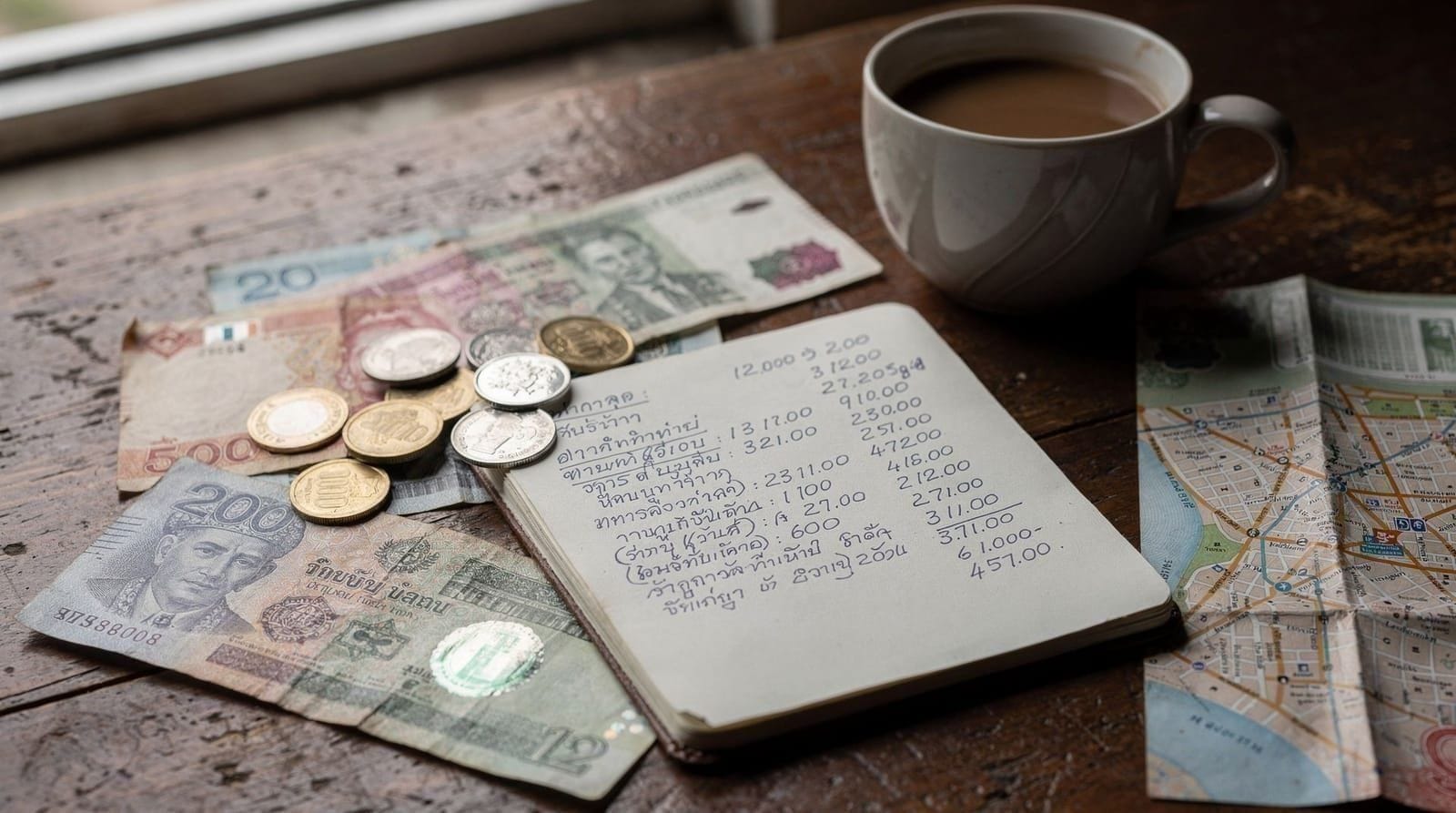
Cash is still king for most daily transactions. Street food vendors, market stalls, tuk-tuks, small guesthouses, and local shophouses operate cash-only. Keep 2,000–3,000 THB on hand each day. The most convenient denominations are 100 THB and 50 THB notes — 1,000 THB notes are fine at hotels and tour offices but can be awkward at street stalls.
ATMs charge 220–250 THB per withdrawal, regardless of your home bank’s fee. To minimise this, withdraw larger amounts less frequently rather than small amounts often. The maximum ATM withdrawal is typically 20,000–30,000 THB per transaction. Bangkok Bank and Kasikorn Bank ATMs tend to have the highest withdrawal limits.
Wise and Revolut cards avoid foreign transaction fees and use the mid-market exchange rate. They are genuinely the cheapest way to access money in Thailand if you set them up before arriving. Avoid exchanging currency at hotels — the rates are typically 5–10% worse than street exchange booths. In Patong, the VASU and SuperRich exchange booths on the main strip offer competitive rates.
Tipping culture is gentle rather than obligatory. At sit-down restaurants, 20–50 THB per person is appropriate. At beach restaurants with table service, round up or leave coins. Tour guides expect a tip at the end of a day trip — 100–200 THB per person is standard for a good guide. Massage therapists typically receive 50–100 THB on top of the session fee. Grab drivers are tipped via the app (there’s a tip option post-ride) or by rounding up. Hotel housekeeping: leave 20–50 THB on the pillow.
Credit cards are accepted at hotels, large tour operators, and most mid-range and upscale restaurants. Smaller restaurants and all street food are cash. A few guesthouses add a 2–3% surcharge for card payments — ask before you commit.
For the full breakdown on managing money across a week in Phuket, including the current ATM withdrawal situation and which exchange booths are most reliable, the best time to visit guide covers seasonal context including how prices shift from peak to low season.
First-timer itinerary framework
Day 1 — Arrive, check in, explore your beach, dinner in Old Town or local restaurant near your hotel.
Day 2 — Phi Phi / Phang Nga day trip (book the day before). Full day.
Day 3 — Explore a different beach by scooter or Grab, visit Big Buddha in the afternoon, watch sunset from Promthep Cape.
Day 4 — Snorkelling half-day trip (Coral or Racha Island), afternoon free.
Day 5 — Phuket Old Town walking tour, Sunday Walking Street if the timing works, evening at leisure.
For longer stays, see the 5-day and 7-day itineraries.
Connectivity: SIM cards and wifi
Getting online quickly matters for Grab, maps, and translation apps. AIS and True Move both sell tourist SIMs at the airport arrivals hall and at any 7-Eleven for 300–500 THB, covering 15–30 days of data depending on the package. The airport kiosks are slightly more expensive but let you set up connectivity before you leave the terminal, which is convenient if you’re using Grab to reach your hotel. Most mid-range and luxury hotels have reliable wifi; budget guesthouses can be patchy, particularly for video calls, so a local SIM is worth having as a backup even if you plan to rely mostly on hotel wifi. eSIMs are also widely supported on modern phones and can be activated before you fly, skipping the arrival-hall queue entirely.
Choosing your beach: a quick comparison
If the beach descriptions above left you undecided, this side-by-side view of the main options should settle it.
| Beach | Vibe | Best for | Nightlife |
|---|---|---|---|
| Kata | Balanced, walkable | First-timers, couples | Moderate |
| Karon | Quiet, long sand | Relaxation, fewer hawkers | Low |
| Patong | Loud, dense | Nightlife-focused travellers | Very high |
| Kamala | Upscale, calm | Boutique stays, beach clubs | Low–moderate |
| Bang Tao | Peaceful, resort-heavy | Families, luxury | Low |
What a realistic first Phuket trip costs
Money worries shouldn’t overshadow planning, but having a number in mind helps. A mid-range first-timer trip — private hotel room with a pool, a mix of market and sit-down meals, Grab transport, and two or three organised day trips across a week — runs approximately 2,500–3,500 THB per person per day, or roughly 17,500–24,500 THB (~$540–750) for a week excluding international flights. The Phuket travel budget guide breaks this down by category (accommodation, food, transport, activities) across budget, mid-range, and luxury tiers if you want to fine-tune your own estimate before booking.
Packing essentials for first-timers
A few items consistently make the difference between a smooth first trip and unnecessary friction. Lightweight, quick-dry clothing handles Phuket’s heat and humidity far better than anything heavier — you will sweat through cotton within an hour outdoors. A scarf or sarong covers shoulders and knees for temple visits without needing a separate outfit.
Reef-safe sunscreen matters both for your skin and, if you’re snorkelling at Coral Island or the Similan Islands, for the reef itself — some marine parks now check for it. Closed shoes are worth packing for any inland activity (waterfalls, jungle walks) even though sandals dominate the beach days. A dry bag protects phones and passports on any boat trip. For the complete list with quantities and seasonal adjustments, see the Phuket packing list guide.
Frequently asked questions about Phuket travel guide for first-timers (2026)
Which beach is best for first-time visitors?
Do I need to book tours in advance?
What's the best way to get around Phuket?
Is it easy to find vegetarian or vegan food?
Should I get a local SIM card?
Is it safe to swim on all beaches?
What currency should I bring?
What should I avoid as a first-timer?
How much should a first Phuket trip cost for a week?
What should I pack that first-timers often forget?
Top experiences
Bookable activities with verified prices and instant confirmation on GetYourGuide.