Phuket in 5 days — the balanced first-timer itinerary
Phuket: Phi Phi, Maya Bay & Khai Island day tour by speedboat
How do you spend 5 days in Phuket well? Five days gives you enough breathing room to combine beaches, island day trips, Phuket Old Town, and at least one ethical wildlife experience — without sprinting between attractions. Budget 4,500–7,500 THB per person per day (~$138–$230 USD) mid-range.
| Best for | First-timers, couples, balanced beach-and-culture trips |
| Base | Kata Beach (or Karon/Bang Tao) |
| Cost | Around 19,100–31,900 THB/person total (mid-range) |
| Getting around | Grab, no scooter needed |
| Book ahead | Phi Phi, Phang Nga Bay, elephant sanctuary — 3–5 days minimum |
Why 5 days works so well for Phuket
Five nights is the sweet spot for a Phuket trip. You have enough time to actually slow down on a beach day, take a proper cooking class, and still fit in both Phi Phi Islands and Phang Nga Bay — the two headline day trips that most 3-day visitors have to choose between.
This itinerary uses Kata Beach as a base — better swimming than Patong, quieter atmosphere, and equally convenient for day trips via Rassada Pier. You can replicate this with Karon or Bang Tao as bases; adjust Grab travel times accordingly.
Logistics note: All Phi Phi and Phang Nga tours depart early (7–8:30am pickup). Do not book late check-in on Day 1 and expect to make a Day 2 tour. Plan arrivals for Day 1 afternoon at the latest.
The comparison with 3 days: a 3-day visit forces a choice between Phi Phi and Phang Nga Bay, leaves no time for Old Town, and no time to simply sit on a beach without feeling like you’re missing something. Five days removes those pressures. If you have 7 days instead, consider adding Krabi — the Phuket–Krabi combo itinerary shows how to structure that.
Visa check: From June 2026, EU/UK/US/CA/AU/NZ citizens get 30 days visa-free but now require TDAC pre-registration within 72 hours before arrival. See our Phuket visa guide 2026 before booking.
Day 1 — Arrival and first beach afternoon
Getting from the airport
Phuket International Airport (HKT) sits at the northern tip of the island. Kata Beach is 55–70 minutes south by Grab (~500–700 THB/$15–$21 depending on traffic). Pre-booked private transfers run ~800–1,200 THB ($24.50–$36.80) and are worth considering for the simplicity with luggage.
Do not take unmarked taxis from the airport arrivals hall — they quote flat rates of 1,500–2,000 THB and won’t negotiate. Walk to the official taxi counter or open Grab once you’re clear of the building. The Grab pickup zone is outside the arrivals hall (exit, turn right, walk to the end of the pavement). Wait time is usually 5–10 minutes.
Airport currency: exchange a modest amount at the SuperRich counter inside the airport (rates are near-bank, no fee). You’ll need cash for the first few hours — Grab accepts card, but street food and local transport do not. See our Phuket money guide for the full currency strategy.
Afternoon beach orientation
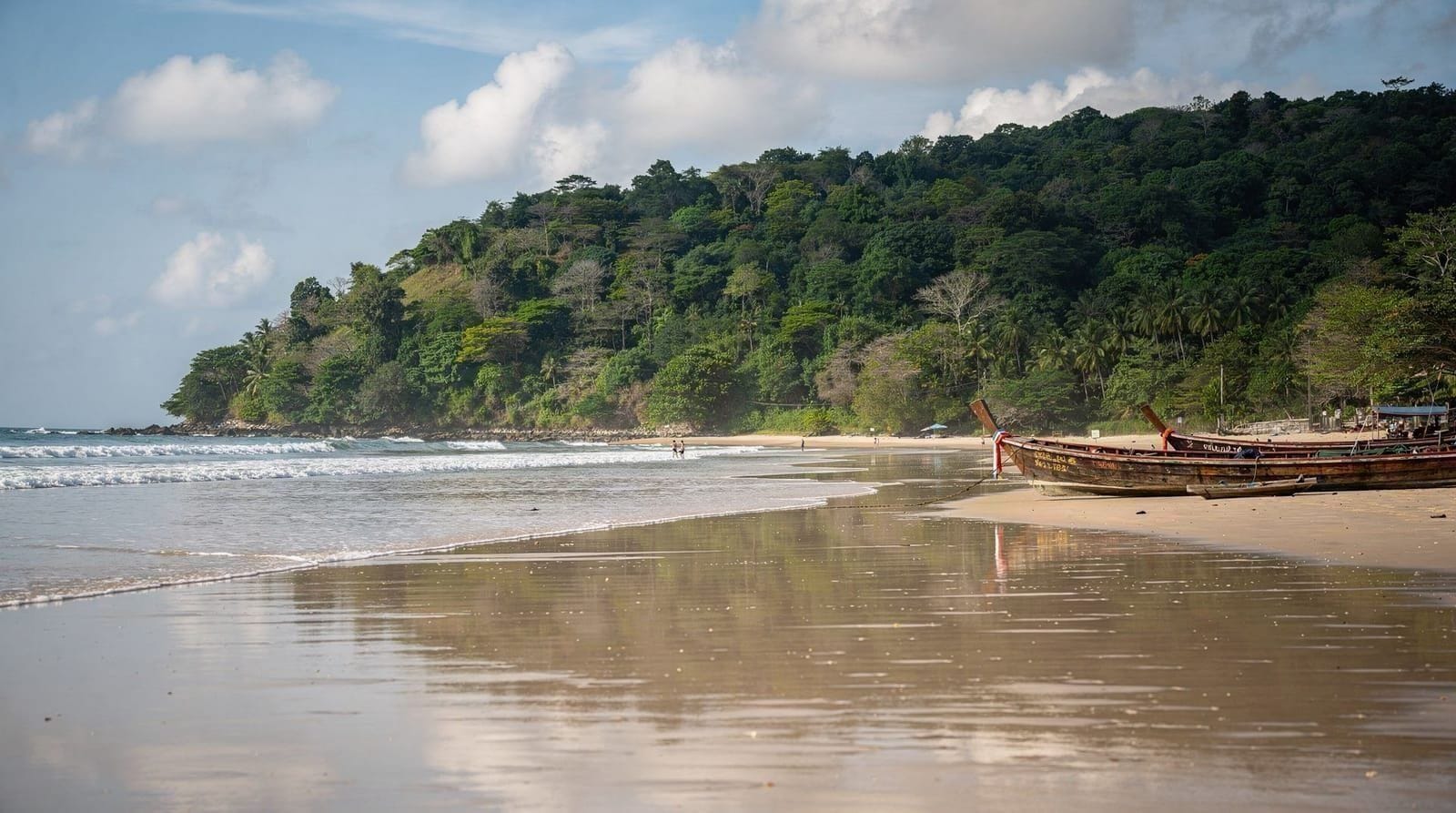
Check in, dump your bags, and spend the afternoon on Kata Beach itself. The main beach is safe for swimming November–April (watch the flags — red means no swimming, no exceptions). Kata Noi, 1 km south, is smaller and quieter if Kata feels busy.
Kata Beach’s layout: the main beach curves about 1 km between two rocky headlands. The southern end near the point is typically calmer; the northern end near the roundabout has more activity (jet skis, water sports). For a first afternoon, plant yourself in the middle third — good sand, manageable waves in dry season, and the Kata Beach Resort’s beach section has sun loungers available for non-guests (50–100 THB/$1.53–$3.07 per chair).
Avoiding the jet ski scam: Kata Beach has persistent jet ski operators who claim damage to their equipment after a ride and demand large cash payments. Either avoid jet skis entirely or photograph the machine from every angle before getting on it. This is Phuket’s most common tourist scam. Our scams to avoid guide covers this and others.
Dinner in Kata: Boathouse Restaurant (seafood, 400–800 THB/$12–$24.50) is the upmarket option with a beach view. For street food, the small vendors around the roundabout at the north end of Kata serve decent pad kra pao (basil stir-fry) for 80–100 THB ($2.45–$3.07). Capannina (Italian, 300–600 THB/$9.20–$18.40) on Kata Road is an anomaly — genuinely good pasta, popular with returning visitors who need a break from Thai food. The Mama Noi cookery school café on the main road does reliable Thai at 150–250 THB ($4.60–$7.67) and is open for dinner.
Day 2 — Phi Phi Islands full day
Phi Phi is the centrepiece of any first-time Phuket visit. Pickup from Kata Beach hotels typically around 7:30–8am; you’re at Rassada Pier by 8:30 and on the water by 9.
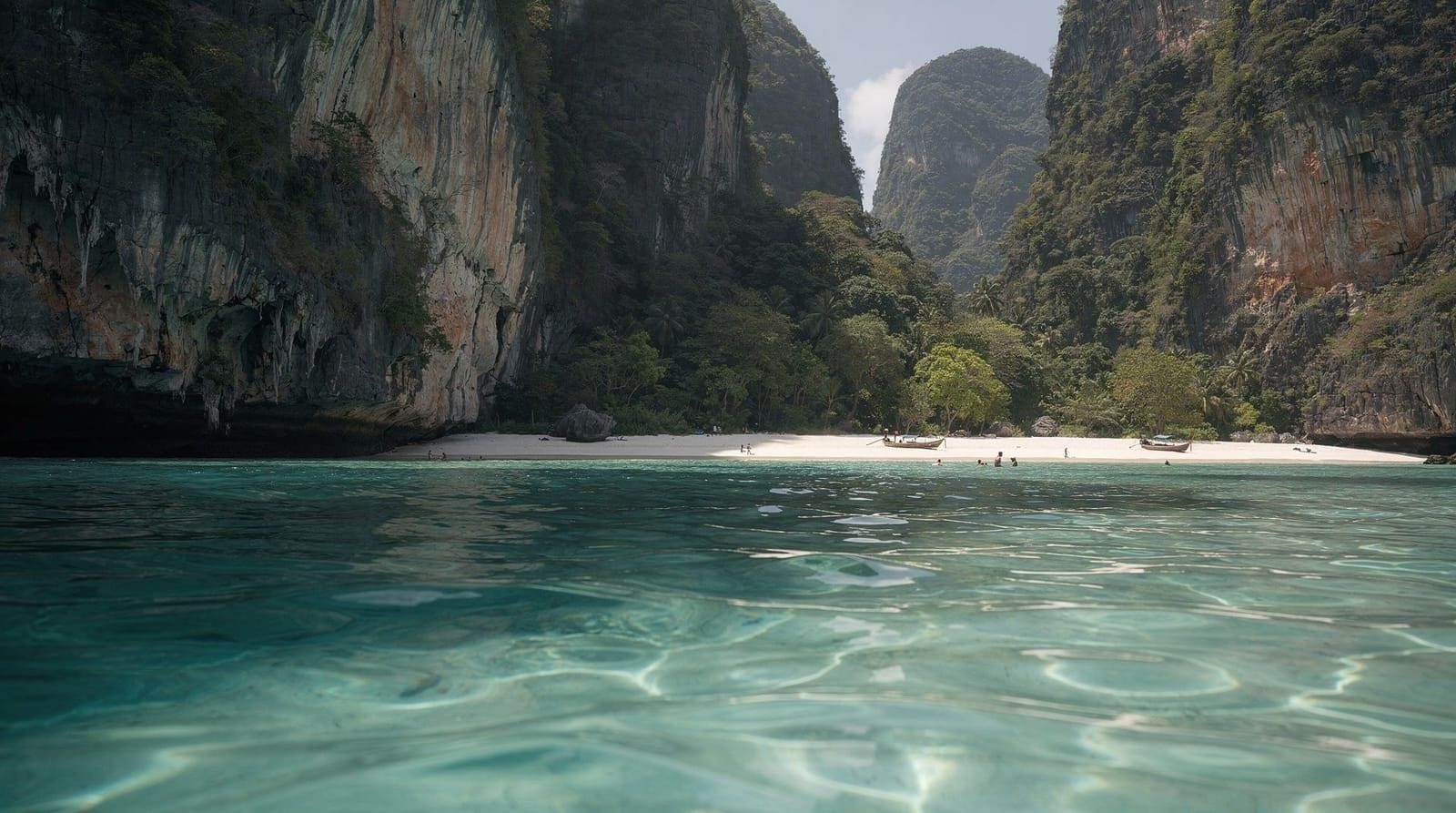
The day covers Phi Phi Don (village, viewpoint), Maya Bay (regulated access since 2022 reef restoration — swimming inside the bay prohibited), Monkey Beach, and Bamboo Island snorkeling. Lunch included on most tours. Back to Phuket by 5:30–6pm.

What to bring: Reef-safe sunscreen only (chemical sunscreens are increasingly restricted around protected reefs). Rash guard recommended — you’ll be snorkeling for 2–3 hours and the tropical sun is brutal on your shoulders. Cash for soft drinks on the boat (40–60 THB/$1.23–$1.84 each). Motion sickness tablets if susceptible — take them 1 hour before departure.
The Phi Phi Don village: Most tours allow 45–60 minutes ashore on the island. The village is the only permanent settlement in the Phi Phi group — restaurants, shops, dive operators. Worth walking the 15-minute trail from the beach to the viewpoint (steep but paved, no entry fee) for the twin-bay panorama that appears on every Phuket postcard. The village itself is crowded and commercial; the viewpoint is worth fighting the crowd for.
Maya Bay: The no-swimming rule is enforced by rangers in patrol boats. The restricted zone covers the bay’s central water area. You can still swim at the beach edge, snorkel the rocks to the right of the bay entrance, and walk the beach itself. The reef closure since 2018 (and the rerouted boat traffic since 2022) has genuinely worked — coral coverage has recovered visibly. The bay is more beautiful now than it was during the mass-tourism years of 2005–2018.
Monsoon season note (June–October): Phi Phi tours continue but sea conditions vary. If swells exceed 2 metres, operators cancel and refund. Have a backup plan — Phang Nga Bay is sheltered and makes an excellent alternative. In monsoon season, check weather the evening before and have Phang Nga Bay pre-booked as an alternative date.
Read our Phi Phi Islands guide for a deeper look at the islands before you go.
Day 3 — Phuket Old Town and ethical elephant sanctuary
Morning: Elephant sanctuary (book well ahead)
Ethical elephant sanctuaries in Phuket are genuinely good — feeding, bathing, and observing rescued elephants without the riding. The Elephant Jungle Sanctuary model (no hooks, no riding, small groups) is the benchmark. Book at least 3 days ahead; morning slots fill fast in high season (December–March).

Most sanctuaries are in Phuket’s interior, 30–45 minutes from Kata. Half-day programs (8am–noon) get you back by lunchtime. What to expect: arrival, mahout orientation briefing, direct elephant feeding (prepared fruit and sugar cane, 50–100kg per elephant per day), observation of elephant social behaviour, optional mud bath (supervised). Groups are typically 6–12 people maximum at genuine ethical operations.
Ethics note: Any sanctuary still offering elephant riding or mahout-on-elephant shows is using a trained-into-submission animal. There are still operators in Phuket offering riding under “ethical” marketing language — check that your chosen operator explicitly prohibits riding. The words to look for: “no riding,” “no hooks,” “rescue-focused.” If the website shows any images of tourists on elephant backs, move on. Our ethical elephant sanctuaries guide has a vetted shortlist.
Afternoon: Phuket Old Town
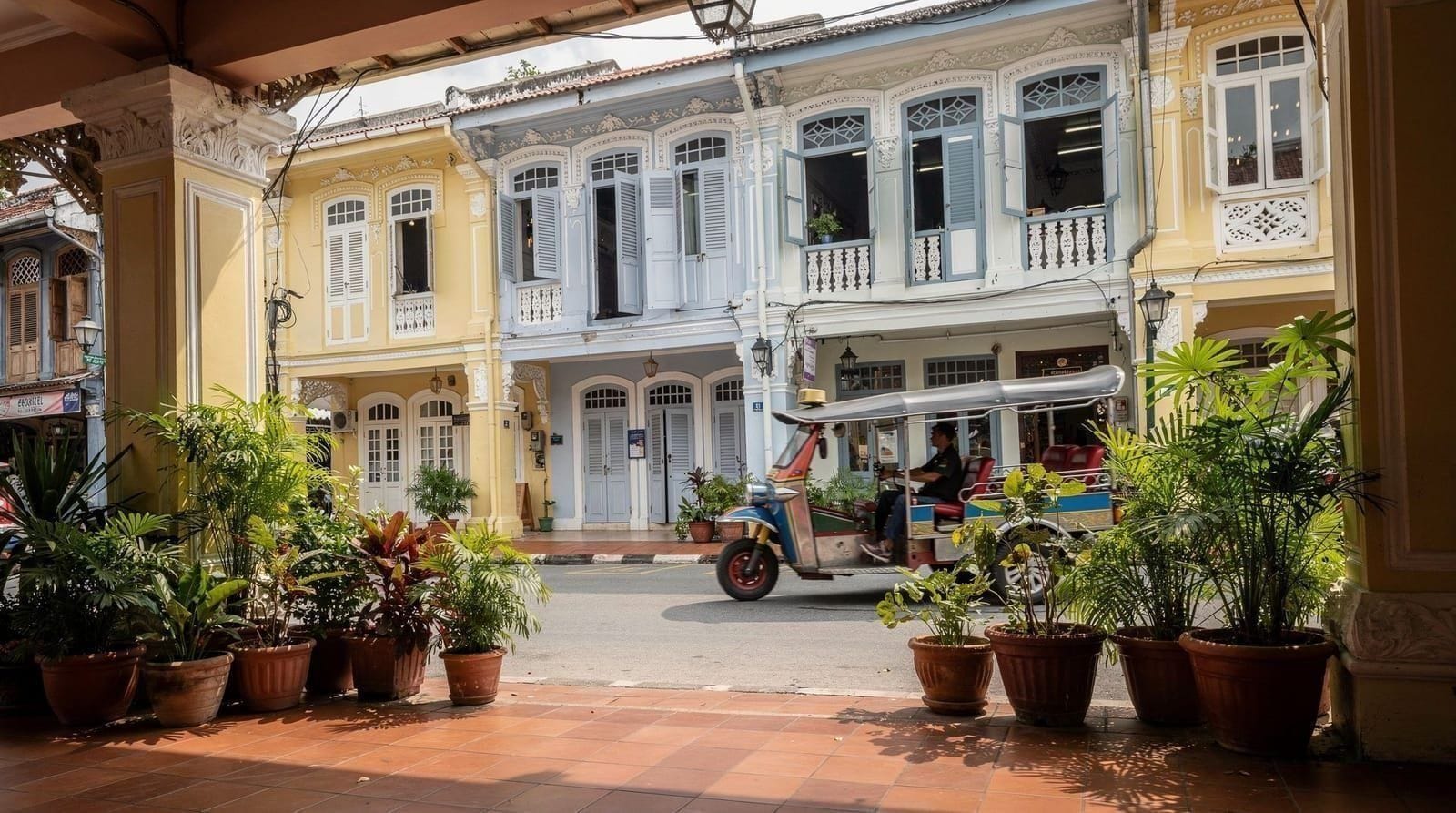
After lunch, Grab to Phuket Old Town (~40 minutes, ~200 THB/$6.15 from the sanctuary). The Sino-Portuguese shophouse district is best explored on foot over 2–3 hours. Key streets: Thalang Road (Sunday Walking Street market location), Dibuk Road, Phang Nga Road.
The architecture here is the result of late-19th and early-20th century tin mining wealth — Hokkien Chinese merchants built ornate two-storey shophouses combining European colonial and Chinese elements. The best examples are on Phang Nga Road between Yaowarat Road and Krabi Road. Many have been restored to their original colours (mustard, pale blue, terracotta) in the last decade; the before-and-after is stark if you look at old photos.
Wat Mongkol Nimit and Jui Tui Chinese Shrine are both within the Old Town core. Free entry; cover shoulders and knees. The Jui Tui Shrine is the centre of Phuket’s Vegetarian Festival (September/October) — the most intense religious event in southern Thailand. Outside festival time, the shrine is active daily and worth 20 minutes.
For a guided food tour — 14 dishes across 5–6 stops over 2 hours — book in advance:

The food tour covers dishes you wouldn’t order from a menu without knowing what they are: Oh Tao (crispy oyster omelette, a Phuket specialty), Khanom Jeen Nam Ya (fermented rice noodles with fish curry), Lor Bah (five-spice pork), and various Chinese-Hokkien sweets sold only from specific market stalls. An honest, navigated introduction to a cuisine that takes some context to appreciate.
Evening: Stay in Old Town
If you time it right for a Sunday, the Walking Street market along Thalang Road runs 4pm–10pm — the best street food market in Phuket, with a strong local-to-tourist ratio and dishes you won’t find in beach resort areas. Otherwise, the Old Town restaurant strip around Dibuk Road has excellent options: Raya for local Phuket cuisine (200–400 THB/$6.15–$12.25), Kopitiam by Wilai for Peranakan breakfast dishes served in the evening (150–250 THB/$4.60–$7.67).
Grab back to Kata from Old Town costs ~200–250 THB ($6.13–$7.67) and takes 35–45 minutes depending on traffic.
Day 4 — Phang Nga Bay and afternoon beach
Morning: Phang Nga Bay small group
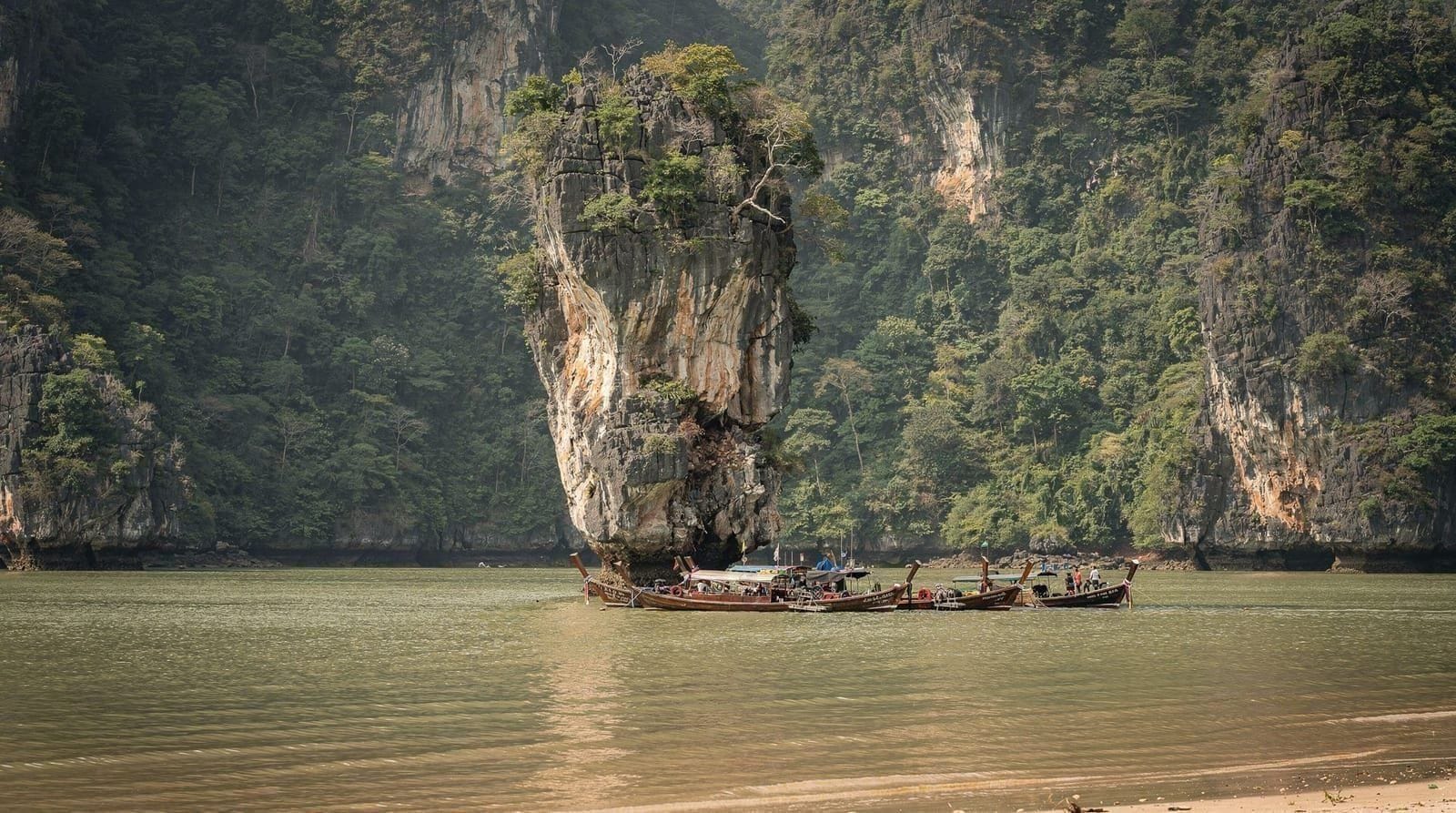
Phang Nga Bay is a protected marine park 80 km north of Phuket — a landscape of vertical limestone karsts erupting from mirror-flat water. James Bond Island (Khao Phing Kan, recognisable from The Man with the Golden Gun) is the anchor attraction, but Koh Panyi fishing village and sea cave canoeing are equally memorable.
Small-group longtail tours have a key advantage over the big-boat tours: they can navigate into sea caves at high tide that the large vessels can’t access. The experience is more intimate and quieter.

Tours typically run 8am–5pm with hotel pickup included. Back by late afternoon.
Sea cave canoeing: The hongs (collapsed cave systems) accessible by kayak are the defining Phang Nga experience. You paddle through a low cave entrance — sometimes ducking flat to fit under the limestone ceiling — and emerge inside a private enclosed world: vertical walls of karst rock, jungle growing at the top, and a small circular sky view overhead. Guides paddle; you sit and take it in. Manageable for anyone who doesn’t have strong claustrophobia.
James Bond Island: The island gets crowded between 10am and 2pm when coach tours arrive. Longtail small-group tours typically time their visit for the early morning (8:30–9:30am) when the light is better and the crowds thinner. The rock itself — Khao Tapu, a limestone pillar balanced on a narrow base — is genuinely striking in person, not just in photographs. 15-minute visit is all you need; the surrounding bay view from the adjacent beach is the better composition.
Koh Panyi: The floating village is a Muslim fishing community of ~1,800 people built on stilts over the bay. The village has its own school, mosque, and even a football pitch (built on wooden platforms at the edge of the water). Lunch is available at the village restaurants — reliable seafood at 200–400 THB ($6.13–$12.27) per dish, though prices are slightly inflated for visitors compared to what residents pay. Worth eating here for the setting alone.
For more on planning your Phang Nga day, see Phang Nga Bay sea canoe guide.
Afternoon: Karon Beach sunset
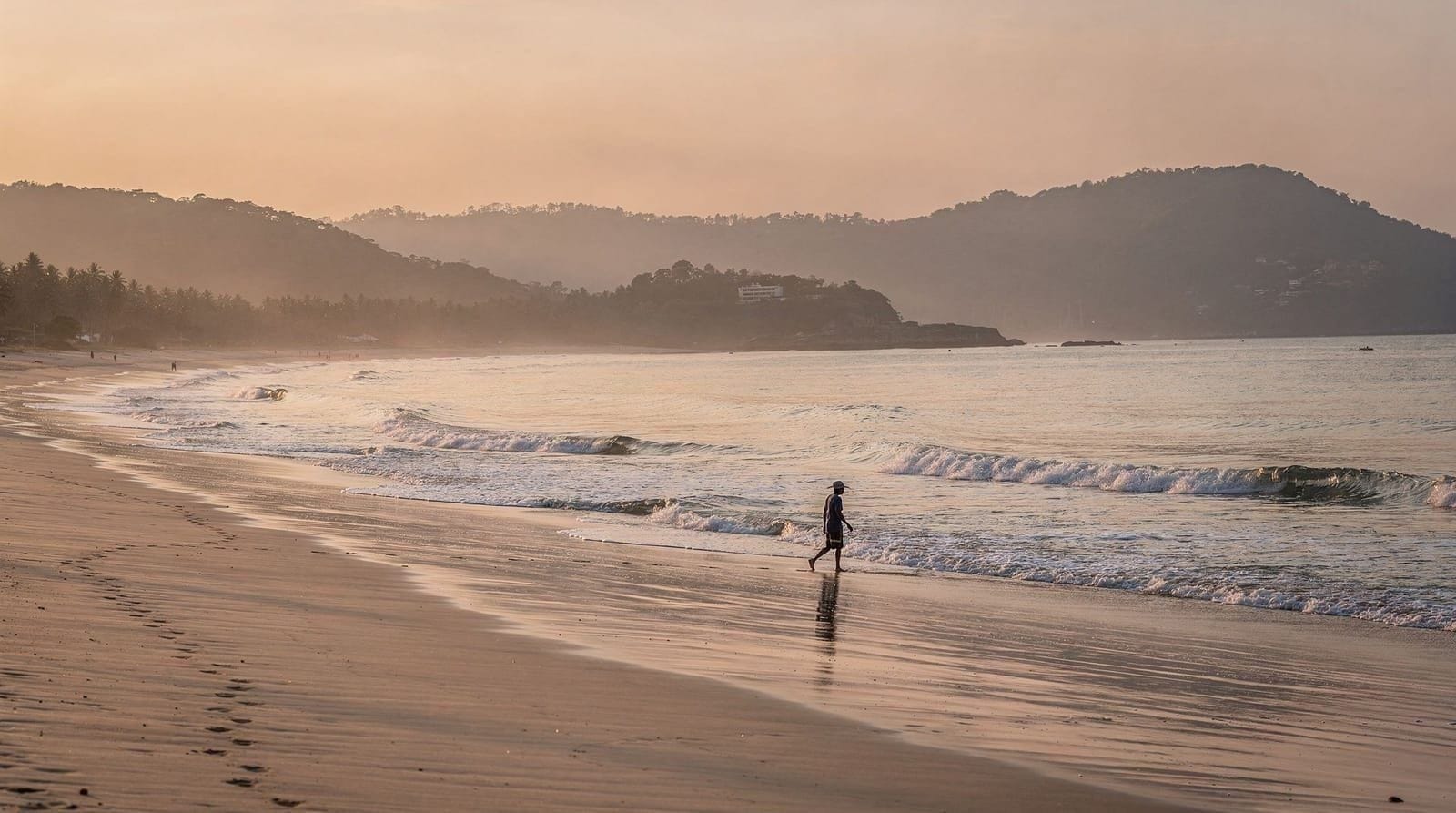
After returning from Phang Nga Bay (~5pm), head to Karon Beach for the evening. Karon is less crowded than Kata and has an excellent beach for sunset watching — the coast faces almost due west. Grab from Kata is ~50 THB ($1.53).
The Karon Beach promenade has a string of beachfront restaurants. My Beach Resort’s beach bar does sunset cocktails with sea views (cocktails 200–300 THB/$6.13–$9.20). For dinner: Kampong Kata Hill Restaurant above Karon has reliable seafood with panoramic views (main dishes 250–500 THB/$7.67–$15.34, book ahead at weekends).
Day 5 — Coral Island half-day, departure
If your flight is afternoon or evening, Coral Island makes a tidy finale. The island is 15 minutes by speedboat from Chalong Pier, with clear water and approachable snorkeling — less dramatic than Phi Phi but gentler on first-time snorkelers. The northern beach has more water sports activity; the southern Long Beach has calmer water and better conditions for actually swimming.

Half-day tours (morning departure, back by noon or 1pm) work well before a late afternoon flight. Airport is 55–70 minutes north of Kata.
What’s worth doing at Coral Island: The snorkeling off the eastern headland between the two main beaches has reasonable coral coverage at 2–4m depth. Fish life includes parrotfish, butterflyfish, and occasional sea turtles (rare, but reported). The glass-bottom boat option (300 THB/$9.20, 20-minute tour) is good for non-snorkelers or anyone who wants to rest between swims.
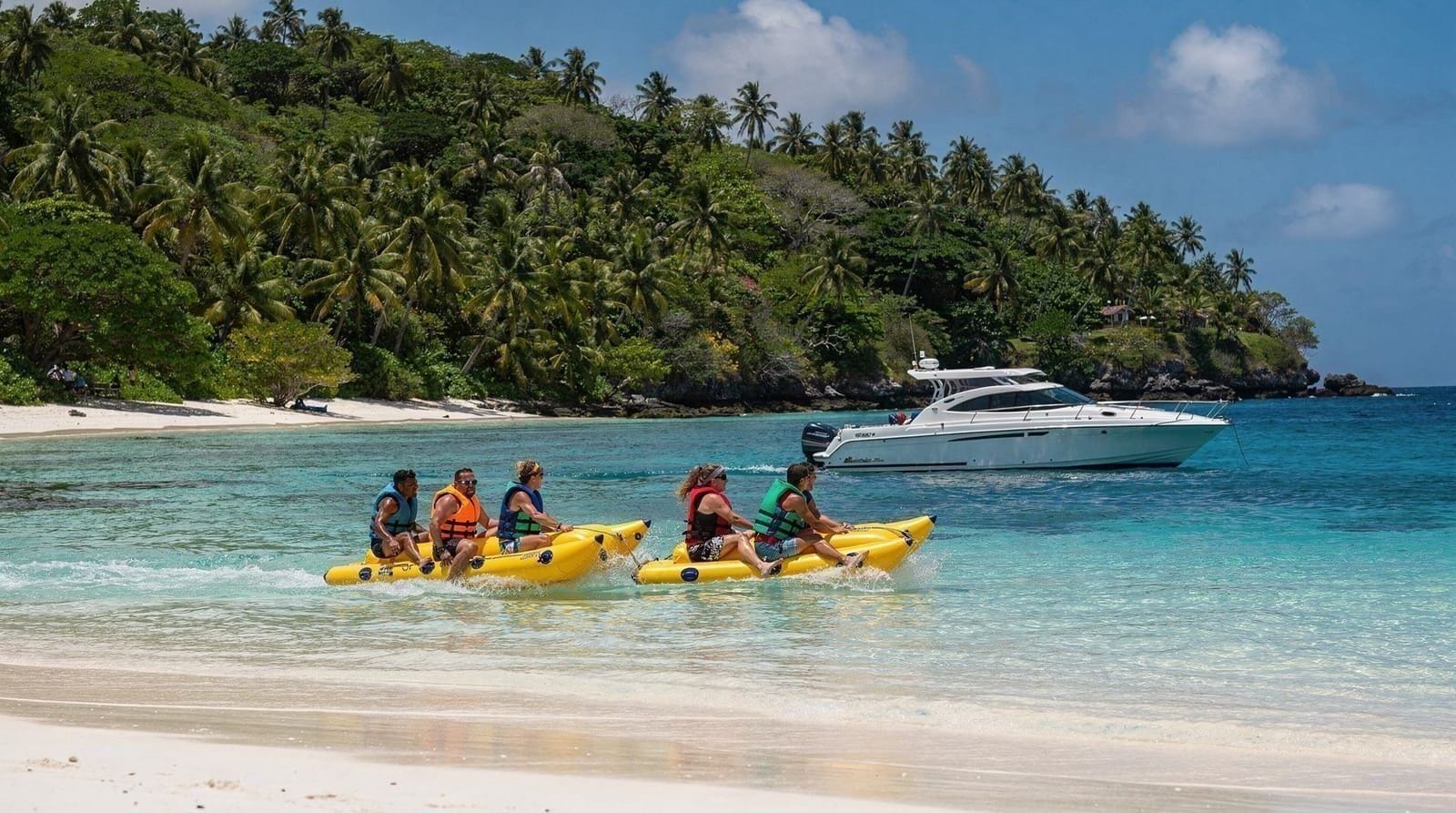
Water sports: Banana boat rides (400 THB/$12.27 per person), parasailing (900–1,200 THB/$27.61–$36.81 per flight), and kayak rental (200 THB/$6.13 per hour) are all available on the northern beach. Prices are posted; negotiate politely — 10–15% off is sometimes achievable outside peak season.
If your flight is morning: Swap this for a leisurely final breakfast at one of Kata’s beachfront cafés and a walk on the beach. Ratri Cafe on Kata Road opens at 7:30am and does good coffee and western breakfast (150–250 THB/$4.60–$7.67). No need to rush — the airport is straightforward when you allow adequate time.
Budget breakdown (per person, mid-range)
| Item | THB | USD |
|---|---|---|
| Accommodation (5 nights, mid-range) | 9,000–15,000 | $276–$460 |
| Phi Phi day trip | 1,800–2,500 | $55–$77 |
| Phang Nga Bay tour | 1,200–1,600 | $37–$49 |
| Elephant sanctuary | 1,500–2,500 | $46–$77 |
| Coral Island half-day | 600–900 | $18–$28 |
| Food (5 days, street food + occasional restaurant) | 4,000–7,500 | $123–$230 |
| Grab transfers | 1,000–1,500 | $31–$46 |
| Temples, entrance fees | 0–400 | $0–$12 |
| Total | ~19,100–31,900 | ~$586–$979 |
For a more detailed cost analysis by traveler type, see our Phuket travel budget guide.
Practical tips for 5 days in Phuket
Book day trips before arrival: Phi Phi, Phang Nga Bay, and elephant sanctuaries sell out in high season (December–March). Book 3–5 days ahead via GetYourGuide — cancellation policies are usually 24–48 hours free.
Drink water constantly: Tropical heat plus boat trips = dehydration risk. Hotel filtered water is safe; carry 1.5L minimum. Coconuts sold on the beach run 60–80 THB ($1.84–$2.45).
Visa reminder: 30-day visa-free entry for EU/UK/US/CA/AU/NZ since June 2026. TDAC required within 72 hours before arrival. See our visa guide for 2026.
Avoiding tourist traps: The tuk-tuk drivers around Patong and Old Town who offer “special tours” to gemstone shops or tailors are operating a well-documented commission scam. If a tuk-tuk driver tells you a temple is “closed for a ceremony” and offers an alternative route, it’s always a lie — temples close rarely and never on short notice. Read more in our tourist traps guide and scams to avoid.
Getting around: Grab covers all inter-area transfers efficiently. Day trips include hotel pickup. Songthaews (shared open-back minivans) run fixed routes between Phuket Town and beach areas for 30–80 THB ($0.92–$2.45) — useful for the Phuket Town to Kata route if you have time and a light bag. See our getting around Phuket guide for the full transport options.
Getting around at night: Grab works reliably until midnight in most tourist areas. After midnight in Patong, negotiate tuk-tuk fares upfront — 200–400 THB ($6.15–$12.25) for short hops is fair.
Sun and heat management: Phuket sits 8 degrees north of the equator. The sun at midday (11am–2pm) is genuinely dangerous for fair-skinned travelers who aren’t acclimatised. Reapply sunscreen every 90 minutes on water days. Schedule active outdoor sightseeing before 10am or after 4pm. Midday is for air-conditioned restaurants, naps, or the hotel pool.
Monsoon season planning: June–October brings afternoon rain, stronger seas, and lower prices. Phi Phi and Phang Nga tours continue but check cancellation policies. If you’re visiting in monsoon season, add a buffer day (or leave Day 5 flexible) in case a tour gets cancelled and needs rescheduling.
Currency, connectivity and small logistics that add up
A few small things make the difference between a smooth five days and one with unnecessary friction. Get a local SIM or eSIM on Day 1 rather than relying on hotel Wi-Fi — Grab, tour operator confirmations, and translation apps all need reliable data, and 7-Eleven sells tourist SIMs for around 300 THB with more data than most visitors use in five days. Keep a running float of small notes (20/50/100 THB) since many street food stalls and songthaews can’t break a 1,000 THB note.
Photograph your passport and visa entry stamp on Day 1 in case you need to show proof of entry date at any point — TDAC confirmation and passport scans stored offline on your phone are a reasonable backup to physical documents. None of this changes the itinerary, but skipping it is the most common source of small, avoidable stress across a five-day trip.
Adding a sixth day
If you can stretch to six nights, the easiest addition is a full day at Racha Island — 45 minutes further out than Coral Island, with noticeably clearer water and better snorkeling, though it means giving up the relaxed Day 5 departure pace:
Racha Island day trip with snorkeling and lunchThe alternative sixth-day add-on is a west-coast beach crawl — Kamala in the morning, Bang Tao for lunch, Surin for a sunset drink — for travelers who found five days left them wanting more unstructured beach time rather than another organized activity. Either works; pick based on whether you left Day 1’s Kata afternoon feeling like enough beach time or not.
Comparing this route with 3 days and 7 days
The extra two days over our 3-day itinerary buy you three specific things: a proper beach afternoon that isn’t squeezed between two day trips, an ethical elephant sanctuary morning (genuinely hard to fit into 3 days without cutting something else), and enough slack that a single cancelled tour (common in monsoon season) doesn’t collapse the whole plan.
What 5 days still doesn’t buy you is Krabi, Khao Sok, or a diving-focused schedule — for those, our 7-day itinerary or the diving-specific 7-day dive itinerary are better templates. If you’re weighing 5 versus 7 days and unsure, the honest answer is that 5 days is enough for a satisfying first visit, while 7 days is enough to actually relax rather than move most days.
Pacing check: is this schedule too packed?
Laid out day by day, this itinerary can look busy — a boat trip, a sanctuary visit, and a full Old Town afternoon inside five days. In practice it doesn’t feel rushed, for one specific reason: only two of the five days (Phi Phi and Phang Nga Bay) involve an early pickup and a fixed schedule. Day 1 is a soft arrival afternoon, Day 3 splits into a morning activity and a self-paced Old Town walk you can shorten or extend, and Day 5 is explicitly flexible around your flight time.
If you finish Day 2 or Day 4 more tired than expected — jet lag, sun exposure, or just travel fatigue — trim the evening plans rather than the day trip itself; a quiet dinner near your hotel instead of a Grab across the island costs you nothing structurally. The one day genuinely worth protecting from fatigue is Day 3’s elephant sanctuary morning, since it’s usually the trip highlight for first-timers and doesn’t work well if you’re not alert enough to follow the mahouts’ instructions closely.
Where this itinerary bends for different travelers
This plan assumes a couple or solo traveler prioritizing a balanced mix. A few adjustments for other trip types: families should swap Day 2’s full-day Phi Phi trip for a shorter island option if traveling with children under 8 — the 1–1.5 hour speedboat crossing each way is a long stretch for young kids, and our families itinerary has a gentler version of this same route.
Honeymooners wanting more privacy should look at upgrading the Phang Nga Bay day to a private or small-luxury charter rather than the small-group longtail here — see our honeymoon itinerary for the upgraded version. Divers should skip this itinerary’s single Phi Phi day trip and go straight to the diving-focused itinerary, which restructures the whole week around dive sites rather than sightseeing.
Frequently asked questions about 5 days in Phuket
Is 5 days too long in Phuket?
Not if you plan day trips properly. Five days lets you hit the Phi Phi Islands and Phang Nga Bay (the two best day trips), spend proper time in Phuket Old Town, do an ethical elephant sanctuary, and still have a beach afternoon. If you add Krabi or Khao Sok, consider 7 days instead — see our Phuket in 7 days itinerary.
What’s the best beach base for 5 days?
Kata Beach for couples and families balancing beach and culture. Bang Tao Beach for luxury travelers wanting quiet and upscale resorts. Patong only if nightlife is a priority — the beach itself is overrated. See our where to stay in Phuket guide for the full neighbourhood breakdown.
Do I need a car or scooter?
No — Grab covers all inter-area transfers in this itinerary. Day trips include hotel pickup. A car rental adds complexity and cost without meaningful benefit for 5 days. Scooters are cheap (200–350 THB/$6.13–$10.74 per day) but Phuket’s roads are genuinely dangerous for inexperienced riders — the accident rate among tourists on scooters is high. Read our scooter rental Phuket safety guide before deciding.
Can I do both Phi Phi and Krabi in 5 days?
Technically yes — Day 2 Phi Phi, Day 4 Krabi day trip. But the Krabi day trip from Phuket is long (2+ hours each way), leaving only 4–5 hours in Krabi itself. Consider extending to 7 days if Krabi is a priority. Alternatively, use our Phuket–Krabi combo itinerary which structures the route properly.
What if it rains?
Phuket’s rain is mostly afternoon thunderstorms, not all-day drizzle. Morning tours rarely get cancelled for rain. When a tour is cancelled for weather (swells, lightning), operators contact you the evening before or morning of and arrange a refund or reschedule. Keep Day 5 flexible for weather — Coral Island half-day can shift to an Old Town morning if conditions are poor.
Which beaches near Kata are worth a detour?
Karon Beach is 5 minutes north — wider, longer, good for walking. Kata Noi is 1 km south — smaller, quieter, excellent swimming. Nai Harn is 20 minutes south — the best beach in southern Phuket, genuinely beautiful. Rawai is next to Nai Harn — not a swimming beach but the best fresh seafood restaurants on the island (Nikita’s, Rawai Seafood Market). A half-day loop covering Nai Harn and Rawai lunch is a good use of a free afternoon.
Top experiences
Bookable activities with verified prices and instant confirmation on GetYourGuide.