Phuket with kids — 7-day family itinerary
Phuket: Coral Island half day tour by speedboat
Is Phuket good for families with young children? Yes — Kata and Kamala beaches are genuinely child-safe, ethical elephant sanctuaries are excellent for kids aged 5+, and island day trips are manageable for older children (8+). Budget 5,000–10,000 THB per person per day ($153–$307 USD) mid-range, accounting for accommodation that works for families.
| Best for | Families with kids 6–14, mixed-age groups |
| Base | Kata Beach or Kamala Beach (not Patong) |
| Cost | Around 85,700–151,000 THB total for a family of 4 |
| Getting around | Private driver or car hire recommended |
| Book ahead | Phi Phi, elephant sanctuary, Carnival Magic — 3–5 days minimum |
Phuket for families: what actually works
Phuket is better for families than its party-town reputation suggests — you just need to base yourself correctly. Patong is the wrong choice: crowds, nightclub noise at 3am, vendors selling alcohol within 10 metres of the beach. Kata Beach or Kamala Beach are the right choices: calm water in dry season, family-friendly restaurants, lower noise levels, and convenient for day trips.
This 7-day itinerary is structured for children aged 6–14. It includes a full day on Phi Phi Islands (manageable for older kids; consider skipping the open-sea speedboat for younger children who get seasick), a Phang Nga Bay tour in calm sheltered water, an ethical elephant sanctuary, and multiple beach days with age-appropriate activities.
Key family logistics:
- Car seat: Rent one when you rent a car. Standard rental cars often don’t include them — request explicitly and confirm in writing.
- Grab vs car: Grab is convenient but no car seats. For day trips with young children, a hired private car with a driver (available through hotels, ~2,500–4,000 THB/$77–$123 per day) is safer.
- Sunscreen: Bring reef-safe SPF 50 from home. Thai pharmacies have limited options and charge premium prices. Apply every 90 minutes on water days.
The best beaches for families are generally in the south and west. Our best beaches for families in Phuket guide covers all the options. Summary: Kata Beach and Kamala Beach for the bases in this itinerary; Nai Harn for a day trip to the quietest good-swimming beach in southern Phuket; avoid Patong entirely with young children.
Monsoon season (June–October): Afternoon rain and occasional morning rougher seas mean flexibility matters. The elephant sanctuary, cooking class, and Old Town are rain-proof. Phi Phi can be cancelled on rough days — have Phang Nga Bay (sheltered) ready as the swap. Prices for accommodation and tours are 20–40% lower in monsoon season, which partly offsets the reduced beach time.
Day 1 — Arrival and Kata Beach settling in
Airport to Kata
HKT to Kata Beach is 55–70 minutes by Grab or private transfer. Family of 4: the 7-seater GrabCar Maxi fits comfortably with luggage (~700–900 THB/$21–$28). If you’re traveling with young children and a car seat is needed, a pre-arranged private transfer through your hotel is the safer option (confirm the car seat in writing when booking — not all drivers carry them despite claiming to).
What to look for in Kata accommodation: Pool is non-negotiable for most families — kids need a lower-stakes water activity for afternoons when the sea is rough or they’re tired. Look for properties with a shallow pool section or steps entry, not just a 1.5m uniform pool. Air conditioning in rooms is essential (not always standard in budget properties). Kata Beach Resort, Beyond Kata, and Novotel Kata Avista are all within walking distance of the beach and have pools with children in mind.
Budget accommodation note: Family rooms (2 doubles or 1 double with 2 singles) at mid-range Kata properties cost 2,500–5,000 THB ($76.69–$153.37) per night. Budget 1,500–2,500 THB ($46–$76.69) gets you a clean guesthouse room that fits 4, though pool facilities are usually absent. The Phuket travel budget guide has a full breakdown by accommodation category.
First afternoon: Kata Beach introduction
The main Kata Beach has lifeguards (seasonal, mostly November–April) and is generally safe for children who can swim. The sea is calm enough for paddling when the yellow flag is flying. When the red flag is up, it means no swimming — this applies to everyone, including confident adult swimmers. Do not override the red flag for children.
Beach logistics for families: Sun loungers are available for rent at various points along the beach (150–200 THB/$4.60–$6.13 per pair, per day). Bring a beach umbrella or rent one (usually included with lounger rental). The beach vendors selling fresh coconuts (70–80 THB/$2.15–$2.45) and fruit (mixed cut fruit in a bag, 80–100 THB/$2.45–$3.07) are a good snack option.
The afternoon sun problem: 11am–3pm on a Phuket beach can genuinely burn fair-skinned children in under 20 minutes without adequate protection. Reapply sunscreen every 90 minutes, enforce hat wearing, and use the hotel pool or a café break during the peak midday heat. Mornings (7–11am) and late afternoons (4–6pm) are the optimal beach times.
Dinner in Kata: Mama Noi Thai Cookery School doubles as a restaurant with reliable, mild Thai dishes (pad thai, tom kha gai) at 150–300 THB ($4.60–$9.20) per plate. The mild versions are usually manageable for children who find Thai spice challenging. Request “mai phet” (not spicy) when ordering for children — this is understood everywhere and results in genuinely milder food, not just a token gesture.
Day 2 — Coral Island family morning
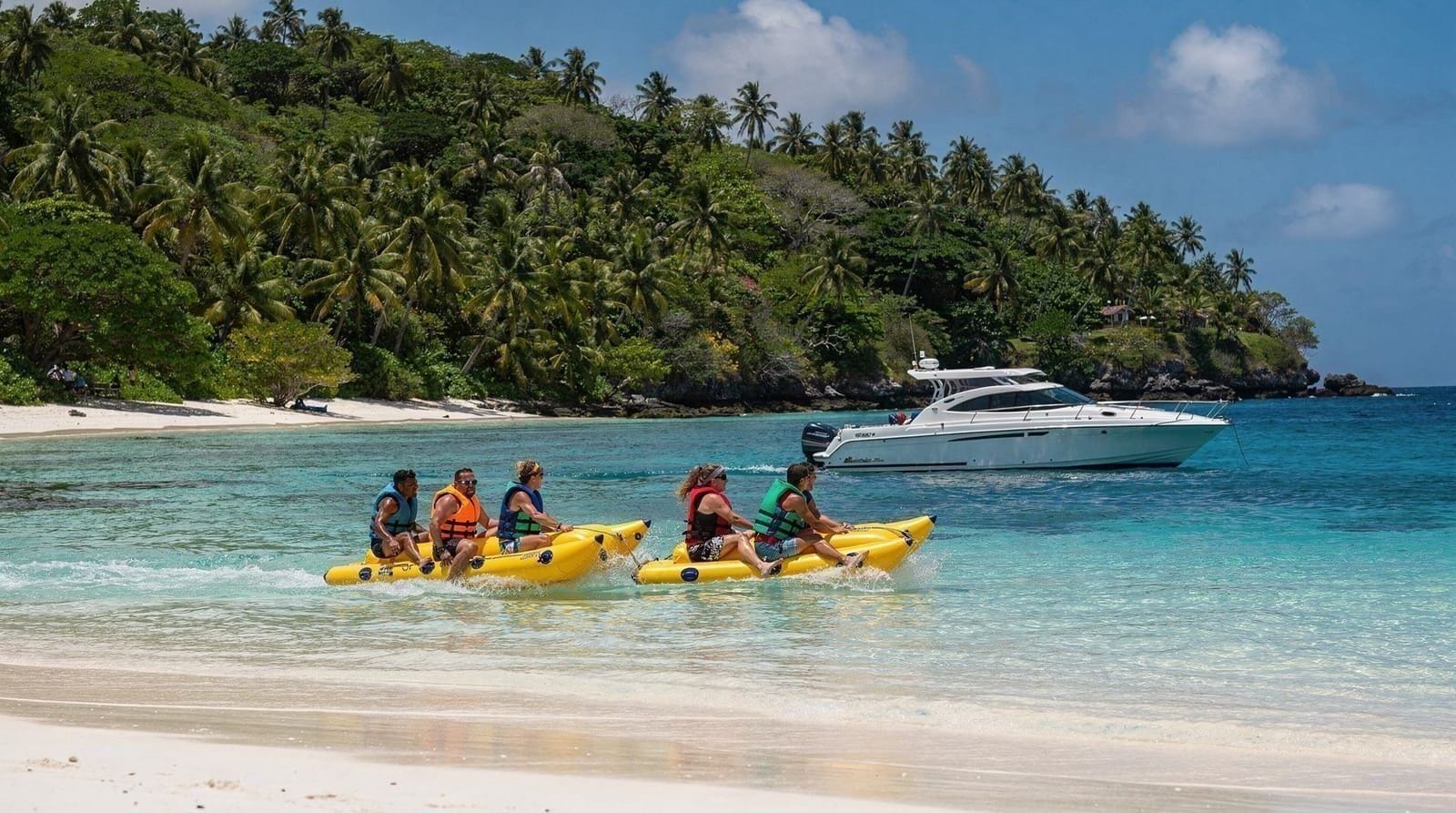
Coral Island is the most family-appropriate snorkeling trip from Phuket. The speedboat is shorter (15 minutes vs 90 minutes for Phi Phi), the water is calmer, and the snorkeling is achievable for complete beginners. Younger children can use provided life jackets and stay in shallow areas.

Half-day tours return by noon or 1pm — leaving the afternoon free for pool time or Kata’s local market.
For very young children (under 6): The snorkeling is accessible if they can wear a mask without panicking. Life jackets are provided and work well for children who can float but are nervous about depth. The glass-bottom boat viewing option (300 THB/$9.20, 20-minute tour) is an excellent alternative for children who don’t want to snorkel — they see the fish and coral without the water confidence requirement.
Water activity options on Coral Island: Banana boat (family option, 400 THB/$12.27 per person), glass-bottom boat viewing (300 THB/$9.20), paddleboarding (500 THB/$15.35 per hour). All negotiable on the beach; agree price before starting. The banana boat is genuinely fun for older children (8+) — expect to get completely wet. The paddleboard can be done tandem with a child sitting in front of an adult.
Afternoon: Kata Noi or Karon beach
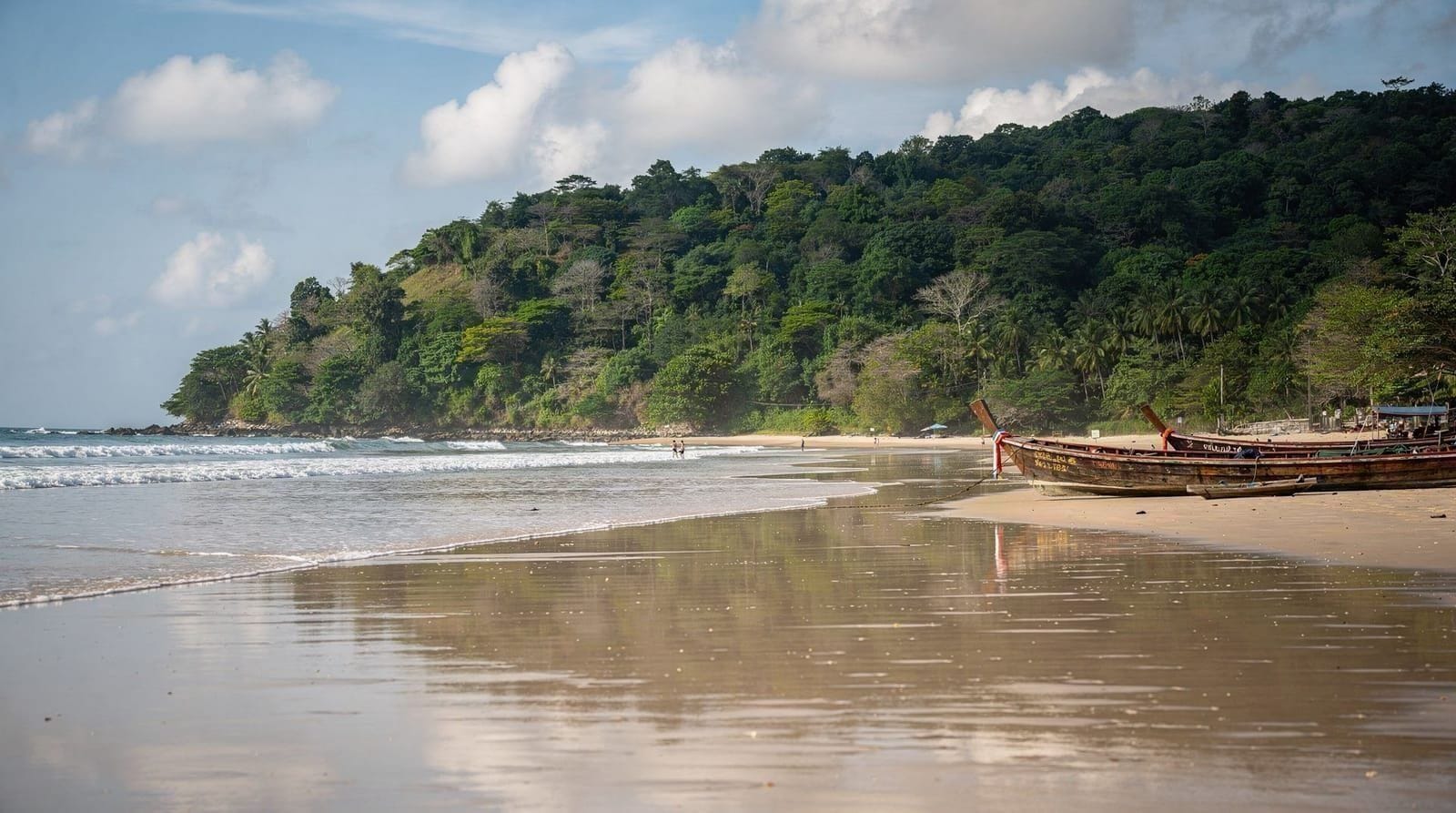
Kata Noi is 1 km south of Kata — smaller, quieter, excellent for families. Karon Beach is 5 minutes north — Phuket’s longest stretch of sand with very gentle entry and broad, flat swimming area. The shallow gradient at Karon’s southern end makes it one of the safest wading beaches for young children on the island. Both are good afternoon options after the morning tour.
Day 3 — Ethical elephant sanctuary (kids’ highlight)
For most children, this is the trip highlight that they’ll describe for years. Ethical sanctuaries let children feed, bathe (mud), and observe rescued elephants at close range. The experience is genuinely educational — guides explain the elephants’ history and how the rescue model works. The close-up scale of an elephant (3–4 metres tall, weighing 4,000–5,000 kg) makes an impression on children that photographs and zoo exhibits don’t.

Age guidance: Children aged 5+ can participate comfortably. Under-5s find the close elephant contact overwhelming. Most sanctuaries don’t allow children under 3.
What to wear: Old clothes that can get muddy and wet. Shoes that can get dirty. Insect repellent (apply at the hotel before departure — the forest-edge setting means mosquitoes). Long trousers are better than shorts for walking on the trails between elephant areas.
What the half-day looks like: Arrive, orientation briefing from the mahout guide (history of each elephant, feeding protocol). Move to the feeding area — the guide hands you sections of cut fruit and demonstrates how to offer them to the elephant (palm flat, held up at the elephant’s level). Children who approach calmly will have the elephant eat directly from their hand. Mud bath: led by guides, optional — most children who are willing to get messy love this. Total: 3.5–4 hours, back in time for lunch.
Checking ethical credentials: Book only with sanctuaries that explicitly prohibit riding. If the website shows any riding images, move on. Check our ethical elephant sanctuaries guide for a vetted shortlist. The pricing of legitimate ethical operations (1,500–2,500 THB/$46–$77 per person) is notably higher than riding operations — this is expected. Lower prices usually mean the operator is still using controlled-training methods.
Half-day programs: 8am–noon. Back in Kata by 1pm.
Afternoon: Phuket Old Town for older children
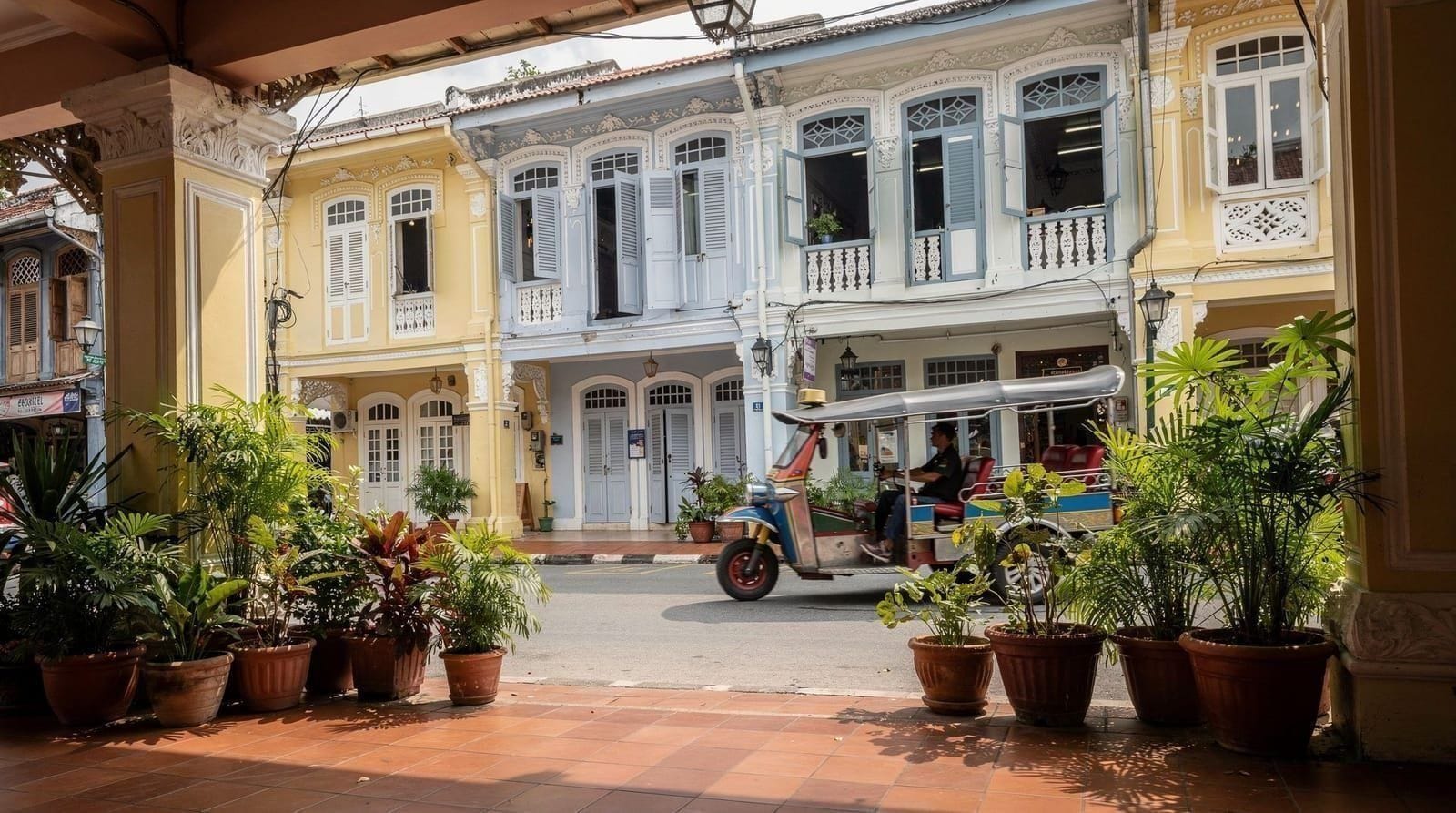
If your children are 8+, a late afternoon in Phuket Old Town works well. The colourful Sino-Portuguese shophouses are photogenic, the street food stalls offer approachable snacks (Thai crepes called roti — 30–50 THB/$0.92–$1.53 each; fresh coconut ice cream in a coconut shell — 60–80 THB/$1.84–$2.45), and Dibuk Road’s café strip serves decent milkshakes and smoothies. The narrow streets of the Old Town are walkable and largely traffic-free on the main tourist sections.
For the food history and architecture context, read our Phuket Old Town guide.
Younger children will have more fun at a beach resort pool afternoon rather than an urban walk. Split accordingly if you have a range of ages.
Day 4 — Kamala Beach and Carnival Magic show
Morning: Kamala Beach
Kamala Beach is 15 minutes north of Kata by car. It’s genuinely family-oriented — calmer development, good beach access, and the beach itself is wider and less crowded than Kata. The southern section near the rocky headland has the calmest water and good shade from trees — important for families with young children who need sun breaks.
Getting to Kamala: Grab from Kata (~150–200 THB/$4.60–$6.13, 15 minutes) or hire a car for the day (1,200–1,800 THB/$36.81–$55.21 per day for a compact car with driver). If you’re renting yourself, Kamala is an easy 8 km drive north on Route 4233 — reasonable road, manageable traffic by Thai standards.
The beach has good shade trees at the southern end — important for younger children who need sun breaks. Spend the morning swimming and playing. The beach vendors here are noticeably less persistent than Patong, making it easier to set up without constant attention.
Kamala lunch options: Rockfish Restaurant on the northern beachfront has reliable international and Thai food at mid-range prices (200–450 THB/$6.13–$13.80 per dish). For something cheaper, the local market on the road 200m inland from the beach has made-to-order Thai food at 80–120 THB ($2.45–$3.68) per plate.
Evening: Carnival Magic show
Carnival Magic at Fantasea Park in Kamala is Phuket’s biggest theatrical production — a 90-minute show with elephants (in a theatrical context, not riding), acrobatics, pyrotechnics, and cultural performances. It’s genuinely impressive for children aged 5+ and adults who don’t take their entertainment too seriously.
Tickets include a Thai buffet dinner (1,500–2,500 THB/$46–$77 per person, children’s prices available). Book ahead — the show runs Thursday–Saturday and fills up in peak season. The buffet opens at 6pm; the show starts at 8pm. Children under 3 are usually free (confirm when booking).
Managing the evening with young children: The show is 90 minutes, ending around 9:30pm. Young children (under 6) may not last the full show — the loud pyrotechnics in the second half can be startling. Seat near an aisle exit if you think you might need to leave early. The buffet quality is moderate (it’s a theme park operation), but the selection is broad enough that even fussy children find something.
Day 5 — Phi Phi Islands (ages 8+ recommended)
The Phi Phi Islands day trip is spectacular but logistically demanding for young children: 90-minute speedboat each way on open sea (seasickness risk), early morning (8am pickup), and a full day on the water. Recommended for ages 8 and up.

For families with younger children: Swap this day for a Phang Nga Bay longtail tour (see Day 6) — calmer water, more sheltered, and the sea caves are fascinating for all ages. The floating village at Koh Panyi gives younger children the “village over water” experience they’ll talk about.
Seasickness prevention: Give children anti-nausea medication (Dramamine or equivalent, available at 7-Eleven for ~35 THB/$1.07 per tablet) 1 hour before departure. Sit at the back-centre of the speedboat rather than the bow — the motion at the bow is significantly rougher. Give children a light breakfast, not a full meal: toast and fruit rather than a cooked breakfast. Keep them looking at the horizon rather than down at a phone or book.
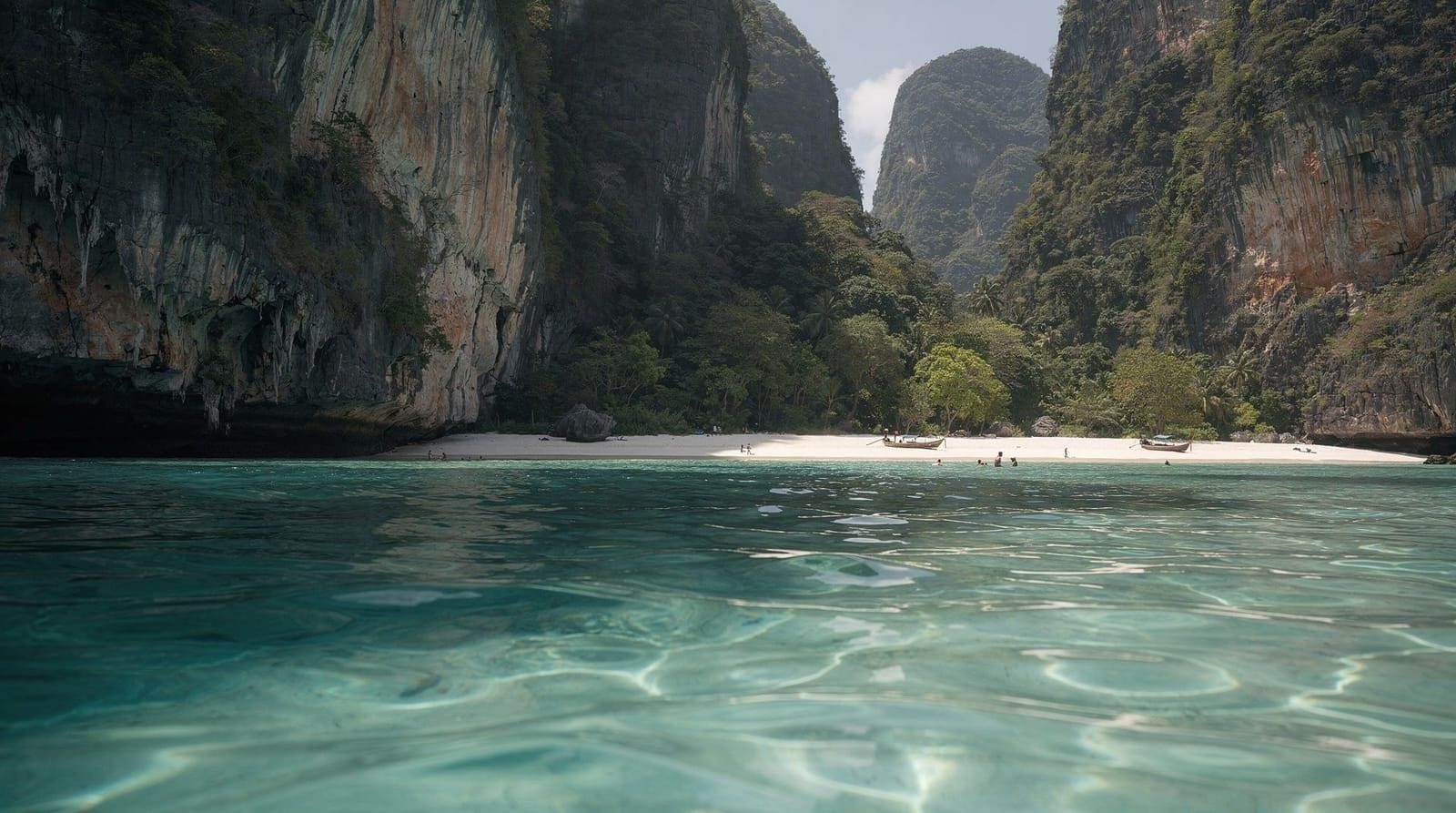
On the islands: Phi Phi Don’s village is an interesting stop for older children — the twin-bay viewpoint trail (15 minutes each way, steep, paved) gives them a genuine sense of achievement. Bamboo Island’s snorkeling in 1–3m crystal-clear water with bright fish is exactly as good for a 10-year-old as for an adult. Maya Bay is the “wow” moment — even children who don’t have cultural context for the James Bond film respond to the scale of the limestone walls.
What to bring for a full island day with children: Reef-safe sunscreen applied before departure plus a tube for reapplication. Rash guards for children (more effective than sunscreen for shoulders and back during long snorkeling sessions). Dry bag for phone and passports. A small snack for between the tour’s scheduled food stops — children get hungry faster than adults on active days.
Back by 5:30–6pm. Dinner near the hotel.
Day 6 — Phang Nga Bay family day
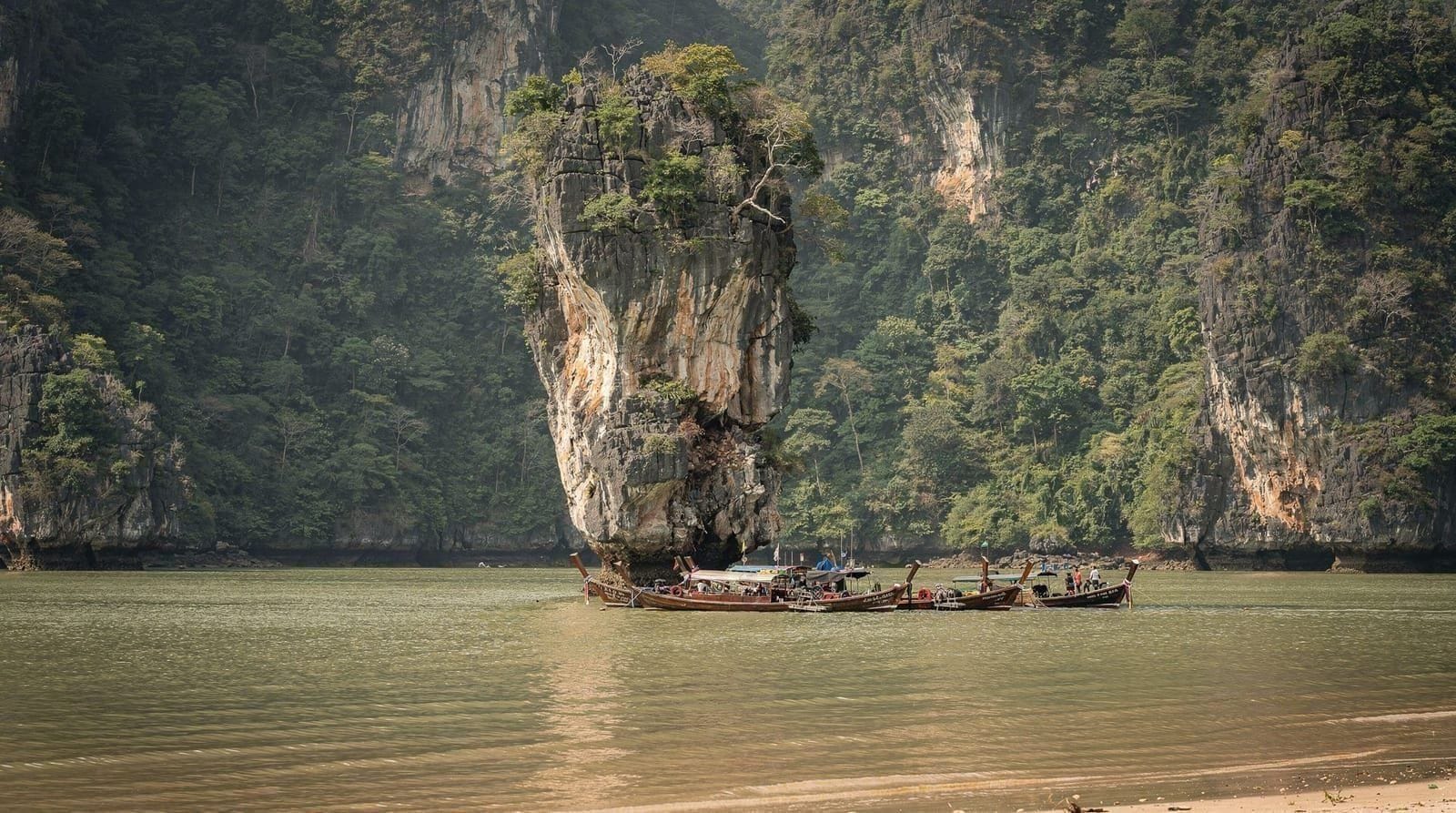
Phang Nga Bay is the most family-friendly big day trip from Phuket. The bay is sheltered from open-sea swells — the longtail boats feel stable even for children who get seasick on speedboats. The limestone karst scenery is dramatic and visually engaging for all ages.

James Bond Island is recognisable to children who’ve seen any 007 films — or who respond to “this is where they filmed a movie where a man gets chased by a villain in a boat.” The rock (Khao Tapu) is one of those geological freaks that looks impossible: a narrow-based pillar of limestone balanced vertically, surrounded by water. Children invariably want to know why it hasn’t fallen over.
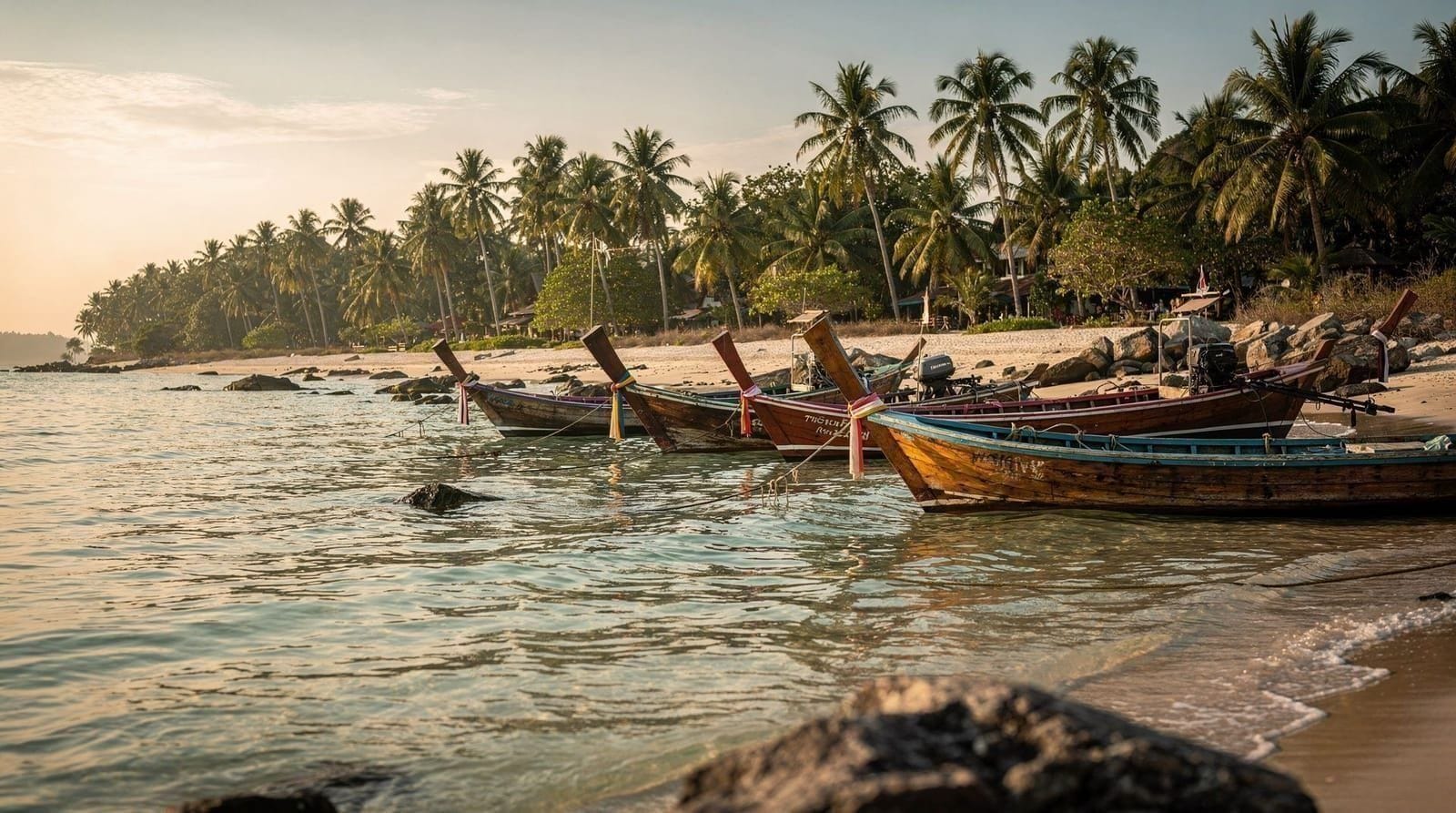
Koh Panyi floating village is genuinely fascinating for children — the idea of an entire village built on wooden stilts over the water, including the school, the mosque, and the football pitch, is the kind of information that gets repeated to friends and teachers for months afterwards. Walking the boardwalks with children: let them look over the rails at the water and boats underneath (supervised, obviously), feed fish from the boardwalk edges (the guides usually carry dry fish food for this purpose), and explain how the village gets fresh water and power.
Sea cave canoeing: manageable for children aged 6+ who don’t mind enclosed spaces. The caves are narrow but not dark — light enters from the hong (collapsed cave roof) above. Guides paddle the canoe; children sit in the middle. The transit through the low-ceilinged cave entrance (sometimes requiring adults to lean flat in the boat) is exactly the right level of mild adventure for most children.
See the Phang Nga Bay sea canoe guide for more detail on what to expect.
Lunch at Koh Panyi: The floating village restaurants are the standard lunch stop. Seafood (350–500 THB/$10.74–$15.34 per dish) and simpler rice dishes (80–150 THB/$2.45–$4.60) are available. Children’s appetites vary after a morning of boat travel and cave kayaking — order light and let them graze from the group’s dishes rather than ordering full individual portions.
Day 7 — Thai cooking class for families, departure
Morning: Family cooking class
A half-day Thai cooking class is one of the best activities for families who cook at home. Children are actively involved (chopping, stirring, tasting), the dishes are concrete and repeatable at home, and it’s slower-paced than beach and boat days. The combination of gentle activity, clear instruction, and edible results is particularly satisfying for children aged 8+ who are competent in a kitchen.

Most schools cater explicitly to families and have child-height work stations or adjustable preparation tables. Classic beginner dishes: pad thai (the 4-ingredient version that actually works at home), green curry from scratch (making the paste by hand in a mortar is the activity children enjoy most), and mango sticky rice for dessert. Duration: 3.5–4 hours; results are eaten for lunch. Recipes are provided for taking home.
For younger children: Most cooking schools accommodate children aged 6+ but the experience is better from 8+. Under-6s can participate in simple tasks (mixing, tasting) but lose attention during the 20-minute paste-making stage. Some schools offer a separate children’s section where they make simpler dishes while parents work on more complex ones.
Phuket-specific dishes to look for: A good cooking school will include at least one Phuket-local dish alongside the generic Thai classics. Mee Hoon Phuket (local crab noodles) and Hokkien mee (Hokkien Chinese noodle stir-fry) are the most distinctive — if the school only teaches generic pad thai and green curry, it’s worth looking for one with a more regional focus.
Departure
Kata to airport: 55–70 minutes by Grab or private transfer. Allow 2.5 hours before international departure for families — airport security and check-in with children takes longer than planned. Factor in toilet stops, hunger, and the general entropy of traveling with children. GrabCar Maxi (7-seater) fits a family of 4 comfortably with luggage (~700–900 THB/$21–$28).
Last-day packing tip: Pack children’s carry-on bags the night before with in-flight entertainment (downloaded, not streaming — airport WiFi is unreliable), snacks, and any comfort items. Having this sorted before the morning rush reduces stress significantly.
Budget breakdown (family of 4, 7 nights, mid-range)
| Item | THB total | USD total |
|---|---|---|
| Family accommodation (7 nights) | 35,000–70,000 | $1,073–$2,147 |
| Coral Island tour (4 people) | 2,400–3,600 | $74–$110 |
| Elephant sanctuary (4 people) | 6,000–10,000 | $184–$307 |
| Phi Phi day trip (4 people) | 7,200–10,000 | $221–$307 |
| Phang Nga Bay (4 people) | 4,800–6,400 | $147–$196 |
| Carnival Magic (4 people) | 6,000–10,000 | $184–$307 |
| Cooking class (4 people) | 4,000–6,000 | $123–$184 |
| Food (7 days, restaurant mix) | 16,800–28,000 | $515–$859 |
| Transport (car hire/Grab) | 3,500–7,000 | $107–$215 |
| Total for family of 4 | ~85,700–151,000 | ~$2,628–$4,632 |
Per person: ~21,400–37,750 THB ($657–$1,158) for 7 nights.
For detailed family budget planning, see our Phuket travel budget guide.
Family health and safety in Phuket
Sun protection: This is the most important practical concern. Children’s skin burns faster than adults’. Apply SPF 50 reef-safe sunscreen 30 minutes before going outside, reapply every 90 minutes in water. Rash guards are more reliable than sunscreen for long beach days. Wide-brim hats make a meaningful difference for face and neck protection.
Water safety: Rip currents exist at Phuket beaches. Always swim between the flags. Red flag means no swimming — enforce this for children even when the water looks calm. The flags exist because local lifeguards know conditions better than arriving tourists. See our best beaches guide for which beaches have lifeguard coverage.
Food and stomach: Thai street food is safe at busy stalls with high turnover. For children with sensitive stomachs: avoid raw seafood for the first 2–3 days while their systems adjust to new food bacteria. Stick to cooked dishes. Bottled water only (never tap water, even for brushing teeth at some hotels — use bottled for this too in your first few days). If a child gets stomach issues, oral rehydration salts (available at 7-Eleven, 30–50 THB/$0.92–$1.53) are the first response.
Medical care: Bangkok Hospital Phuket (in Phuket Town) is the best private hospital on the island — English-speaking staff, 24-hour emergency, fully equipped. Mission Hospital is the alternative. Both can handle paediatric emergencies. Travel insurance with medical evacuation cover is essential for families traveling with children in Asia.
Insects: Dengue fever is present in Phuket year-round (higher incidence in monsoon season). Use DEET-based repellent at dusk and dawn. Aedes mosquitoes (dengue vector) bite during the day, not just at night — apply repellent before outdoor activities. The elephant sanctuary and Old Town visits are the highest-exposure contexts.
Packing checklist for a family week in Phuket
Beyond the standard beach-trip basics, a few items make a genuine difference across this specific itinerary. Bring more sunscreen than feels necessary — reef-safe SPF 50 is harder to find in Thai pharmacies than expected, and the boat days especially (Coral Island, Phi Phi, Phang Nga Bay) mean multiple reapplications across a single day. Pack a dry bag per child rather than sharing one — phones, snacks, and a change of clothes for each kid separately reduces the mid-tour scramble when one bag has to serve four people.
A printed (not just digital) copy of each child’s passport photo page is worth having for the elephant sanctuary and any activity requiring waivers, since spotty rural connectivity can make pulling up a phone photo unreliable exactly when you need it. Finally, bring a familiar snack from home for the first two days — even adventurous eaters sometimes want something predictable after a long flight and a new-food-heavy first 48 hours.
What to do if a child gets sick mid-trip
Travel illness in children is common enough on a week-long Thailand trip that it’s worth planning for rather than hoping to avoid. Mild stomach upset in the first 2–3 days is normal as systems adjust to new food bacteria — oral rehydration salts (available at any 7-Eleven for 30–50 THB) and a day of simple, cooked food usually resolve it without needing a doctor.
If symptoms persist beyond 48 hours, involve fever, or include visible dehydration (dry mouth, no tears when crying, reduced urination), see a doctor at Bangkok Hospital Phuket or Mission Hospital rather than waiting it out — both have paediatric-experienced staff and English-speaking doctors. Build a low-key buffer day into your mental plan (Day 7’s cooking class is the easiest to skip if needed) so that a sick day doesn’t feel like it’s wrecking the whole trip; missing one activity out of seven barely changes the overall experience, but pushing a genuinely unwell child through a full day of boats and sun does.
Adjusting the week for different family ages
This itinerary is written for a mixed 6–14 age range, but the two days worth actively rethinking are Day 5 (Phi Phi) and Day 7 (cooking class) if your children skew younger. For families with children under 6, swap Day 5’s Phi Phi speedboat for a second Coral Island or Phang Nga Bay morning — both are shorter, calmer, and don’t risk a miserable seasick toddler an hour from shore. For families with teenagers who find the pace too gentle, Day 2’s Coral Island morning can be upgraded to a Racha Island trip with proper snorkeling depth, and Day 4’s Carnival Magic show can be swapped for an evening at Bangla Road’s tamer daytime market stalls if the show feels too young for their taste.
Our 3-day itinerary and 5-day itinerary both work as shorter templates if a full week with kids feels like too much structure, though neither is family-specific — treat them as a pacing reference rather than a direct swap, and keep this page’s age guidance and safety notes in mind regardless of which day-count you follow.
If you’re traveling with a genuinely wide age spread — a toddler and a teenager, say — the honest answer is that no single itinerary serves both well every day, and the better approach is splitting some days between one parent and each child’s preferred pace rather than forcing the whole family through every activity together. Day 1 and Day 4’s beach mornings are the easiest to split this way, since a hotel pool or shallow beach section keeps a toddler occupied while an older sibling and one parent do something more active nearby.
Managing jet lag and pacing with children
Long-haul jet lag hits children differently than adults — often as early waking rather than daytime sleepiness, which actually works in this itinerary’s favor since it means early starts for Phi Phi and Phang Nga Bay pickups feel less painful in the first few days. Expect Day 1 and Day 2 to run on a slightly different rhythm than the rest of the week; a child waking at 5am jet-lagged is a good candidate for an early beach walk rather than fighting to keep them in bed. By Day 4 or 5, most children have adjusted to local time, which is one reason this itinerary places the physically demanding Phi Phi day on Day 5 rather than earlier in the week.
If your family is prone to jet lag lingering longer than a few days, consider swapping the itinerary’s day order so Phi Phi lands on Day 6 instead of Day 5, keeping the most demanding day trip as late as comfortably possible. Afternoon naps are worth protecting even for children who’ve “grown out of” them at home — the combination of heat, sun, and new stimulation is genuinely more tiring than a normal day, and a cranky overtired child at dinner is a common and avoidable end to an otherwise good day.
Frequently asked questions about Phuket with kids
What’s the best beach in Phuket for young children?
Kata Beach for calm water and lifeguards (November–April). Kamala Beach for wide beach and family-friendly atmosphere. Nai Harn in the south for complete quiet and very gentle waves. Avoid Patong — crowded, noisy, and water quality is lower. See our best beaches for families in Phuket guide.
Is Phuket safe for young children?
Yes, with standard precautions: reef shoes for rocky sea entry, high-SPF reef-safe sunscreen, sun hats, hydration. Sea conditions need checking daily (red flags mean no swimming for anyone). Dengue is present — use repellent at dusk and dawn. Medical care at private hospitals (Bangkok Hospital Phuket, Mission Hospital) is competent and available.
What age are Phi Phi day trips suitable from?
Confident swimmer children aged 8+ handle the speedboat and full day well. Children aged 6–7 can do it but the 90-minute open-sea speedboat is tough if they get seasick. Children under 6: substitute with Phang Nga Bay (calmer) or Coral Island (much shorter boat ride).
Do elephant sanctuaries accept very young children?
Most require children to be at least 3–4 years old for safety reasons. Under-3s find the close elephant contact frightening. Ages 5–12 typically love it. Check with your specific sanctuary on their minimum age policy before booking.
Should I rent a car for a family trip?
For this 7-day itinerary with day trips included (pickup provided), you can manage without a car. A hired driver (available through hotels at 2,500–4,000 THB/$77–$123 per day) is the middle ground — someone who knows the roads, can wait while you explore, and handles parking. Renting and driving yourself requires an international driving permit and increases accident risk on Phuket’s busy roads. The getting around Phuket guide covers transport options for families in detail.
What should we do if a day trip gets cancelled due to weather?
Phi Phi is the most weather-sensitive day trip in this itinerary. If cancelled, the operator will offer a reschedule or refund (check cancellation terms when booking). Backup plan: use the day for the elephant sanctuary or cooking class if you haven’t done them yet. The Phuket in 7 days itinerary has additional activity ideas if you need alternatives.
Top experiences
Bookable activities with verified prices and instant confirmation on GetYourGuide.