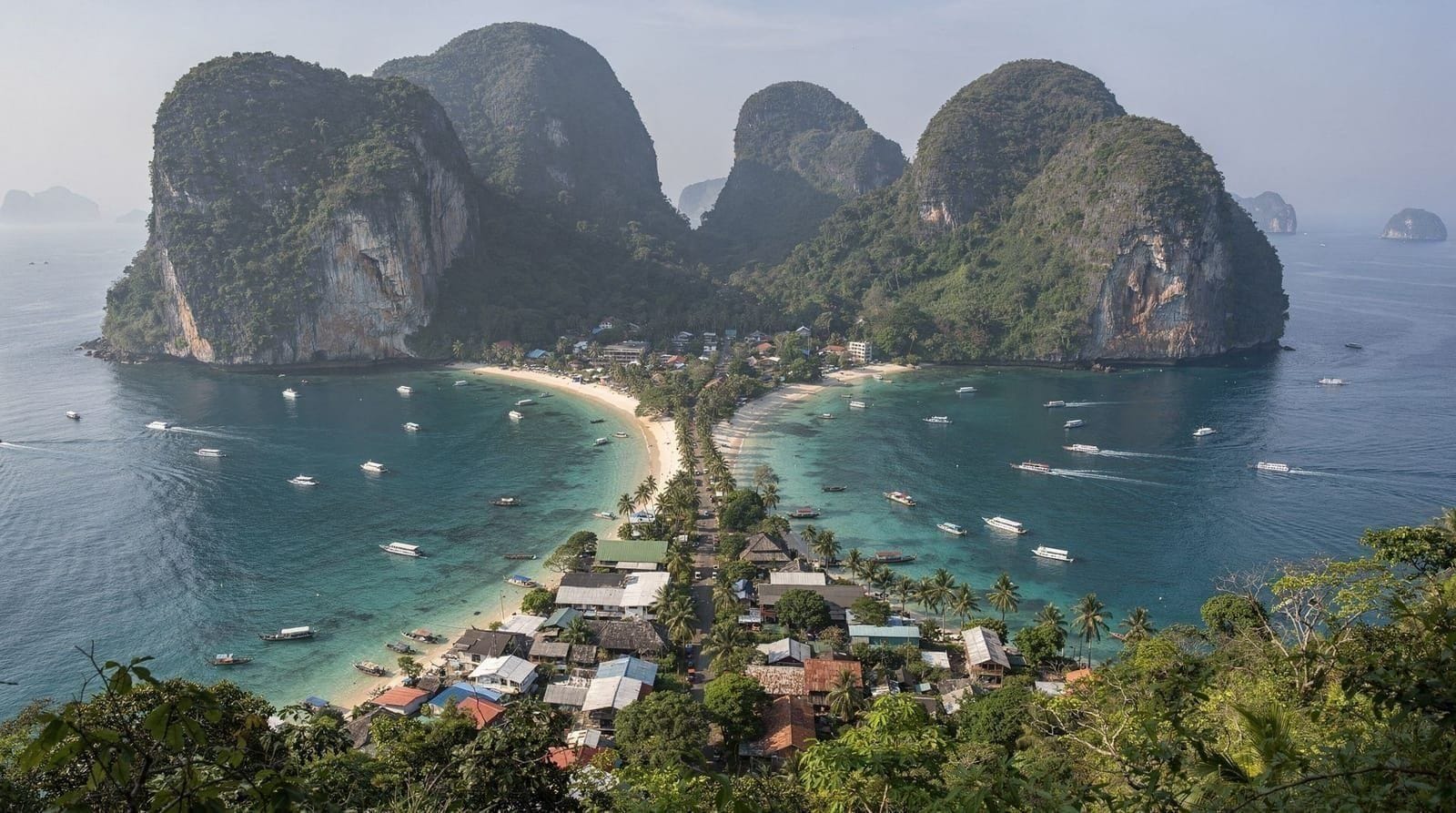
How many days in Phuket do you actually need?
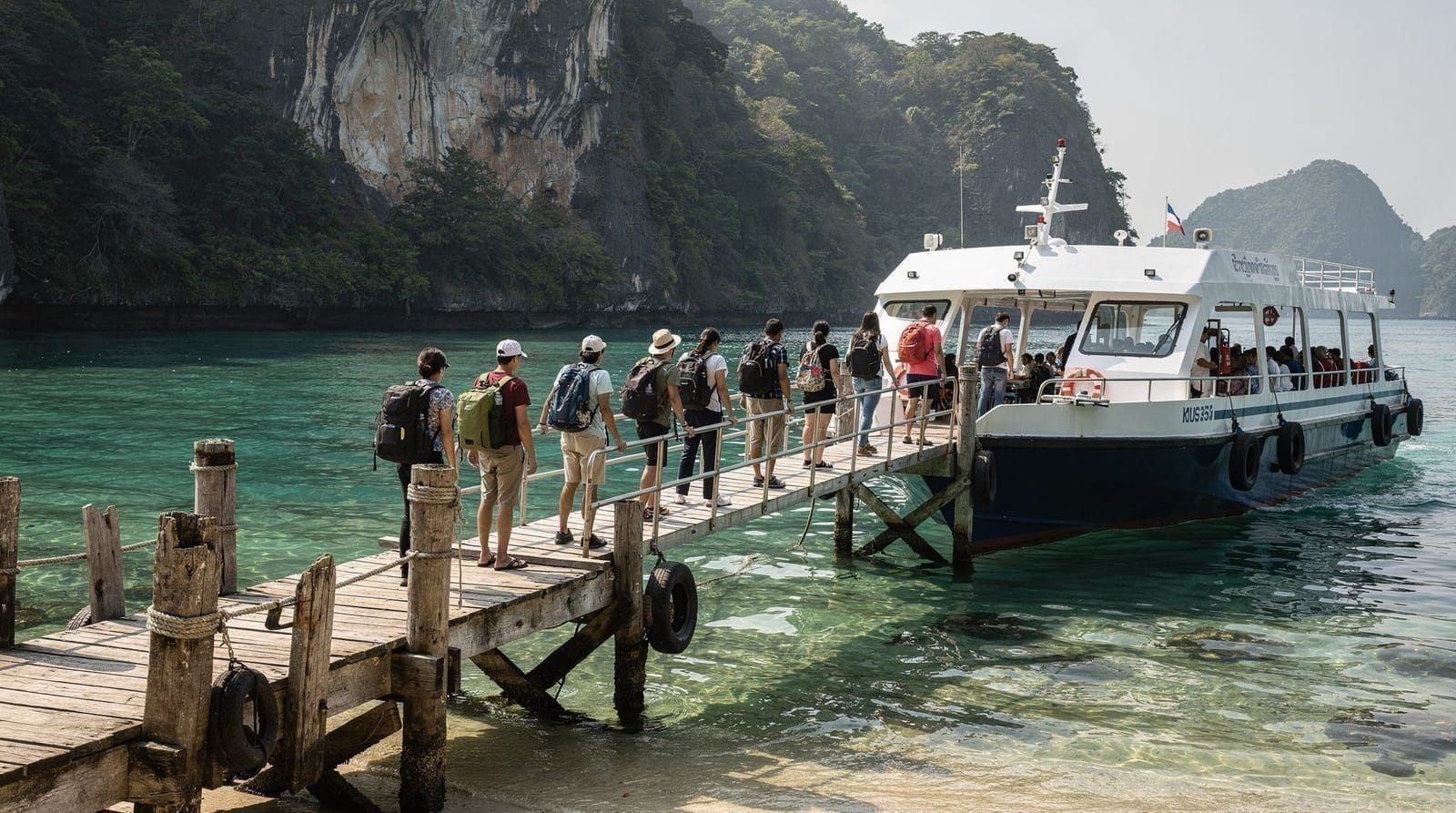
Phuket: Phi Phi, Maya Bay & Khai Island day tour by speedboat
How many days should I spend in Phuket?
Five to seven days is the sweet spot. Three days covers the headline highlights with no margin for rest. Seven days lets you do two or three island day trips, explore different beaches, and visit Old Town without feeling rushed. Ten or more days makes sense if you're combining Phuket with side trips to Krabi or Khao Sok.
The question of how many days to spend in Phuket depends on what you want to do more than any fixed formula. Here’s a realistic breakdown by trip length, with honest assessments of what’s achievable and what’s a stretch.
| Sweet spot | 5–7 days |
| Bare minimum | 3 nights, one island day trip only |
| Add Krabi | 10+ days total |
| Best season for a tight itinerary | November–April, low cancellation risk |
| Book day trips | 24–48 hours ahead in high season |
What determines how many days you need
Three factors shape the calculation:
- Island day trips — Each one is a full day (8–10 hours). If you want Phi Phi and Phang Nga Bay, that’s already two days committed.
- Travel style — A jam-packed sightseeing pace needs fewer days than a slow-travel beach holiday.
- Scope — Are you doing just Phuket, or combining it with Krabi, Khao Sok, or a liveaboard dive trip?
3 days in Phuket: what’s realistic
Three nights is the minimum useful stay. It gives you two full days and the tail-end of a third. Here’s what that looks like:
Day 1 — Arrive, orient, beach. If you land in the morning, afternoon at your base beach. Old Town dinner.
Day 2 — One full island day trip (Phi Phi + Maya Bay by speedboat is the classic). Leave 7 am, back 6 pm.
Day 3 — Morning: Big Buddha + Wat Chalong (2–3 hours total). Afternoon: second beach. Evening flight or relaxation.
What you miss with 3 days: Phang Nga Bay (would need day 4), snorkelling at Racha or Coral Island separately, the northern beaches (Kamala, Surin, Bang Tao), any cooking class or muay thai session, and meaningful downtime.
If your schedule forces 3 days, prioritise one island day trip and spend the rest of the time at one beach with relaxed meals and an Old Town evening.
Phi Phi, Maya Bay and Khai Island speedboat day trip5 days in Phuket: the comfortable minimum
Five nights is the most common duration for European travellers and gives a genuinely satisfying trip. A practical framework:
Day 1 — Arrive, settle in, beach afternoon, local dinner.
Day 2 — Phi Phi Islands full day (7 am–6 pm by speedboat).
Day 3 — Explore a second beach by scooter or Grab. Big Buddha viewpoint. Sunset at Promthep Cape.
Day 4 — Phang Nga Bay or Coral Island half-day. Old Town afternoon.
Day 5 — Optional cooking class (morning) or second beach. Late checkout if flying.
Five days lets you decompress between activities without feeling like you’re running a sightseeing marathon. The key priority choice is usually between Phang Nga Bay and a snorkelling/diving day — both are excellent but they don’t both fit in a single day.
7 days in Phuket: the ideal window
A week in Phuket hits the sweet spot between “too much to fit in” and “too much idle time.” You can:
- Do two or three island day trips without hurrying
- Explore three or four different beaches at a relaxed pace
- Add a half-day activity (cooking class, muay thai lesson, ATV tour)
- Visit Old Town properly, with time for a sunset market evening
- Have two or three days with no fixed plan — beach, book, pool
Sample 7-day structure:
| Day | Activity |
|---|---|
| 1 | Arrive, Kata or Karon beach, dinner |
| 2 | Phi Phi + Maya Bay speedboat |
| 3 | Explore Surin + Kamala beaches by scooter |
| 4 | Phang Nga Bay sea cave kayaking |
| 5 | Big Buddha + Chalong + Old Town food tour |
| 6 | Racha Island or Coral Island half-day, afternoon free |
| 7 | Relaxed beach day, evening departure or extra night |
The full 7-day itinerary has a day-by-day breakdown with logistics and accommodation suggestions.
10 days and beyond: when it makes sense
Ten or more days makes Phuket genuinely rewarding if you extend the scope:
Diving certification — A PADI Open Water course takes 3–4 days. Add it at the start or end of a beach-focused itinerary.
Khao Sok overnight — Khao Sok National Park is 2–3 hours northeast. A two-night stay gets you a Cheow Lan Lake floating bungalow and morning jungle walk — a completely different experience from coastal Phuket.
Krabi extension — 4–5 nights in Phuket + 3–4 nights in Krabi is one of the best Andaman itineraries. See the Phuket–Krabi combo itinerary.
Similan liveaboard — The Similan Islands are 70 km northwest. A 2–3 night liveaboard diving trip is among the best dive experiences in Southeast Asia (open November–April only).
James Bond Island and Phang Nga Bay sea canoe tourSpecific travel styles: how many days each needs
Families with young children
Five to six nights is ideal. Build in rest time — kids tire quickly in heat and long boat trips. Kata or Kamala as base. Day 2 for Coral Island half-day (shorter and calmer than Phi Phi), Day 4 for the interactive museum or elephant sanctuary.
Divers
Seven to ten days. Allow 3–4 days for PADI Open Water if certifying. Add Racha Island for intro dives and plan a full Similan or Surin day trip. November–April only for the best visibility and sea conditions.
Budget backpackers
Five nights is often the practical limit before the higher costs relative to other Thai destinations become a factor. Stay in Kata or Phuket Town, eat local, skip premium tours in favour of local longtail boats and cheap snorkel trips.
Digital nomads
Three to six weeks. Phuket has decent coworking spaces in Phuket Town and Kata. Monthly room rates drop significantly. The digital nomad guide covers neighbourhoods, internet speeds, and visa strategy for longer stays.
Planning note: day trip booking windows
In high season (December–March), popular Phi Phi and Phang Nga tours sell out 24–48 hours ahead. Book as soon as you arrive, or pre-book online. In low season, same-day booking is almost always fine.
Tours depart early — typically 7:00–7:30 am. If you land in Phuket late on day 1, your earliest day trip is day 3 (you need a full night’s rest and a day to orientate).
Coral Island half-day speedboat snorkelling tripHow the season affects how many days you need
The number of days you plan on paper can shift significantly depending on when you visit. Season is not just about weather — it determines which tours run reliably, how often boats cancel, and how much buffer you need to build in.
Dry season (November–April) is when Phuket is easiest to plan. Sea conditions on the Andaman coast are calm, visibility is excellent for snorkelling and diving, and virtually every tour operator runs daily departures. You can plan a tight itinerary with back-to-back day trips because the probability of cancellation is low. For the Similan Islands, this is the only window — the park closes June through October. If seeing the Similans is on your list, it locks your travel dates.
Monsoon season (June–October) requires a different approach. September is the worst month: heavy rain, rough seas, and frequent tour cancellations. If you’re visiting during this period, add one to two buffer days to every activity-heavy itinerary. Book a Phi Phi or Phang Nga Bay tour and you may get a cancellation the night before — having a spare day means you can rebook the next morning rather than miss it entirely. The upside is that accommodation prices drop significantly (mid-range hotels fall to 1,000–2,000 THB/night) and the island is noticeably less crowded. A relaxed beach stay of 7–10 days during low season can be excellent value; a packed 5-day itinerary in September is a gamble.
Transition months (April–May and October–November) are less predictable. October-November sees conditions improving and is increasingly popular as an “almost dry season” value window. April–May is hit and miss — the tail end of dry season weather can extend well into May some years, while others see early monsoon squalls.
For a detailed month-by-month breakdown of what to expect, see the best time to visit Phuket guide. The practical takeaway for trip length: in dry season, 5 days is genuinely 5 productive days. In monsoon, budget 6–7 days to reliably fit 5 days of activities.
What first-timers consistently underestimate
Experienced Phuket visitors budget their days differently from first-timers. These are the planning errors that repeatedly catch people out.
Travel time between beaches is longer than it looks. Phuket is 50 km long. Getting from Patong to Kata Beach looks like nothing on a map — it’s 30–40 minutes by Grab (roughly 150–200 THB) through hilly roads. Getting from Kata to Bang Tao or Surin in the north adds another 30–40 minutes on top. If you’re based in the south and want to explore the northern beaches, budget a half-day for the logistics alone, not just the beach time. A scooter (300–600 THB/day) gives you more flexibility than Grab for this kind of multi-stop exploration, but the roads between areas are not flat.
Tour departures start at 7 am — and that’s not optional. The early departure on island day trips is not arbitrary. Tours leave at 7–7:30 am to reach outer islands (Phi Phi, Phang Nga Bay) during the calmest sea window and to arrive at Maya Bay before the crowd peaks around 10 am. If you’re a late sleeper or planning a late-night out, schedule active days and beach days in the right order. Going out until midnight on day 2 and then doing a Phi Phi trip on day 3 is a common regret. The Phi Phi Islands guide has more on why early departure matters for that specific trip.
Arrival and departure days are not full days. A midday flight landing at Phuket airport (HKT) at 1 pm means you’re at your beach hotel by 2:30–3 pm at best (45–60 minutes by Grab, 400–700 THB from airport to Kata or Karon). That’s an afternoon and evening, not a day. Similarly, a noon departure flight means checkout by 10–11 am and two hours at the airport. Add these realities to your planning: a 5-night trip is 5 nights but 4 usable full days at best, often 3.5.
The airport is not near the beaches. HKT airport is in the north of the island. Kata Beach and Karon Beach — two of the most popular bases for first-timers — are 45–60 minutes south. There is no rail link and no express bus. Grab is reliable and the fare is consistent (400–600 THB for the airport run), but factor the transfer time into your first and last days. Arriving late, eating at the hotel restaurant, and collapsing into bed is a legitimate strategy for day 1.
The beach variety is worth the effort. First-timers often stay in one spot and assume all of Phuket’s beaches are similar. They’re not. Patong is busy and urban; Kata and Karon are calmer and family-friendly; Surin and Bang Tao are upscale and quieter; Nai Harn in the south is arguably the most beautiful and almost entirely Thai local in atmosphere. The best beaches in Phuket guide covers each area with honest assessments of who each suits best — read it before you book accommodation, not after.
Restaurant meals take longer than at home. Thai service culture is relaxed. A sit-down dinner at a beach restaurant takes 1.5–2 hours including ordering, waiting, and eating. Budget this into evenings, especially if you have a 7 am tour the next morning. Street food (60–120 THB for a meal) is faster and often better — particularly the night markets in Phuket Old Town and around Kata.
The Phuket travel guide for first-timers covers these logistics in more detail, including which neighbourhoods to base yourself in and how to manage the first 24 hours after landing. For context on which beaches are worth visiting and how far apart they really are, the best beaches in phuket guide includes a practical distance and travel time breakdown that helps with realistic day planning.
Sample cost per day by trip length
Planning how many days also means planning how much money you need. Costs don’t scale linearly in Phuket — island day trips and arrival/departure days swing the daily average significantly.
3-day trip: The island day trip on day 2 costs 1,200–2,200 THB alone. Add accommodation (1,500–2,500 THB/night mid-range), meals (500–800 THB/day eating mix of local and restaurant), and airport transfers (600–700 THB each way). Estimated total per person: 12,000–18,000 THB ($368–$552) excluding flights, for mid-range. The per-day average looks high because day 1 and day 3 include airport transfers.
5-day trip: Two island day trips (2,400–4,400 THB combined), 5 nights accommodation, meals, and internal transport. Estimated total per person: 20,000–30,000 THB ($614–$920) for mid-range. Per-day average drops to roughly 4,000–6,000 THB once accommodation and meals even out. The 5-day trip offers the best cost efficiency per activity day.
7-day trip: Three island day trips possible, more beach days, potentially a cooking class or muay thai session. Estimated total per person: 28,000–42,000 THB ($859–$1,289) mid-range. Adding a day to a 7-day trip costs a marginal 1,500–2,500 THB (accommodation + food) rather than the inflated per-day average of shorter trips — the fixed costs (flights, airport transfers) are already absorbed.
Budget floor for any trip length: Hostels at 400–600 THB/night, street food at 200–300 THB/day, free beaches, and one island day trip at 1,200 THB brings a 5-day trip to roughly 8,000–10,000 THB ($245–$307) per person excluding flights. The phuket travel guide for first-timers has practical money advice including ATM fees and which exchange booths to use in Patong.
Frequently asked questions about How many days in Phuket do you actually need?
Is 3 days enough in Phuket?
Is 5 days in Phuket enough?
Is 7 days too long in Phuket?
What can you do in Phuket in 10 days?
Is Phuket worth a two-week stay?
How many days do you need for the main tourist sites?
Can I combine Phuket with Krabi in one trip?
Should I stay in one beach or move around Phuket?
Top experiences
Bookable activities with verified prices and instant confirmation on GetYourGuide.