Phuket vs Krabi vs Koh Samui — which should you choose?
Krabi: Tiger Cave Temple, Emerald Pool & hot springs tour
Should I visit Phuket, Krabi, or Koh Samui?
Choose Phuket for infrastructure, island variety, and international connectivity. Choose Krabi for dramatic limestone scenery, rock climbing, and a less touristy feel. Choose Koh Samui for a self-contained island experience with direct flights and the Gulf of Thailand's different seasonal timing.
Thailand’s three main beach destinations each have their own character and distinct advantages. Choosing between them — or deciding how to combine them — is one of the most common planning questions for first-time visitors to southern Thailand. Here’s a direct, experience-based comparison.
| Phuket | Best infrastructure, most day trips, direct international flights |
| Krabi | Most dramatic scenery, rock climbing, 10–20% cheaper |
| Koh Samui | Gulf coast, opposite dry season, good for Oct–Jan |
| Combine | Phuket + Krabi is the classic pairing, 4–5 + 3–4 nights |
| First-timers | Phuket, for infrastructure and day-trip variety |
The core difference in one sentence
Phuket is Thailand’s most developed beach island — best infrastructure, widest tour selection, easiest to navigate. Krabi is more scenic, less crowded, and more adventurous. Koh Samui is on a different coast with a different seasonal calendar, best for people who’ve already done the Andaman.
Phuket: the infrastructure leader
What Phuket does best:
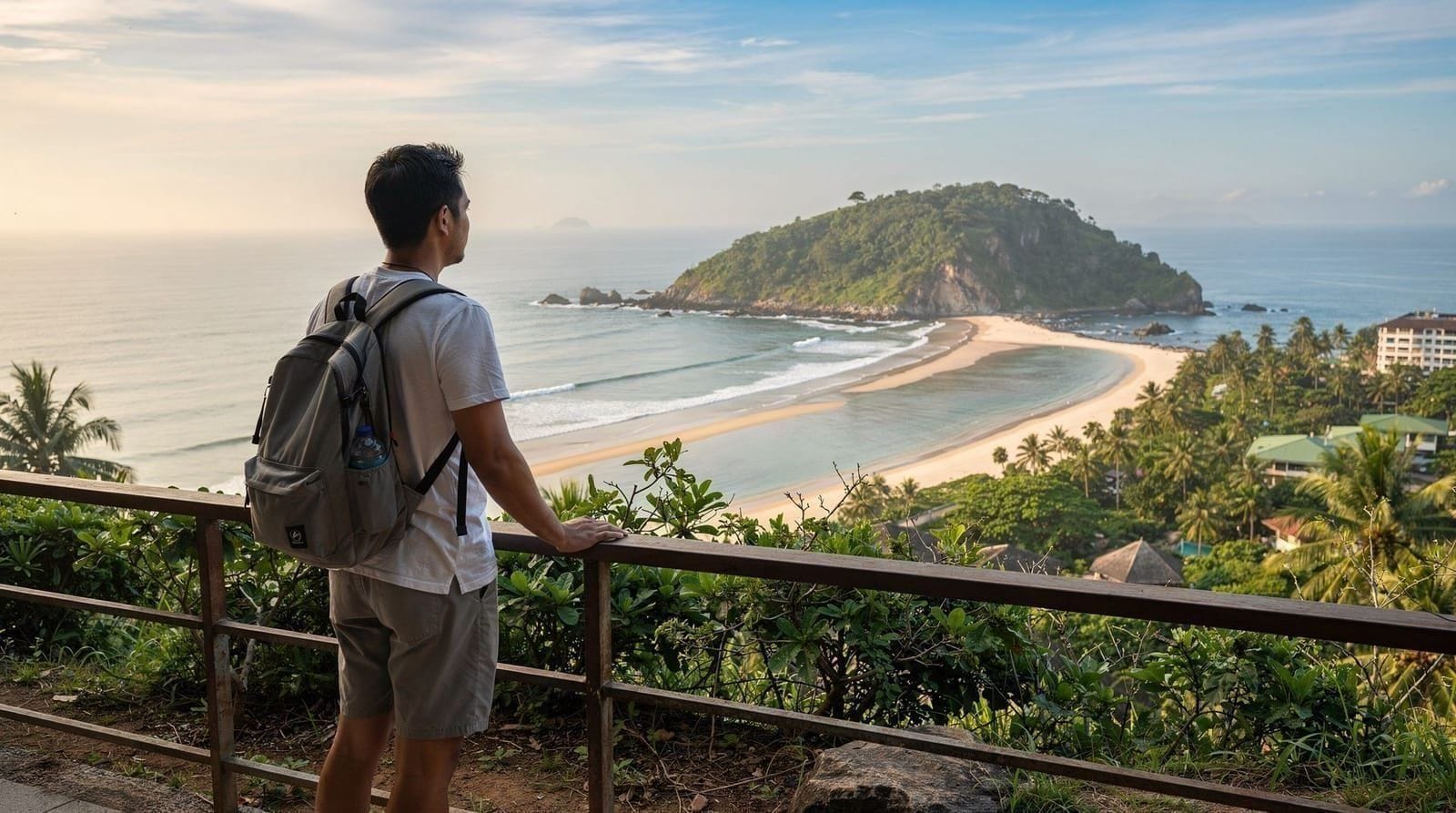
Phuket wins on connectivity and range. Phuket International Airport (HKT) receives direct flights from London, Frankfurt, Sydney, and over 50 other cities. Once you’re in, the island has excellent roads, Grab ride-hailing, and easy pier access for day trips.
The island’s strongest point is day trip variety. Within a 90-minute speedboat radius from Rassada Pier:
- Phi Phi Islands — the Andaman’s most famous island cluster
- Phang Nga Bay — limestone karst sea caves and James Bond Island
- Similan Islands — world-class snorkelling and diving (November–April)
- Racha Island — accessible diving and snorkelling
- Coral Island — short half-day option
Phuket’s weaknesses:
Patong is genuinely overwhelming for many visitors. The island also suffers from beach hawker saturation in peak season, and the mass tourism infrastructure can feel impersonal at the larger resorts. Authenticity requires more effort to find than it does in Krabi or quieter Thai islands.
Best for: First-time Thailand visitors, families, divers, anyone wanting maximum day-trip options, visitors on a tight schedule who want reliable infrastructure.
Krabi: the scenery winner
What Krabi does best:
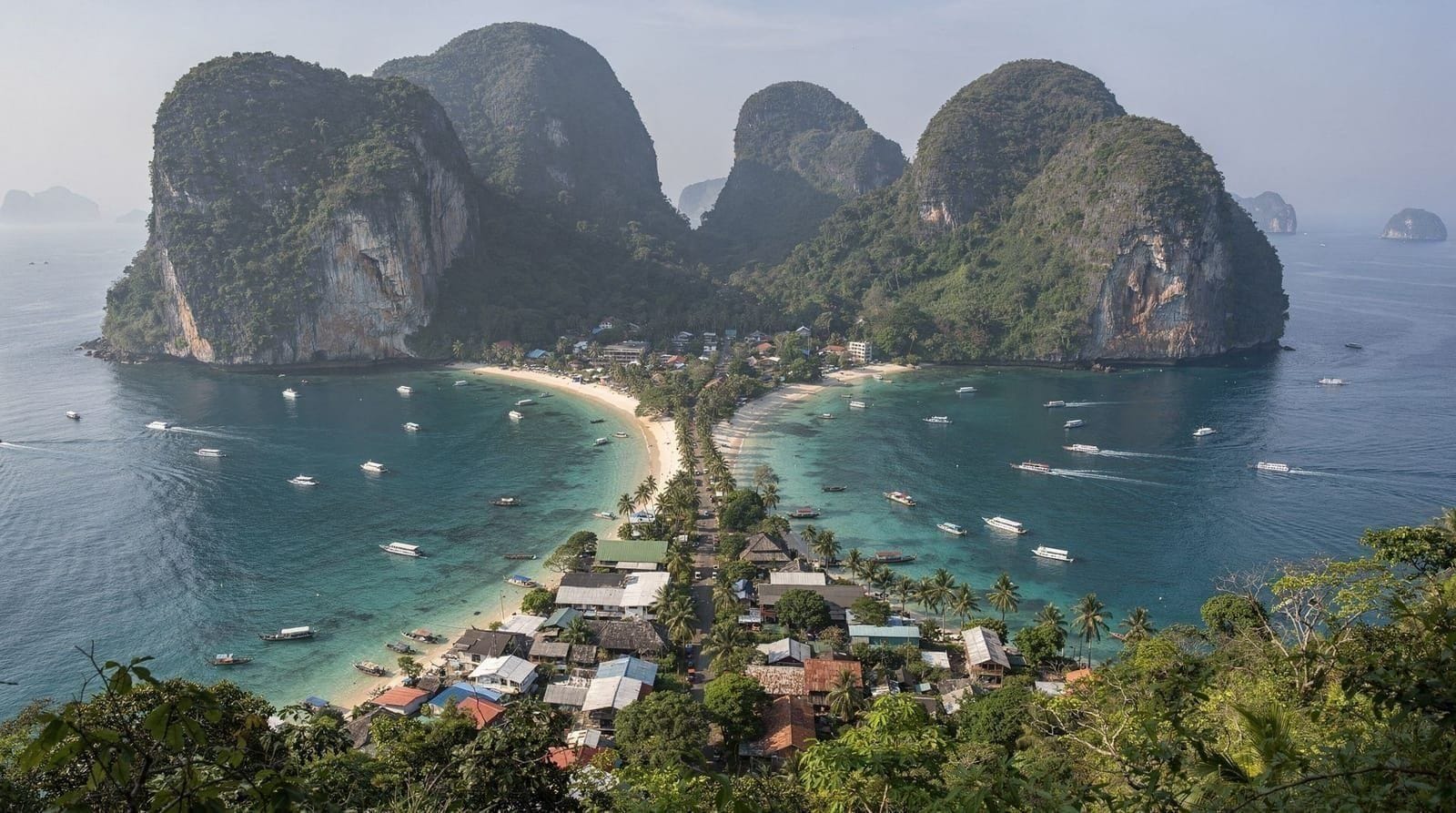
Krabi has the most dramatic scenery of the three destinations. The towering limestone karsts that rise from the water around Railay Beach and the 4 Islands are genuinely extraordinary — no photograph adequately captures the scale. Railay Beach is accessible only by longtail boat (10 minutes from Ao Nang) and has no road access at all, which keeps it quieter than comparable attractions.
Krabi is also Thailand’s rock climbing capital. The limestone cliffs of Railay and Tonsai have routes for all levels, with several reputable schools operating there.
The town of Ao Nang has a backpacker strip with budget guesthouses, a good night market, and a notably more relaxed vibe than Patong. Outside peak season it’s a pleasant base.
Krabi: Tiger Cave, Emerald Pool and hot springs day tourKrabi’s weaknesses:
Krabi doesn’t have an international airport on the same scale as Phuket — Krabi Airport (KBV) has connections but fewer direct long-haul flights. Most international visitors connect via Bangkok. The beach at Ao Nang is average; the best beaches (Railay, Phra Nang) require boat access. The 4 Islands tour quality varies — book with a reputable operator.
Best for: Adventurous travellers, rock climbers, couples wanting dramatic scenery, backpackers, second-time Thailand visitors, anyone who finds Phuket too touristy.
Koh Samui: the Gulf alternative
What Koh Samui does best:
Koh Samui is on the Gulf of Thailand — the east coast — rather than the Andaman Sea. This matters primarily for weather: Samui’s peak season runs roughly February to August, making it a useful destination for October–January travel when Phuket’s monsoon transition makes conditions less predictable.
Koh Samui has its own international airport (USM) with direct flights from several European cities and Singapore. The island has a well-developed ring road making independent exploration easy. The resort strip at Chaweng is lively; the north coast around Bophut and Fisherman’s Village is quieter and more upscale.
The proximity to Koh Phangan (30-minute ferry) makes Samui the launch point for the Full Moon Party if that’s on your agenda.
Koh Samui’s weaknesses:
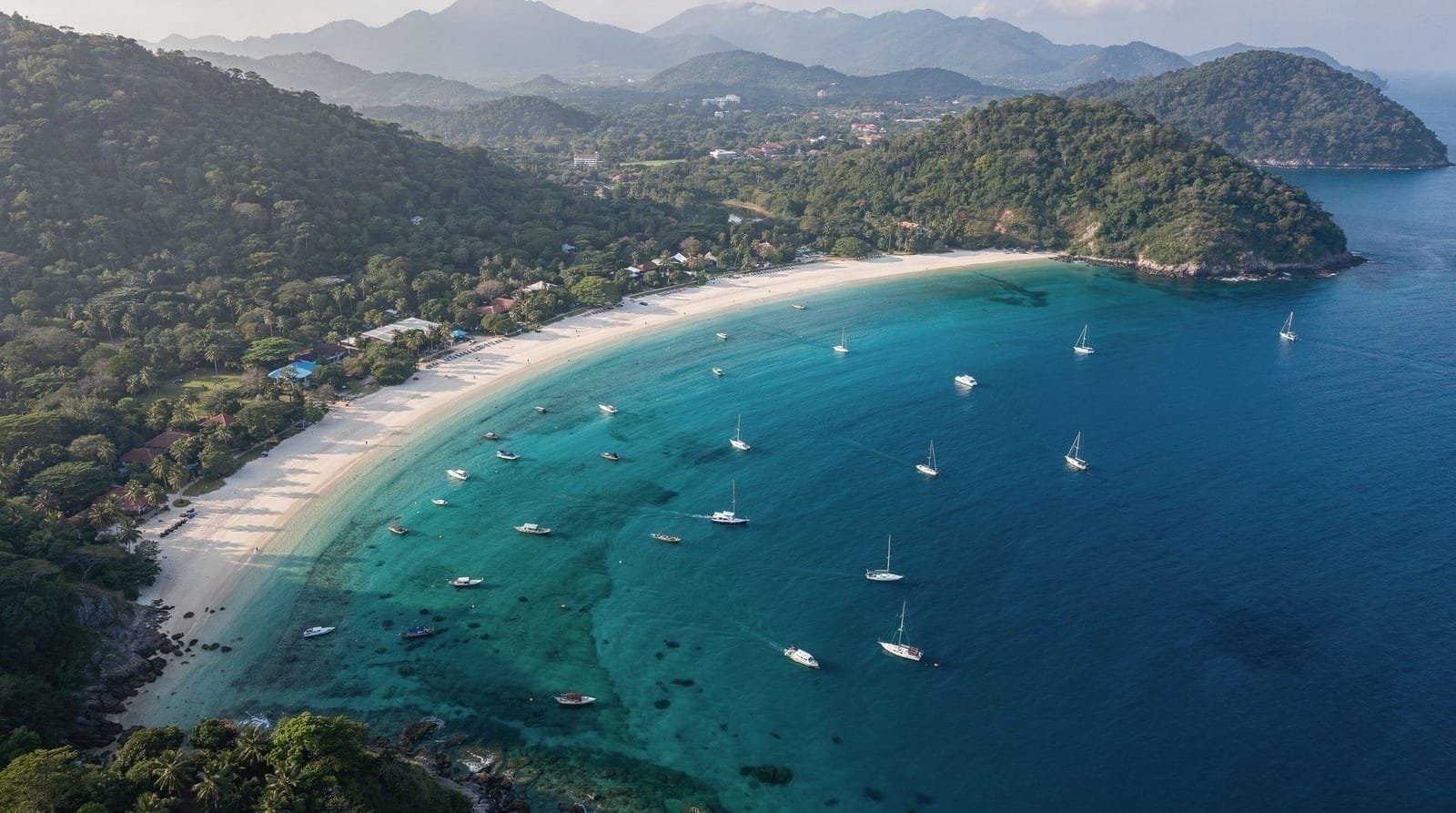
The beaches are generally not as good as Phuket’s best (Karon, Kata Noi, Surin). Chaweng in particular has been heavily developed and the beach quality has declined. Snorkelling directly off the beach is poor compared to Andaman sites. The diving around Koh Tao (90 minutes by ferry) is good but requires an extra move.
Best for: Travellers visiting November–January who want a calmer Andaman alternative, Full Moon Party-seekers, couples who’ve already done Phuket and want something different.
Side-by-side comparison
| Factor | Phuket | Krabi | Koh Samui |
|---|---|---|---|
| International flights | Excellent (direct from EU/US/AU) | Good (via Bangkok) | Good (via Singapore/KL) |
| Beaches | Very good (Karon, Kata Noi, Surin) | Good (Railay, Phra Nang) | Average–good (Lamai) |
| Island day trips | Excellent (Phi Phi, Similan, Phang Nga) | Good (4 Islands, Hong Islands) | Moderate (Koh Tao for diving) |
| Diving | Excellent (Similan, Racha, Shark Point) | Moderate | Good (via Koh Tao) |
| Nightlife | Best in southern Thailand (Patong) | Quiet bar scene | Lively (Chaweng) |
| Scenery | Good | Exceptional (limestone karsts) | Good |
| Crowds | High (peak season) | Medium | Medium |
| Cost | Medium–high | Slightly cheaper | Similar to Phuket |
| Family-friendly | Yes (Kata, Kamala) | Yes (Ao Nang) | Yes (Chaweng north) |
| Rock climbing | No | Yes (world-class) | No |
| Dry season | Nov–March | Nov–March | Feb–Aug |
Which to choose based on your priorities
Choose Phuket if:
- It’s your first time in southern Thailand
- You want maximum day-trip variety
- You’re diving (especially Similan Islands, open November–April)
- You’re travelling with family and want infrastructure
- You need a direct international flight
Choose Krabi if:
- You want dramatic scenery over facilities
- Rock climbing is on your agenda
- You’re on a budget (10–20% cheaper overall)
- You want a quieter base than Phuket
- You’ve already done Phuket
Choose Koh Samui if:
- You’re travelling November–January and want the most reliable weather on a Thai coast
- The Full Moon Party at Koh Phangan is your objective
- You prefer Gulf of Thailand diving (via Koh Tao)
- You want a self-contained island experience with a ring road
Combining them
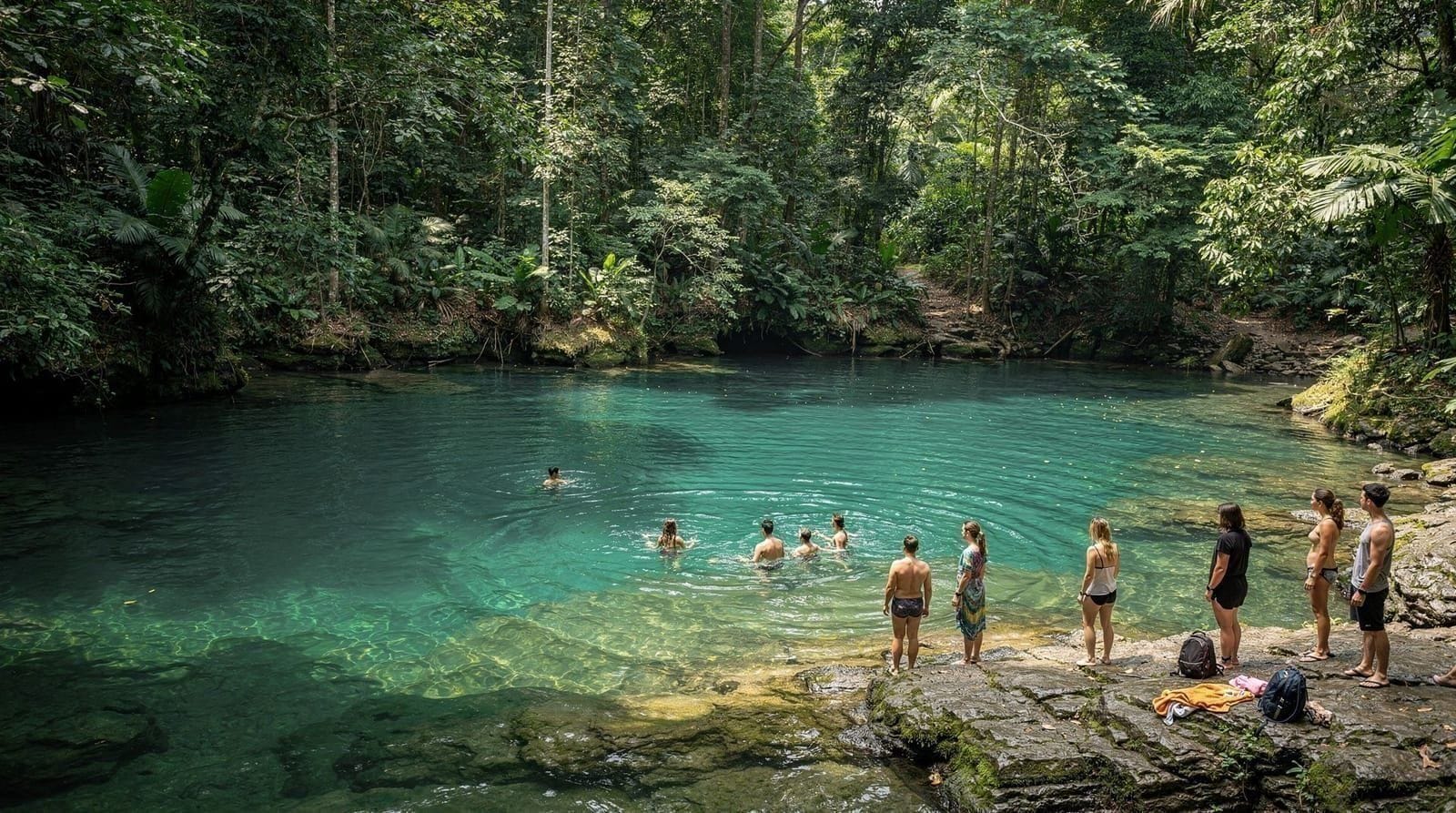
The most common two-destination trip is Phuket + Krabi — they’re 50 km apart and complement each other perfectly. A typical split: 4–5 nights Phuket (infrastructure, island day trips, Old Town) plus 3–4 nights Krabi (Railay Beach, 4 Islands, Emerald Pool).
Getting between them: seasonal direct ferry (November–March, ~2 hours, 1,500–2,000 THB), year-round bus (3 hours, 300–500 THB), or taxi (1.5–2 hours, 2,500–4,000 THB). See the Phuket to Krabi transport guide for current schedules.
Phuket + Koh Samui requires a flight (1.5 hours via Bangkok) or a very long surface trip (7+ hours). It works well for a 10–14 day trip but is logistically more complex.
James Bond Island and Phang Nga Bay sea canoe tourFood, culture and day-to-day experience
The three destinations differ meaningfully beyond beaches and logistics. Phuket has the most distinctive culinary identity of southern Thailand — the Sino-Portuguese heritage of Phuket Old Town produces dishes like moo hong (slow-braised pork belly in five-spice), oh tao (oyster cake), and khanom jeen (fresh rice noodles with curry broth). Street food at Old Town shophouses runs 60–120 THB per dish. The Sunday Walking Street on Thalang Road is one of the best food markets in the south.
Krabi’s food scene is centred on Ao Nang’s night market and local seafood restaurants — good, but without the same depth of culinary history. Koh Samui has a similar situation, with Bophut’s Fisherman’s Village offering the most charming dining environment.
For cultural sightseeing beyond beaches, Phuket again has the widest range. Big Buddha (45 m white marble statue on Nakkerd Hill, free, open 6 am–7 pm), Wat Chalong (Phuket’s most important Buddhist temple, free entry, shoulders and knees must be covered), and the Old Town itself can fill 2–3 worthwhile days without beach time. Krabi’s Tiger Cave Temple (1,237 steps to a summit viewpoint) is the standout inland attraction. Koh Samui has temples but its main appeal remains the coast.
Budget: what to realistically expect at each destination
Day-to-day costs are broadly comparable across all three, with Krabi running slightly cheaper for accommodation and food. Here’s a practical framework based on 2026 prices:
Phuket: Street food at local shophouses runs 60–120 THB per meal. Mid-range restaurant meals 200–500 THB. Grab fares between beaches 100–300 THB. A mid-range double room runs 1,500–3,500 THB/night at Kata or Karon. A full Phi Phi day trip costs 1,200–2,200 THB per person in a group. Budget travellers staying in guesthouses and eating local food can manage 1,200–1,800 THB/day; comfortable mid-range visitors spending 2,500–4,000 THB/day.
Krabi: Ao Nang has a wider range of genuinely budget guesthouses (from 400–700 THB/night) than Kata or Karon. Street food prices are comparable to Phuket. The 4 Islands tour runs 1,000–1,500 THB per person — slightly cheaper than Phuket’s Phi Phi tours. Budget travellers can manage 1,000–1,500 THB/day; mid-range 2,000–3,500 THB/day.
Koh Samui: Prices track Phuket closely. Chaweng has budget guesthouses from 500–900 THB but mid-range quality starts higher than Phuket equivalents. The ring road makes car rental (900–1,500 THB/day) useful here in a way it isn’t on Phuket where Grab is more practical.
For all three, the biggest single-day cost is usually a boat tour — budget for 1,000–2,500 THB on any day you do an island trip.
Practical entry notes
Since June 2026, EU, UK, US, Canadian, Australian, and New Zealand passport holders receive 30 days visa-free for Thailand. A TDAC (Thailand Digital Arrival Card) must be completed online before flying — it takes about 10 minutes. This applies equally to arrivals at Phuket (HKT), Krabi (KBV), and Koh Samui (USM).
If you’re combining destinations with bus or ferry travel, note that crossing between Phuket and Krabi during monsoon (June–October) can be affected by sea conditions on the ferry route. Year-round bus service is reliable regardless of weather.
Getting around within each destination also varies. Phuket has the best Grab coverage — the app works reliably across the whole island with fares of 100–300 THB for most intra-beach routes. Krabi’s Ao Nang is compact enough to walk, and the longtail boats to Railay operate as an informal shuttle. Koh Samui’s ring road is best explored by rented car or scooter — the island’s layout rewards independent transport in a way the others don’t.
Who regrets which choice
Looking at the pattern of traveller feedback across all three destinations, a few regret patterns come up repeatedly and are worth naming directly.
Travellers who choose Phuket expecting quiet, untouched beaches are sometimes disappointed by Patong’s density — though this is entirely avoidable by basing at Kata, Kamala, or Bang Tao instead, none of which share Patong’s character. Read the best beaches in Phuket guide before booking rather than defaulting to Patong because it’s the most-searched name.
Travellers who choose Krabi expecting Phuket-level infrastructure sometimes find the more limited direct flight options and smaller town centre restrictive, particularly on a short trip where a Bangkok connection eats into limited days. Krabi rewards travellers with slightly more time and a taste for scenery over convenience.
Travellers who choose Koh Samui without checking the seasonal calendar sometimes arrive during its own shoulder-season rain (September–November) expecting the reliable weather that made them pick it over Phuket in the first place. Samui’s weather advantage is real but time-specific — it doesn’t hold year-round.
A closer look: which delivers better value for a week
For a single week-long trip, value depends heavily on what “value” means to you. If it means maximum activity variety per baht spent, Phuket wins clearly — the island’s day-trip infrastructure means a single week can include Phi Phi, Phang Nga Bay, temples, and Old Town food without excessive planning effort. If value means the most dramatic scenery per baht, Krabi wins — Railay Beach and the karst landscape deliver visual impact that Phuket’s more developed coastline can’t match, at a slightly lower daily cost. If value means avoiding monsoon uncertainty during a specific travel window (particularly October–December), Koh Samui’s opposite seasonal pattern can be the deciding factor regardless of the other comparisons.
Krabi Outback Explorer: Tiger Cave, waterfalls and hot springsFrequently asked questions about Phuket vs Krabi vs Koh Samui — which should you choose?
Is Krabi better than Phuket?
Is Koh Samui worth visiting compared to Phuket?
Which destination is cheapest — Phuket, Krabi, or Koh Samui?
Can you combine Phuket and Krabi in one trip?
Which is better for families — Phuket or Krabi?
Which has better nightlife — Phuket, Krabi, or Koh Samui?
Is the weather the same in Phuket, Krabi, and Koh Samui?
Which is better for diving — Phuket or Krabi?
Which destination is best for a first-time visitor to southern Thailand?
Is it worth visiting all three destinations in one trip?
Top experiences
Bookable activities with verified prices and instant confirmation on GetYourGuide.