Ferry vs speedboat — which to take to the islands near Phuket?
Phuket: Phi Phi Islands speedboat tour
Should I take a ferry or speedboat to the Andaman islands from Phuket?
For day trips to Phi Phi or Phang Nga Bay, take a speedboat — you get 2+ more hours on the islands. For overnight trips where schedule flexibility matters, ferries are cheaper and more comfortable for the crossing (350–500 THB vs 1,200–2,000 THB). For Krabi, a shared minibus + ferry is cheapest; taxi is fastest.
The ferry vs speedboat decision shapes your entire island experience. It’s not just about comfort — it’s about how much time you actually spend where you want to be. Here’s the honest breakdown.
| Day trip pick | Speedboat — 2+ extra hours on the islands |
| Overnight pick | Slow ferry — cheaper, more stable, luggage-friendly |
| Cheapest to Phi Phi | Car ferry, around 200–350 THB one-way |
| Fastest to Phi Phi | Speedboat, 45–60 minutes |
| Similan Islands | No public ferry — speedboat, catamaran or liveaboard only |
The core trade-off
Ferry: Slower (90–120 minutes), cheaper (350–500 THB one-way passenger ferry), more stable, suitable for luggage, and better if you’re staying overnight.
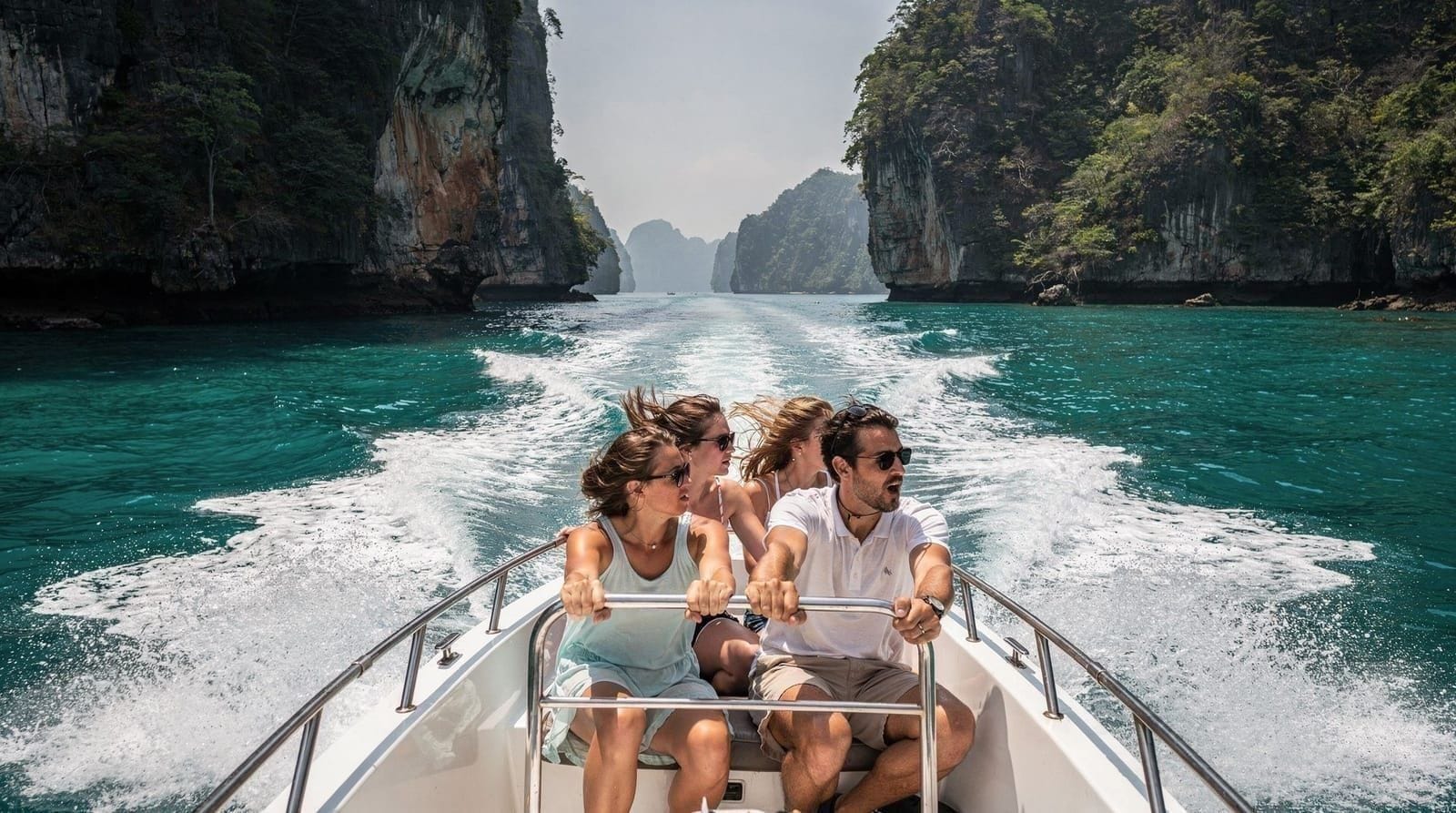
Speedboat: Faster (45–60 minutes), more expensive for the transport alone (or included in a tour package), bouncier in choppy seas, essential for day trips where time at the destination matters.
The calculation changes based on your trip type:
- Day trip: Almost always take a speedboat. Losing 60–90 minutes each way on a slow ferry costs 2–3 hours on the islands.
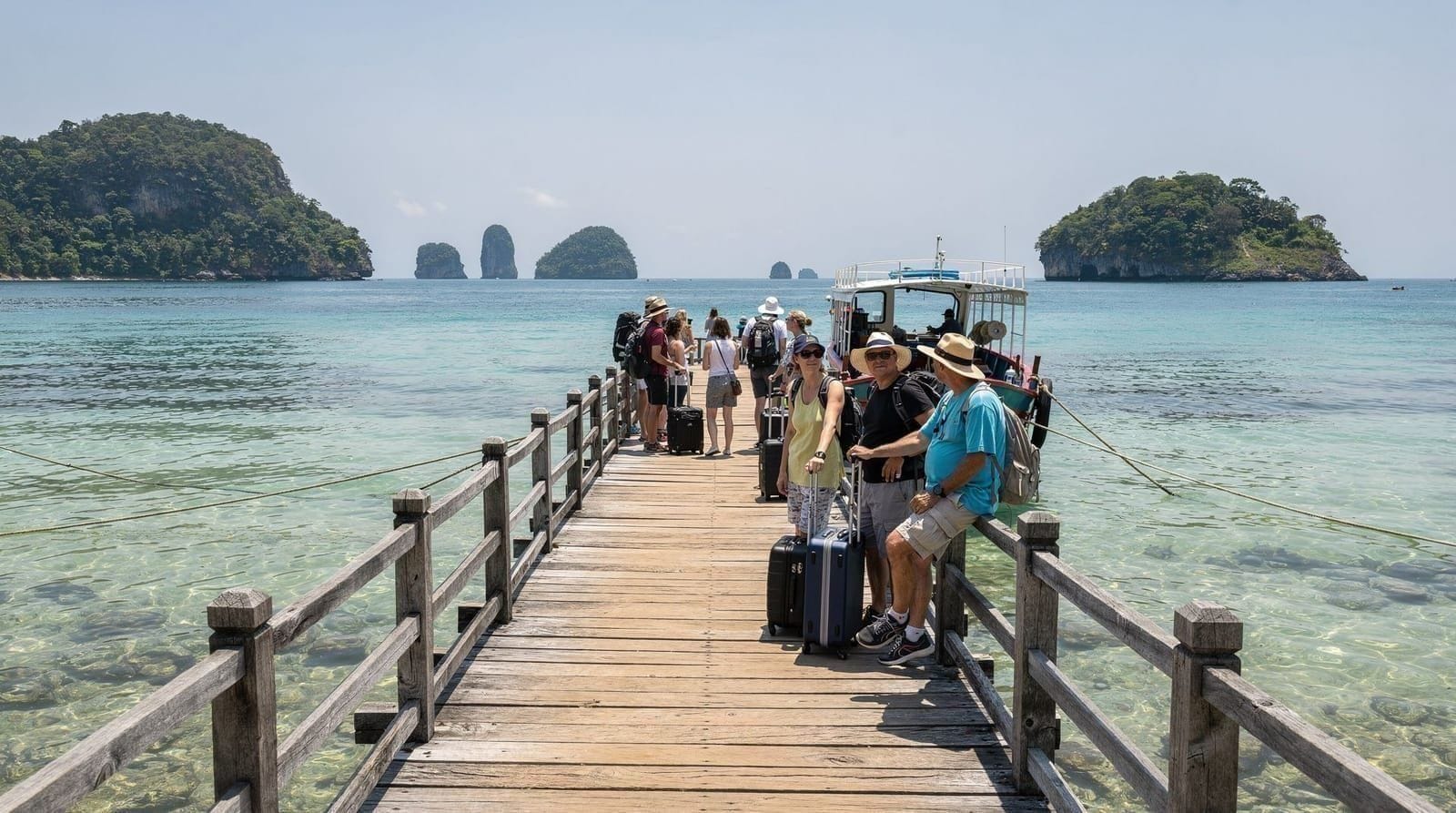
- Overnight stay at Phi Phi: Slow ferry or passenger speedboat ferry makes more sense — you’re not time-pressured.
- Budget one-way transfer: Slow car ferry to Phi Phi is the cheapest option at 200–350 THB.
Phi Phi: the main route
From Phuket (Rassada Pier)
Slow ferry / car ferry:
- Operator: Raja Ferry Port (departs from north Phuket, near Bang Rong Pier), Andaman Wave Master
- Duration: 90–120 minutes
- Price: 200–350 THB one-way
- Frequency: 2–3 departures per day in high season, reduced in low season
- Best for: Overnight travellers carrying luggage, backpackers
Passenger speedboat ferry:
- Duration: 60 minutes
- Price: 350–500 THB one-way
- Operators: Multiple companies from Rassada Pier
- Best for: Budget day trippers or one-way transfer without an organised tour
Speedboat day tour:
- Duration: 45–60 minutes
- Price: 1,200–2,200 THB return (includes island activities, guide, usually lunch)
- Departs: 7:00–8:30 am typically
- Best for: First-time visitors who want a guided experience with activities
Phuket to Krabi
The Phuket–Krabi crossing is 50 km and involves a different set of options:
Tigerline Ferry (seasonal, Nov–Mar):
- Route: Phuket → Phi Phi → Krabi (Klong Jilad Pier)
- Duration: 2.5–4 hours total
- Price: 1,500–2,000 THB
- Best for: Scenic crossing that visits Phi Phi en route, no connection needed
Speedboat transfer:
- Duration: 90 minutes direct
- Price: 800–1,200 THB one-way per person (shared speedboat)
- Best for: Quick crossing without island stops
Bus + ferry combination (year-round):
- Route: Phuket → Phang Nga → Krabi by road (2.5–3 hours) or Phuket → Krabi ferry from Klong Jilad Pier
- Price: 300–500 THB
- Best for: Budget travellers, year-round reliability
Private taxi (year-round):
- Duration: 1.5–2 hours door-to-door
- Price: 2,500–4,000 THB total (split by group)
- Best for: Families, groups, or those with lots of luggage
Full details in the Phuket to Krabi transport guide.
Phuket to Koh Yao Noi/Yai
Koh Yao Noi and Koh Yao Yai are small islands in Phang Nga Bay, accessible year-round.
Regular ferry from Bang Rong Pier (north Phuket):
- Duration: 30–45 minutes
- Price: 100–150 THB one-way
- Frequency: Several departures per day (more in high season)
- Best for: Overnight stays, locals, budget travellers
Speedboat transfer:
- Duration: 20–25 minutes
- Price: 300–500 THB one-way per person
- Best for: Day trips or quick transfers
Comfort factors
Motion sickness
The Andaman Sea in dry season is calm and most people have no issues. In choppy conditions (especially September–October), the speedboat crossing to Phi Phi can be rough — the boats are lightweight and small waves become significant bounces. If you’re sensitive:
- Take motion sickness medication (Dramamine or similar) 1 hour before departure
- Sit at the rear of the speedboat — the least bouncy position
- Fix your gaze on the horizon, not the interior of the boat
- Slow ferries are significantly more stable in rough conditions
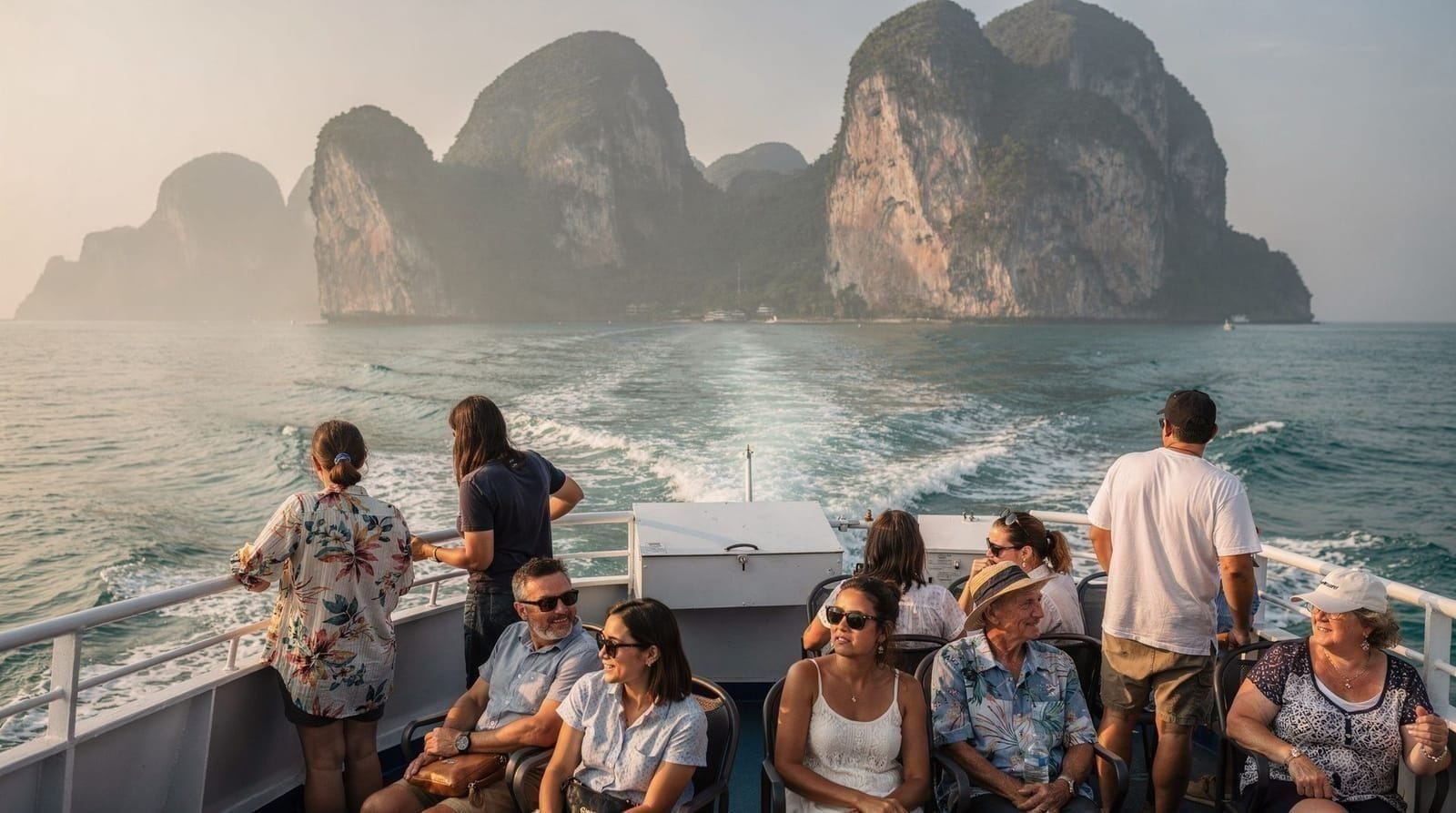
On the positive side: the crossing in excellent weather (clear skies, glassy sea) is one of the most beautiful boat journeys in Southeast Asia regardless of boat type.
Wet on speedboats
Speedboats spray — sometimes substantially. In choppy conditions, expect to get wet even under the canopy. Seat plastic bags for electronics and keep valuables in a dry bag or sealed zip-lock.
Children on speedboats
Children under 3 are sometimes better suited to the slower ferry (stability, more space to move). Children over 5 generally do fine on speedboats for the Phi Phi crossing. Life jackets in children’s sizes should be confirmed with your operator.
What the tour operators don’t tell you
Departure point matters: Tours from Rassada Pier on Phuket’s east coast face a longer initial crossing than those departing from southern piers closer to the destination. Most operators are transparent about this; check the departure point when booking.
The “VIP speedboat” upsell: Premium speedboats with fewer seats and air-conditioned cabins are sold at significant markups (2,500–3,500 THB vs 1,200–1,800 THB for standard). For the Phi Phi crossing in good weather, the upgrade rarely delivers enough difference to justify the price. The main benefits are slightly fewer people and better seating — worthwhile for those with seasickness concerns.
Rain on a speedboat: If it rains during the crossing, a covered speedboat with canvas sides (most standard boats) gets wet inside. Transparent plastic side windows help but don’t keep all rain out. Your bag will get wet; pack accordingly.
Phi Phi, Maya Bay and Khai Island speedboat day trip — the most popular optionPhuket to Phang Nga Bay: transport options
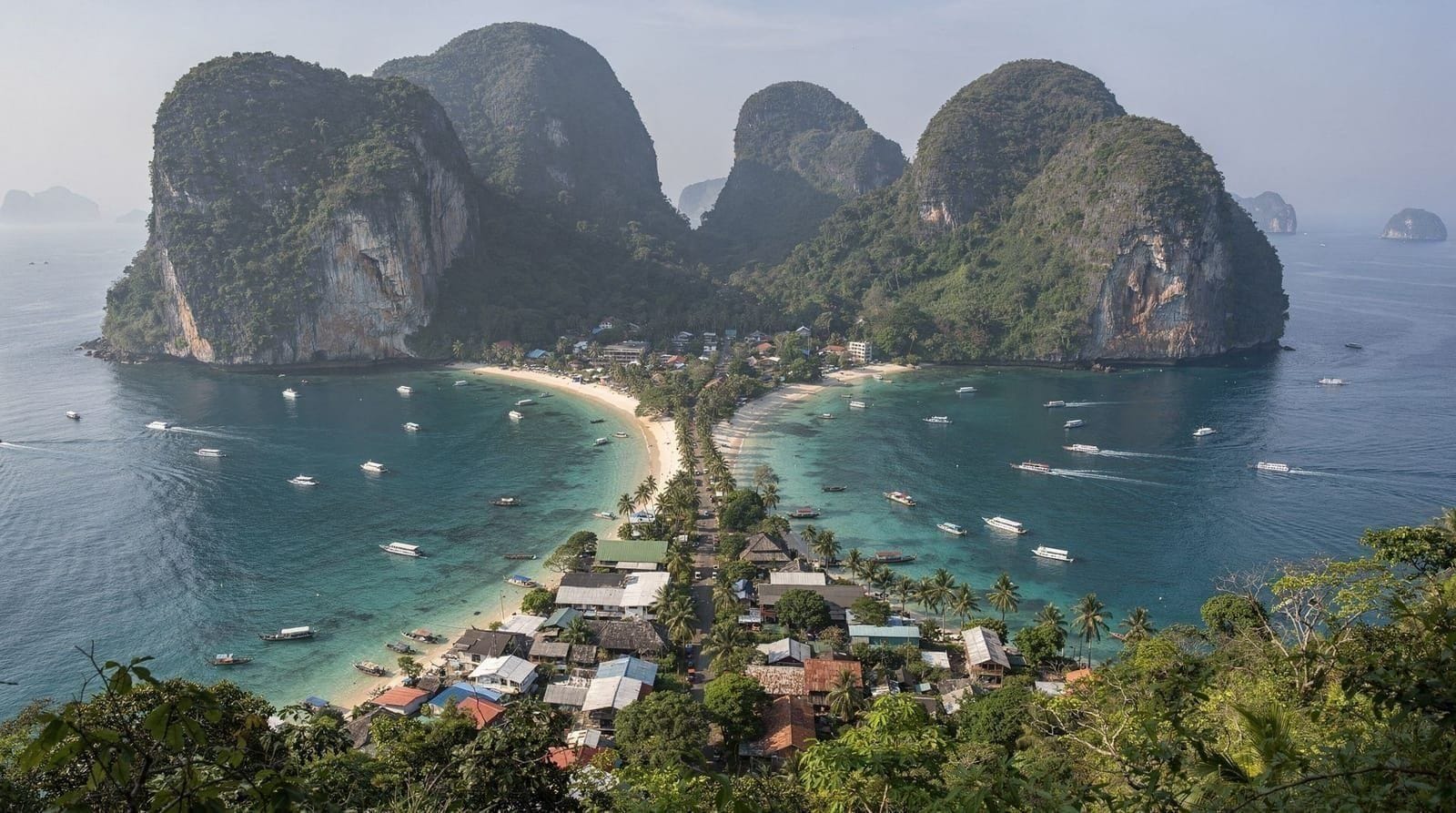
Phang Nga Bay is one of the most dramatic seascapes in Southeast Asia — limestone karst towers rising from a shallow tidal bay, sea caves accessible by kayak, the floating fishing village of Koh Panyi, and James Bond Island (Khao Phing Kan) made famous by the 1974 film. Getting there from Phuket is straightforward but the transport options differ from the Phi Phi route.
Distance and timing: Phang Nga Bay’s main access point is approximately 90 km north of Phuket — roughly 90 minutes by road to Tha Dan Pier in Phang Nga Province. This is why most Phuket-based tours use a speedboat departing from Phuket directly rather than a road transfer: the boat approach through the bay is more direct, and arriving by water is the correct way to experience the landscape.
Standard speedboat tour from Phuket is the most common option and the easiest for visitors:
- Departs from Ao Por Pier or Rassada Pier
- Duration to James Bond Island: 45–60 minutes
- Typical tour includes: James Bond Island, sea cave kayaking (sit-inside kayaks, no experience needed), Koh Panyi stilt village lunch, snorkelling stop
- Price: 1,400–2,200 THB per person including hotel pickup
- Hotel pickup is usually included — most operators collect from Patong, Kata, Karon, and Kamala areas
Longtail boat tours from within the bay are an option for travellers already based in Phang Nga Province (for example, on a road trip north, or returning from Khao Lak). Longtails operate from Tha Dan Pier and cover the key bay sites at a slower pace. They’re cheaper (600–900 THB) but cover less ground and are not practical as a day trip from Phuket — the road journey each way would eat the day.
Self-drive to Ao Por Pier is possible for those renting a car — park at the pier and join a longtail or join a boat tour from there. This works if you have a rental car and are comfortable driving Thai roads; otherwise the hotel pickup speedboat tour is simpler.
What a typical Phang Nga Bay day includes:
The bay circuit on a standard tour runs approximately 6–7 hours from Phuket. The sequence is usually: boat north through the bay, sea cave kayaking (the caves are tight and thrilling, guides are present, no prior kayak experience needed), James Bond Island photo stop (20–30 minutes ashore), Koh Panyi floating village for lunch (included, seafood), and a snorkelling stop on the return if sea conditions allow. The photography throughout — karst towers, emerald water, fishing boats silhouetted against limestone — is exceptional.
For more detail on what to expect at the bay itself, including the kayaking sections and James Bond Island entry, see the Phang Nga Bay destination guide.
What to book in advance vs on arrival
The conventional advice to “book everything in advance” overstates the need for most Phuket island transport. The practical distinction:
Book in advance (high season, December–March):
- Phi Phi speedboat day tours — these do genuinely sell out 1–2 days ahead in peak December–January. If you know your Phi Phi day, book it before you arrive or on your first day on the island.
- Popular overnight accommodation on Phi Phi Don in the same peak window
- Liveaboard dive trips to the Similans — these are the most supply-constrained product, particularly for cabin-based trips with specific departure dates
Book on arrival (or 24 hours ahead):
- Phang Nga Bay tours — ample supply year-round, same-day booking is almost always available
- Koh Yao day trips — low competition for spots
- Coral Island or Racha Island half-day trips from Chalong Pier
- Slow ferries to Phi Phi — they rarely sell out
Where to book: The hotel desk is the most convenient option but consistently charges 10–25% more than booking directly with the operator or through platforms like GetYourGuide. For price comparison, check GetYourGuide before accepting the hotel price — the same tour with the same operator often lists at a lower rate, and the cancellation policies on platform bookings are typically more transparent. Walking down to Rassada Pier or asking at any dive shop on the main beach roads also works for most standard tours.
One practical note: avoid booking island tours through tuk-tuk drivers or unsolicited street vendors. These are sometimes legitimate but the commission layers mean you pay above-market prices and the driver, not the operator, holds your money if there’s a cancellation.
For more context on how island day trips fit into a broader Phuket trip structure, the Phi Phi Islands guide covers the Phi Phi experience in detail, and the how many days in Phuket guide helps you allocate island days within a realistic itinerary.
Phuket’s pier system: which pier for which destination
Not all island trips leave from the same pier, and showing up at the wrong one means missing your boat. Phuket has four main departure points for island and bay tours.
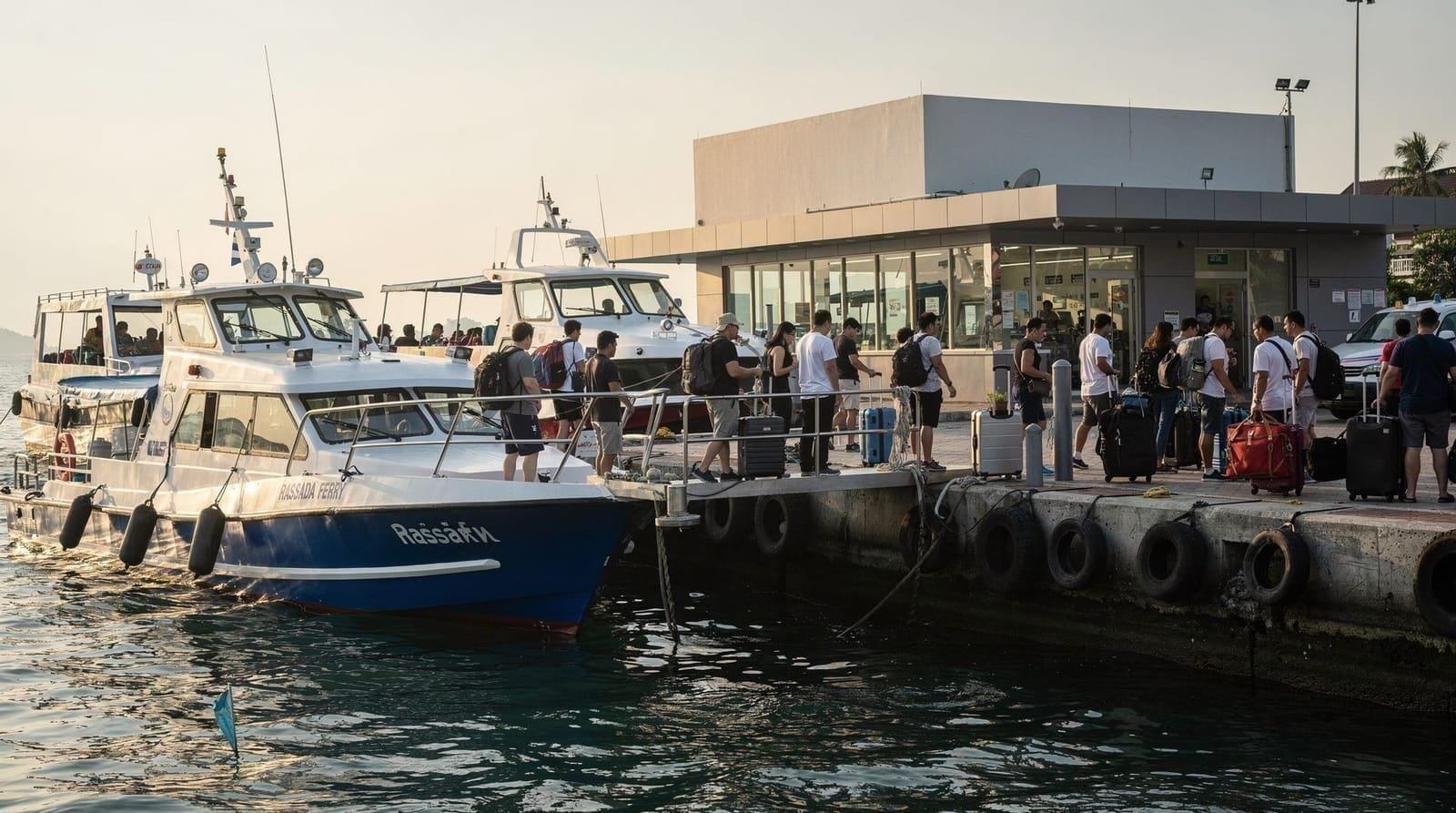
Rassada Pier (east coast, near Phuket Town) is the main commercial pier for passenger speedboat services and most day tours. This is where the majority of Phi Phi day tours depart, along with Phang Nga Bay speedboat tours and some Koh Yao transfers. It’s in the industrial port area — not scenic, but logistically central. Most hotels in Kata, Karon, and Patong are 25–35 minutes from Rassada by Grab (200–350 THB).
Bang Rong Pier (north Phuket, near Nai Yang) is the main departure point for ferries to Koh Yao Noi and Koh Yao Yai. The car ferry to Phi Phi (Raja Ferry) also departs from this area. If you’re staying near the airport or in Bang Tao, Bang Rong is significantly closer than Rassada — 10–15 minutes versus 45 minutes. For those based in Kata or Karon, Bang Rong is 45–50 minutes north.
Chalong Pier (south Phuket) is the main departure point for Coral Island (Koh Hae), Racha Yai, and Racha Noi islands, as well as many dive operations. Chalong is well-positioned for visitors staying in Kata, Karon, or Rawai — typically 15–25 minutes by Grab (150–200 THB). It’s also the departure point for some Similan Islands day trip operators, though the crossing from here is longer than from Rassada or Khao Lak.
Ao Por Pier (northeast Phuket, near Koh Yao) is a secondary option for some Phang Nga Bay and Koh Yao tours, particularly those targeting a quieter longtail boat experience rather than a speedboat circuit. It’s 30–40 minutes from Patong and about 45 minutes from Kata by Grab. Confirm your departure pier when booking — some operators list “Phang Nga Bay tour from Phuket” without specifying which pier, and it matters for your morning logistics.
When booking any island trip, ask your operator: which pier does the tour depart from, and does the price include hotel pickup? Most organised tours include a minivan pickup that takes you to the pier — if yours doesn’t, budget the Grab fare into your total cost.
Booking platforms and pier agents: the price difference
Where you buy your ferry or speedboat ticket affects the price more than most travellers expect.
Hotel and resort tour desks are the most convenient option — the desk is in your lobby, and they handle logistics. The cost: typically 200–500 THB per person above the base price, depending on the tour and how much the hotel marks up. This is a reasonable convenience fee for guests who don’t want to research alternatives. For a single person on a day trip, the markup is marginal. For a group of four on a premium speedboat tour, it can add 2,000 THB to the bill.
Rassada Pier walk-up booking is the cheapest route for standard passenger speedboat ferries — you show up, pay, and board. There are multiple operators selling tickets at the pier (350–500 THB one-way to Phi Phi). This works best if you have a flexible schedule and are travelling light.
Online booking platforms (GetYourGuide, Viator, Klook) typically offer the same tour operators as the hotel desk at prices 10–25% lower, with the added benefit of clear cancellation policies in writing. For Phi Phi speedboat day tours, these platforms are the most reliable combination of price and transparency. You get the operator’s boat, the operator’s guide, and the operator’s cancellation terms — not the hotel’s interpretation of them.
Direct with the operator: Many operators have WhatsApp numbers and will quote prices directly. For groups of 6+ or for private charters, negotiating directly with a speedboat company at Rassada Pier or Chalong Pier often yields better prices than any platform. This approach requires more effort and is most practical for those with multiple days in Phuket who have time to shop around.
For first-time visitors managing the overall booking process — including which tours to prioritise, which beaches work best as a base, and how to structure island days — the phuket travel guide for first-timers covers the full picture. The how many days in phuket guide helps decide how many island days to allocate within your trip length.
Summary: which to choose
| Trip type | Recommendation |
|---|---|
| Day trip to Phi Phi (first visit) | Speedboat tour (includes guide + activities) |
| Day trip to Phi Phi (independent, budget) | Passenger speedboat ferry (one-way, 350–500 THB) |
| Overnight on Phi Phi | Slow ferry (luggage friendly, 200–350 THB) |
| Day trip to Phang Nga Bay | Speedboat tour |
| Phuket to Krabi (November–March) | Tigerline Ferry (scenic, includes Phi Phi stop) |
| Phuket to Krabi (April–October) | Bus + ferry or private taxi |
| Phuket to Koh Yao Noi | Regular ferry from Bang Rong (100–150 THB) |
Frequently asked questions about Ferry vs speedboat — which to take to the islands near Phuket?
How long does it take to get to Phi Phi by ferry vs speedboat?
Is the speedboat crossing rough?
Can I take a ferry to the Similan Islands?
Which is safer — ferry or speedboat?
Do the ferries have life jackets?
Is there a direct ferry from Phuket to Krabi?
What is the cheapest way to get to Phi Phi from Phuket?
Can you bring luggage on the ferry to Phi Phi?
Top experiences
Bookable activities with verified prices and instant confirmation on GetYourGuide.