Patong vs Kata vs Karon — which beach should you base yourself at?
Phuket: Coral Island snorkeling & sunset catamaran cruise
Should I stay at Patong, Kata, or Karon?
Kata for most first-timers — best balance of beach quality, walkable village, and range of accommodation. Patong if you want maximum nightlife and amenities. Karon for more space and lower prices. All three are within 15 minutes of each other by Grab, so you can visit the others as day trips.
Patong, Kata, and Karon are Phuket’s three most visited beaches, all within a 12 km stretch of the west coast. They’re close enough that you can visit all three in a day, but different enough that choosing the right base significantly affects the quality of your trip.
| Best overall for first-timers | Kata — balance of beach, village and value |
| Best for nightlife | Patong — Bangla Road and the largest amenity base |
| Best value | Karon — lowest prices for equivalent quality |
| Distance between them | 5–12 minutes by Grab, 50–150 THB |
| Airport distance | All within 35–45 km (45–70 minutes) |
Overview: what each beach does
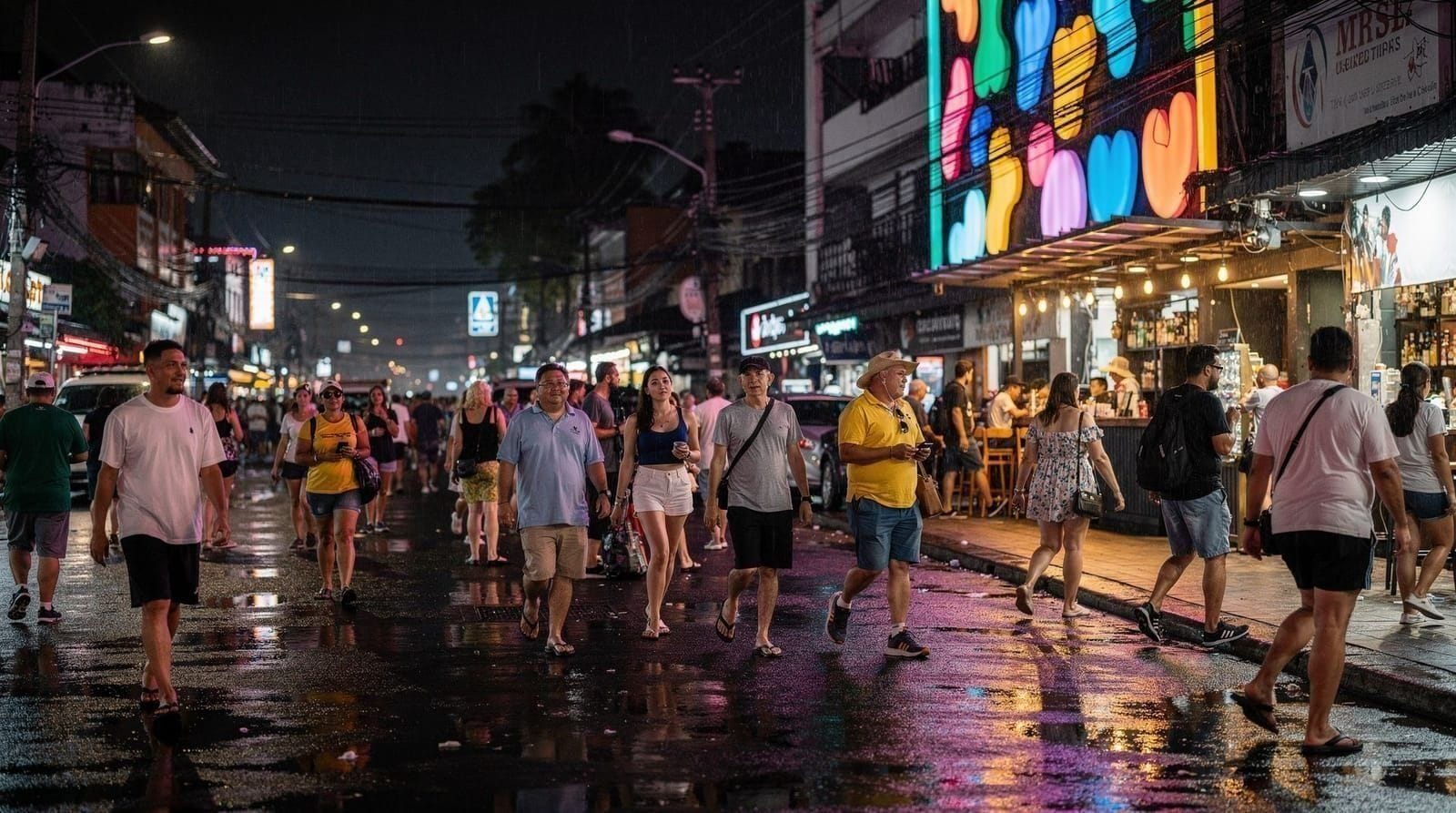
Patong — Phuket’s original tourist hub. The biggest beach (3 km), the most accommodation, the most restaurants, the most noise. Home to Bangla Road (neon nightlife strip). The beach itself is the least impressive of the three.
Kata — The most balanced choice. Good water quality, walkable village, mid-range accommodation options, and a quieter atmosphere than Patong while remaining convenient for tours and services.
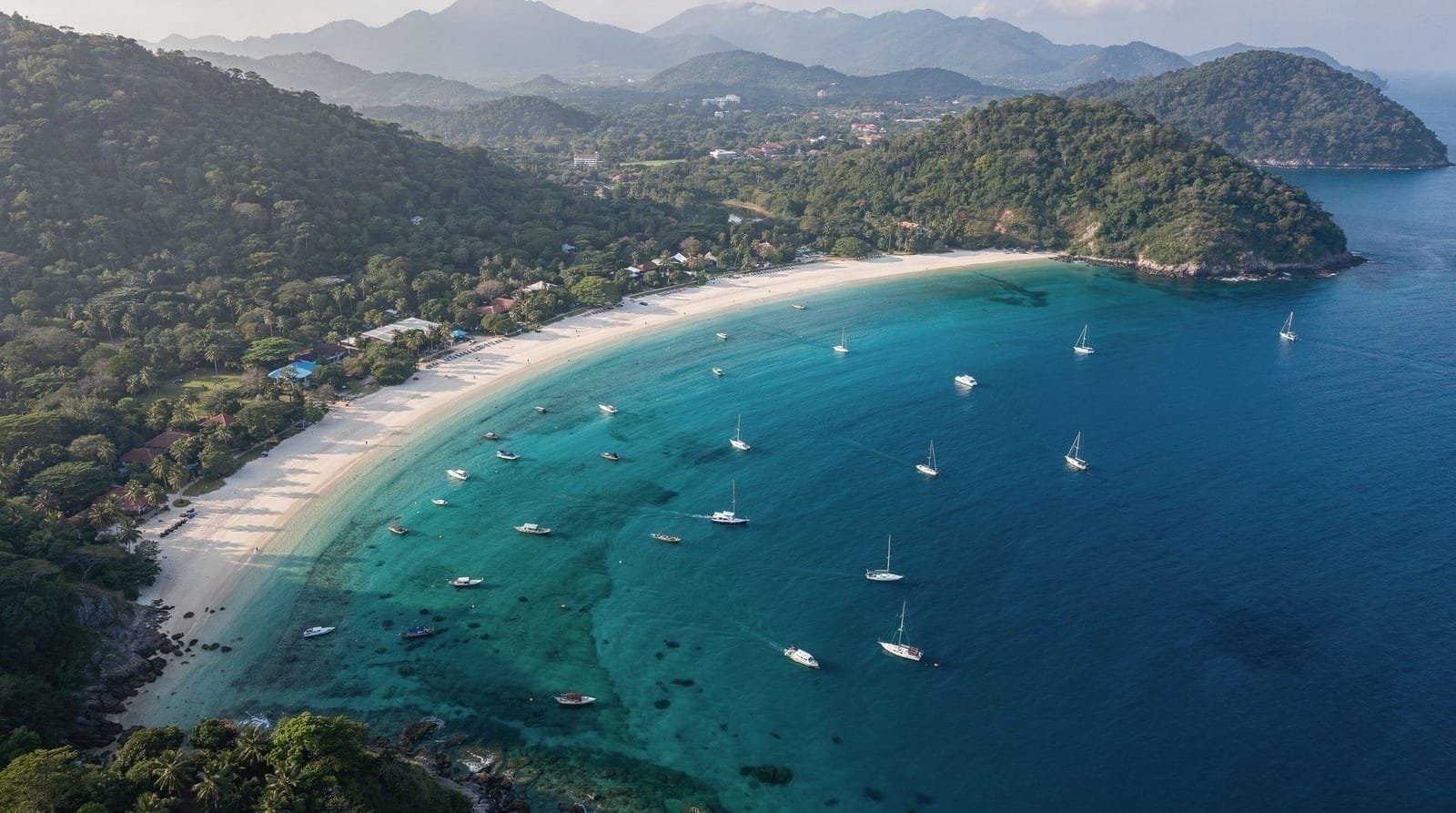
Karon — Phuket’s longest beach (3 km), with squeaky white sand and notably less crowd density than either Patong or Kata. Limited walkable restaurant options but excellent value for accommodation.
Beach quality
This is where Kata wins clearly:
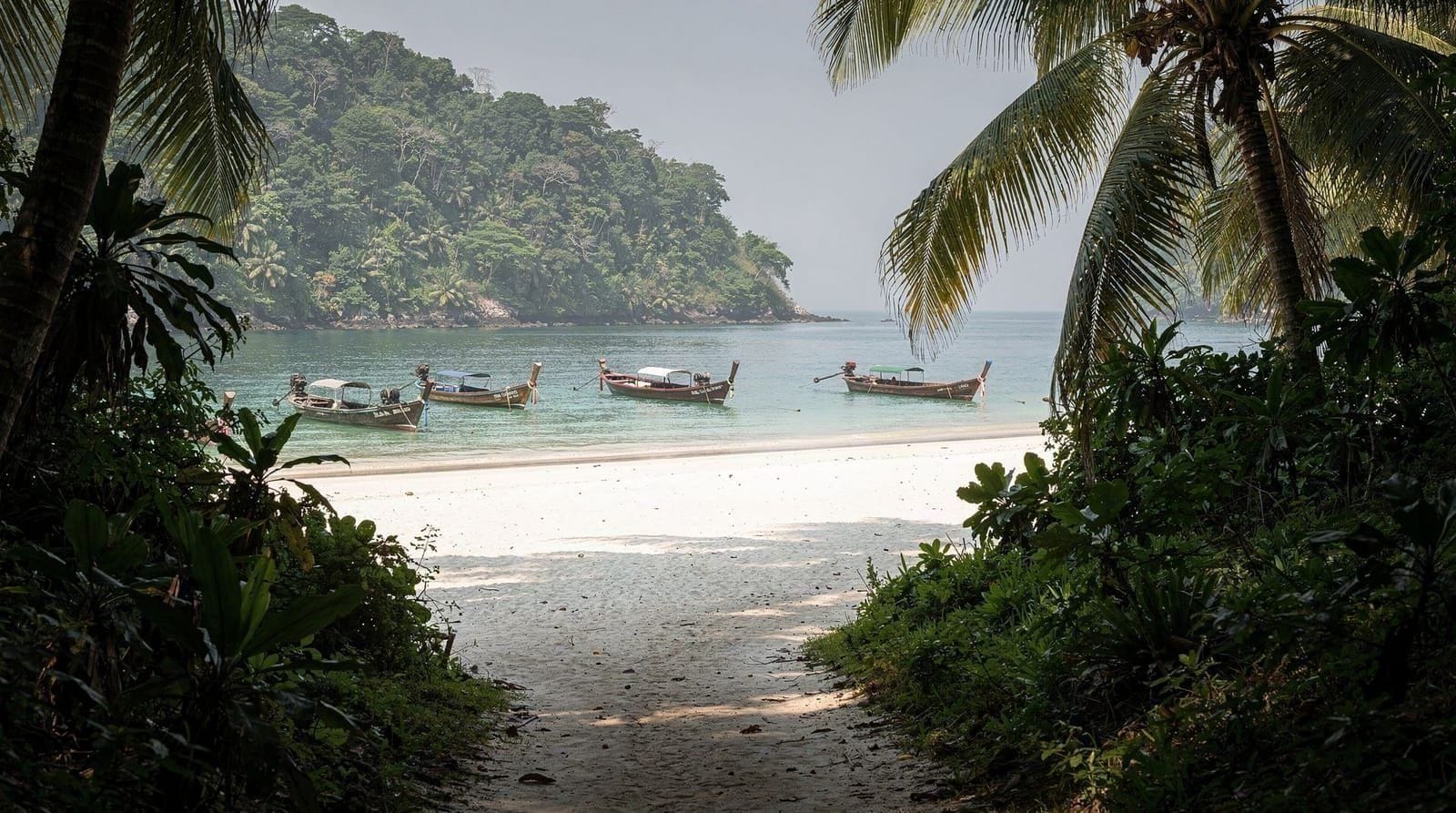
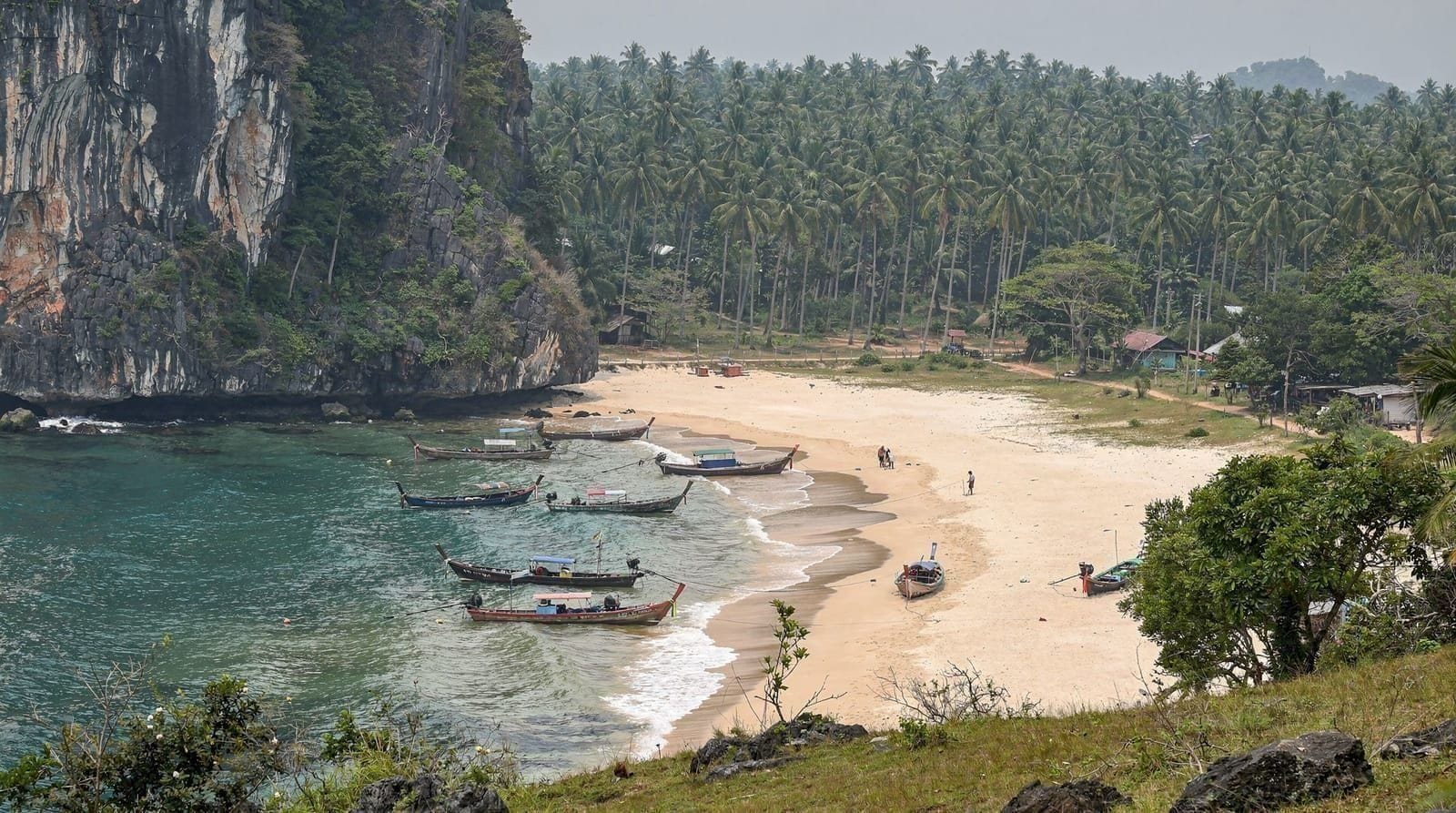
Kata Noi (the smaller cove immediately south of Kata) has soft white sand, crystal-clear water, and a rocky headland that filters swell. In high season, it’s genuinely postcard-quality. The main Kata beach shares the same character with a larger footprint.
Karon has fine white sand and the space advantage — at 3 km, the density of people per metre of beach is significantly lower than Patong even in peak season. The water is clean. The main negative is a slightly exposed northerly section that can get rough.
Patong is the weakest on pure beach quality. The sand is coarser, the water is often cloudy from boat traffic and jetski density, and beach hawkers (bracelet sellers, longboat tour touts) approach persistently on the main section. The beach is large and the southern end near Tri Trang is significantly calmer — if you base in Patong, stay south.
Water quality ranking: Kata Noi > Karon south > Kata main > Patong south > Patong main
Accommodation
All three have accommodation across the full price range, but the character differs:
Patong has the most rooms, the cheapest budget guesthouses (400–700 THB for a basic fan room), and some of the best-value mid-range hotels on the island (large supply keeps prices competitive). The most recognisable hotel brands are here. Downside: street noise at night is unavoidable in central Patong; book upper floors or blocks away from Bangla Road.
Kata has less supply (and therefore sometimes less availability in peak season), with guesthouses from 600–1,000 THB and boutique hotels from 1,500–5,000 THB. Kata Beach Resort, On the Rocks (Marina Phuket), and the Katathani Phuket Beach Resort are well-regarded options. Kata Noi has several directly beachfront options worth paying slightly more for.
Karon is the most affordable of the three for equivalent quality — mid-range hotels run 1,000–2,500 THB. Lower demand means better rates, especially in shoulder season. Hilton Phuket Arcadia and Karon Sea Sands are the best-known properties.
Food and restaurants
Patong wins on volume and variety — Italian, Japanese, Indian, Middle Eastern, fast food chains, and every tier of Thai restaurant are within walking distance. The catch: tourist-targeted restaurants charge 3–5× local prices, service is often rushed, and quality is inconsistent. The best strategy in Patong is to find the local Thai restaurants 2–3 streets back from the beach and Bangla Road area.
Kata has a smaller but more reliable local restaurant scene. Kata Road (the main village street) has good Thai shophouses at 80–150 THB/meal alongside beachfront restaurants charging 300–600 THB/dish. Kata is where several of Phuket’s more celebrated local restaurants are found — locals from other areas sometimes come to eat here.
Karon has the weakest food scene of the three. The main beach road has restaurants but less density and less variety than Patong or Kata. Mid-range hotels have good in-house restaurants. For serious food, a Grab ride to Kata or Phuket Old Town makes more sense.
Nightlife
Patong is Phuket’s nightlife capital by a massive margin. Bangla Road alone has 50+ bars, three major club-format venues (Illuzion, Seduction, XANA), and live music venues operating until 3–4 am. The street entertainment (fire shows, boxing demonstrations, tuk-tuk drag racing) is relentless. If nightlife is your priority, Patong is unambiguously correct.
Kata has a relaxed bar scene — a small strip of beach bars, a few sports bars, and some live music spots. The atmosphere is social but winds down by midnight. Good for a couple of drinks without committing to a full night out.
Karon is the quietest of the three in the evenings — a few hotel bars and a handful of low-key venues, but nothing resembling a nightlife strip. Fine if you want early bedtimes.
Sunset catamaran to Coral Island from Karon BeachTour access and logistics
All three beaches have good tour operator access — hotel desks and street-level tour shops can arrange Phi Phi day trips, Phang Nga Bay tours, and cooking classes from all three. Tour pickups are from your hotel.
The slight logistical advantage for Kata: it sits closest to Chalong Pier (10–15 minutes south), which is the departure point for Coral Island, Racha Island, and some dive trips. This is worth noting if you’re planning multiple island day trips.
Scams and safety: what differs between the three
All three beaches share the same general scam ecosystem, but the intensity varies. The most documented problem across all three is the jetski damage scam — a rental operator claims you damaged the jetski and demands payment, supported by pre-existing damage photographed after (not before) your ride. If you rent a jetski anywhere on these beaches, photograph every surface — hull, handlebars, bottom — before starting. This is not hypothetical: it is a documented, systematic operation at Patong particularly, and less common but present at Kata and Karon.
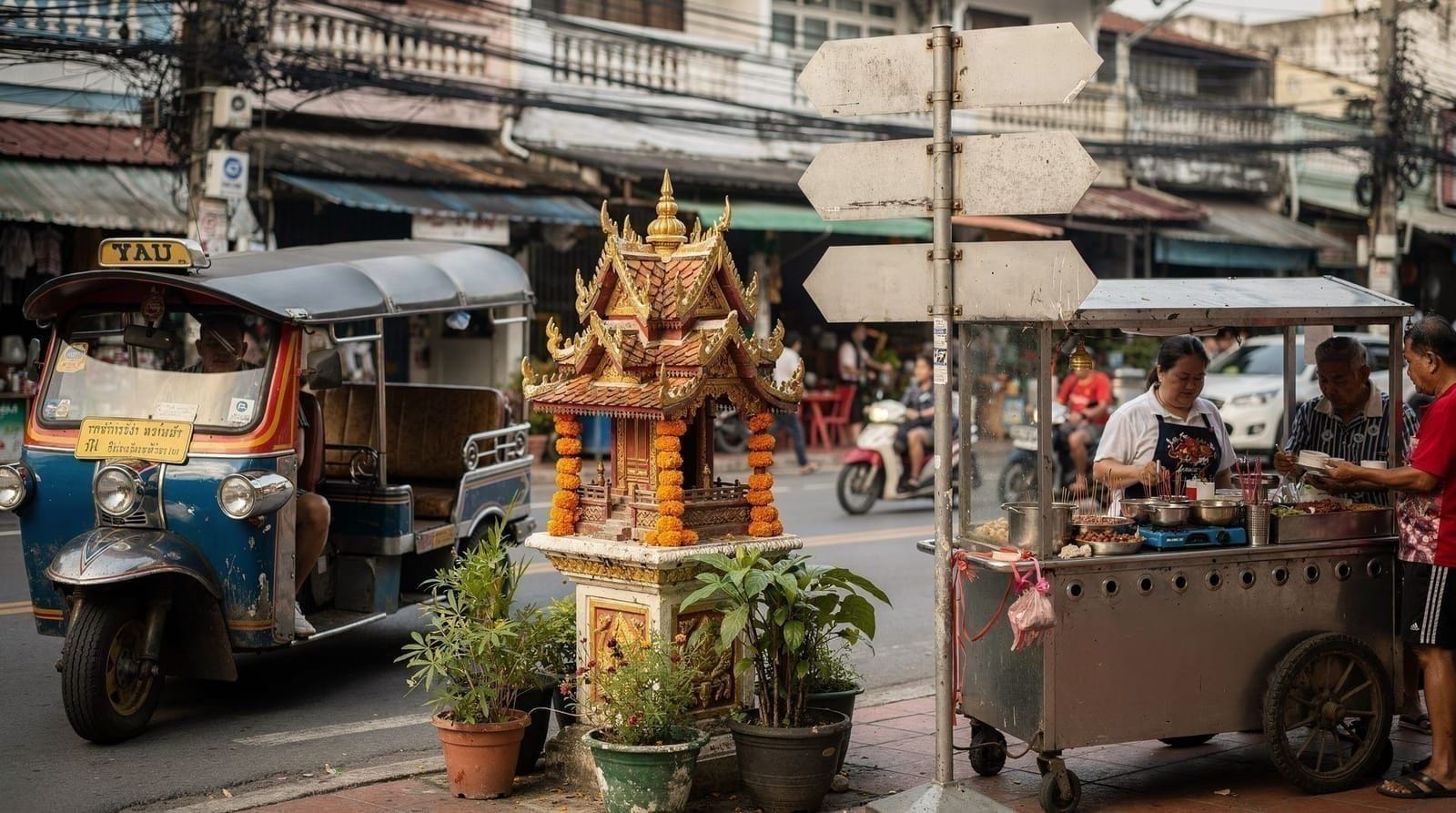
The “temple is closed” tuk-tuk scam operates from all three areas. A tuk-tuk driver near a temple or attraction tells you it’s closed today (a holiday, cleaning day, or similar) and offers to take you to a “special shop” or alternative attraction instead. The temple will not be closed. The shop is a gem store with commission-based selling. Verify temple hours directly with your hotel before going.
At Patong specifically, the bar fine and drinks scam is prevalent in Bangla Road establishments. Always clarify prices before ordering, and be specific about what you’re agreeing to pay. Printed menus are a good sign; verbal-only price discussions in English are not.
For comprehensive coverage of what to watch for, the Phuket scams guide covers the most common situations in detail.
Visiting Phuket Old Town from any of the three beaches
Phuket Old Town is one of the island’s most worthwhile experiences and is underused by visitors who don’t venture off the beach strip. From Kata, Karon, or Patong, the Old Town is 25–35 minutes by Grab (200–350 THB) and well worth an afternoon or evening.
The Sino-Portuguese architecture of Thalang Road and the surrounding lanes is the island’s most distinctive cultural asset. Street food here includes moo hong (slow-braised pork belly), oh tao (oyster cake), and various Hokkien-influenced dishes available at shophouses for 60–120 THB per plate — significantly cheaper and more authentic than beach-area restaurants. The Sunday Walking Street on Thalang Road runs from approximately 4 pm to 10 pm and is one of the best food markets in southern Thailand.
Big Buddha (free entry, 45 m white marble statue on Nakkerd Hill, open 6 am–7 pm) is accessible from all three bases in roughly 20–30 minutes by Grab. It’s visible from much of the island and worth visiting once, particularly in the late afternoon when the light is better and crowds thin slightly.
The verdict: who should stay where
Choose Patong if:
- Nightlife is a primary motivation
- Budget is tight and you need the cheapest possible guesthouse
- You want maximum food and service variety walking distance
- You’ve been to Phuket before and specifically want the Bangla Road experience
Choose Kata if:
- It’s your first visit and you want the most balanced experience
- You’re travelling as a couple and want a walkable, pleasant village
- You’re primarily interested in beaches, day trips, and good food
- You have children or prefer a quieter evening atmosphere
Choose Karon if:
- You want the most space on the beach
- Budget is important — Karon offers better value than Kata for equivalent quality
- You’re a light sleeper or early riser who wants quiet evenings
- You’re content to Grab to other areas for food variety
Best beach by traveller type
| Traveller type | Best base | Why |
|---|---|---|
| Solo traveller wanting nightlife | Patong | Maximum bars, clubs and social energy within walking distance |
| Couple on a first trip | Kata | Romantic atmosphere, walkable village, Kata Noi’s boutique hotels |
| Family with young kids | Karon | Space on the beach, quieter evenings, less overwhelming than Patong |
| Budget backpacker | Patong | Cheapest fan rooms and biggest supply keeps prices competitive |
| Divers based for day trips | Kata | Closest of the three to Chalong Pier for island departures |
| Digital nomad / longer stay | Karon or Kata | Lower rents, calmer daily rhythm, still close enough to Patong for a night out |
Splitting your stay across more than one beach
Because the three beaches sit within 12 minutes of each other, some visitors deliberately split a longer trip rather than committing to a single base. A common pattern for a 7–10 day visit: 2–3 nights in Kata or Karon for the calmer half of the trip, followed by 2–3 nights in Patong toward the end for nightlife, once the early jet-lag and beach relaxation phase is done. This avoids the main downside of each — you’re not stuck listening to Bangla Road bass for a full week, and you’re not missing it entirely if a night out matters to you. The trade-off is the hassle of repacking and moving hotels, which isn’t worth it for trips under five days; in that case, pick one base using the table above and Grab to the others for day visits instead.
Getting between the three beaches
Patong to Kata by Grab: 12 minutes, approximately 100–150 THB.
Kata to Karon: 5 minutes, approximately 50–80 THB.
Patong to Karon: 8 minutes, approximately 80–120 THB.
Songthaews (shared vans) connect all three with Phuket Town via fixed routes — useful for budget travel but slower and not door-to-door.
Frequently asked questions about Patong vs Kata vs Karon — which beach should you base yourself at?
Which is closer to the airport — Patong, Kata, or Karon?
Which has the best beach — Patong, Kata, or Karon?
Is Kata more expensive than Patong?
Is Patong beach safe for swimming?
Which beach is best for a couple on a first trip?
Which has the best food scene?
Can I see Bangla Road from Kata or Karon?
Which beach is best during monsoon season?
Top experiences
Bookable activities with verified prices and instant confirmation on GetYourGuide.